Meghalaya’s unique blend of women-led agriculture, indigenous knowledge systems, and sustainable farming practices took centre stage at an international conference that brought together policymakers, development partners, agricultural experts, and organic farming advocates from across the world.
The event highlighted the growing global recognition of women farmers as key drivers of food security, environmental conservation, and resilient agricultural systems, while positioning Meghalaya as an important example of community-based sustainable development.
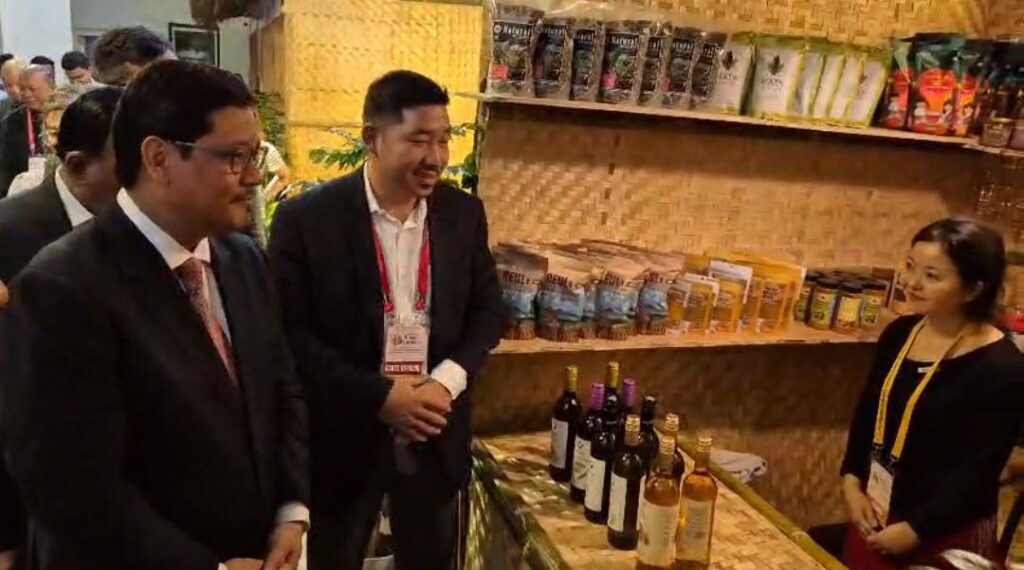
The International Conference on Women Farmers and Sustainable Organic Agriculture was organised by the Department of Agriculture & Farmers’ Welfare, Government of Meghalaya, in collaboration with IFOAM – Organics Asia. It attracted delegates from India and abroad, including representatives of international organisations such as the German development bank KfW and IFOAM, alongside policymakers, researchers, development practitioners, and stakeholders from the agricultural sector.
Throughout the conference, participants exchanged ideas on strengthening sustainable organic agriculture through community participation, preserving indigenous farming traditions, promoting women’s leadership, and building partnerships capable of expanding environmentally responsible farming practices.
The deliberations also explored ways of integrating traditional ecological knowledge with scientific innovation to improve agricultural productivity while ensuring long-term environmental sustainability and livelihood security for farming communities.
Addressing the gathering, Chief Minister Conrad K. Sangma highlighted Meghalaya’s distinctive matrilineal social structure, where women have traditionally played a central role as custodians of land and agriculture. He suggested that the close relationship between women’s land ownership and sustainable farming practices in the state offers valuable lessons that could inform agricultural policies not only in India but across the world.
Sangma said Meghalaya’s agricultural progress has been shaped by locally designed development strategies that build upon the state’s own social and ecological strengths instead of replicating external models. Over the past eight years, he said, the government has consistently pursued farmer-centric policies that place women at the centre of the state’s development agenda.
According to the Chief Minister, this approach has strengthened self-help groups, farmer producer organisations, and other community institutions, enhancing collective participation while improving rural livelihoods across the state.
He also underlined the importance of safeguarding the Northeast’s rich agricultural heritage, where generations of farmers have practised largely chemical-free cultivation rooted in indigenous knowledge. At the same time, he advocated a balanced approach that combines traditional farming wisdom with modern technology to increase productivity without compromising environmental sustainability.
Looking beyond Meghalaya, Sangma called for greater regional collaboration among the Northeastern states. He urged stakeholders to view the region as a shared ecological and cultural landscape rather than isolated administrative units, arguing that such cooperation would help scale up organic farming initiatives, attract greater investment, and strengthen the region’s presence in global organic markets.
He further stressed the need for responsible partnerships with the private sector to promote innovation and commercial expansion while ensuring that the interests of grassroots farmers remain fully protected.
The conference commenced with a welcome address by Agriculture and Farmers’ Welfare Minister Timothy D. Shira, who reaffirmed the state’s commitment to expanding organic cultivation and strengthening the economic role of women farmers.
The event concluded with renewed calls for stronger collaboration among governments, international organisations, researchers, and farming communities to build more inclusive, resilient, and sustainable agricultural systems.