The oft-repeated adage that one can choose one’s friends but not one’s neighbours appears particularly relevant to India and Bangladesh at this juncture. After months of strained ties and competing political compulsions, a series of high-level engagements between New Delhi and Dhaka suggests that both sides are beginning to recognise a simple reality: whatever their differences, neither can afford to let the relationship drift indefinitely.
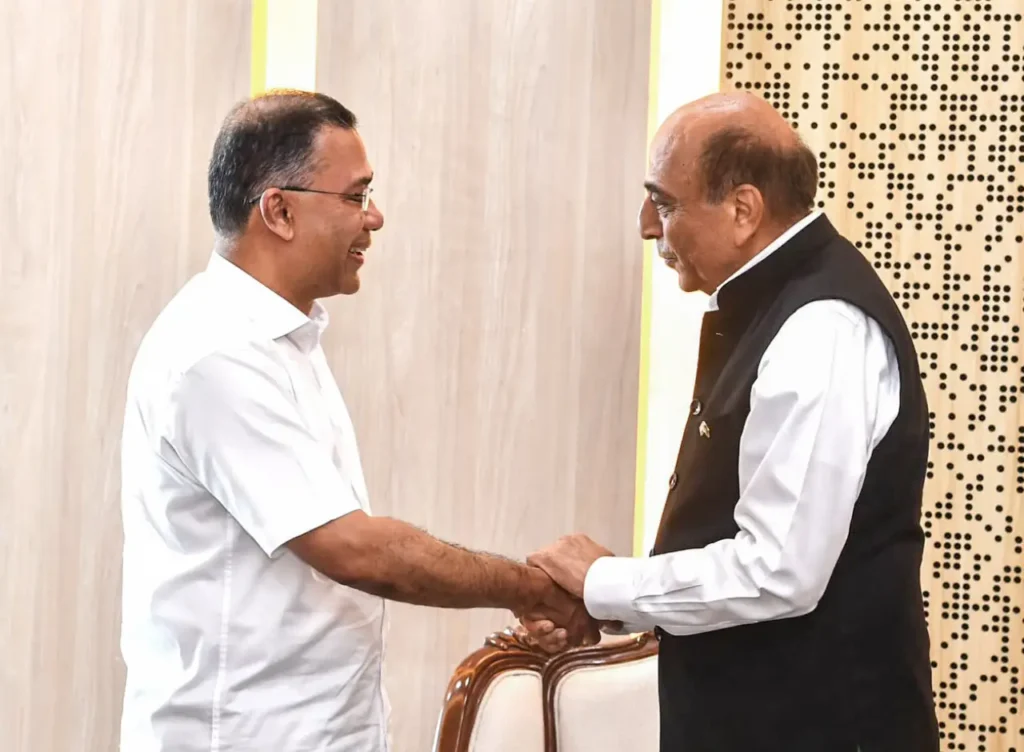
The visit of Research and Analysis Wing (RAW) chief Parag Jain to Dhaka, preceded by discussions between India’s High Commissioner to Bangladesh, Dinesh Trivedi, and Prime Minister Tarique Rahman, comes at a particularly important moment. The engagements have taken place amid a series of bilateral and regional developments, as well as growing questions over the direction of Bangladesh’s foreign and domestic politics.
A direct meeting between Prime Ministers Narendra Modi and Tarique Rahman is yet to take place. But Rahman’s possible presence at the 18th BRICS Summit in New Delhi on September 12-13 could provide the opening both sides need to begin addressing some of the more difficult issues that have strained ties.
Rahman has yet to confirm his participation in the BRICS summit, to which he has been invited in his capacity as chair of Bay of Bengal Initiative for Multi-Sectoral Technical and Economic Cooperation (BIMSTEC). There is, however, another invitation that carries a more personal significance. Modi separately invited Rahman to India on the day of his inauguration as Prime Minister.
The uncertainty surrounding the visit has fuelled considerable speculation in Dhaka and New Delhi. Bangladesh Foreign Minister Dr Khalilur Rahman has sought to distinguish between the two invitations, noting that Rahman was invited to BRICS as the chair of BIMSTEC rather than in his capacity as Bangladesh’s Prime Minister. He has, however, confirmed the separate invitation extended by Modi.
For now, therefore, the question of when Rahman will travel to India remains open. His hesitation becomes easier to understand when viewed against the political pressures at home and the increasingly complicated choices confronting his government.
The extradition of former Prime Minister Sheikh Hasina remains one of the most contentious issues between the two countries. Dhaka has repeatedly sought her return, while New Delhi has been examining the request through its legal and diplomatic channels. The issue has acquired another layer following Hasina’s recent press interaction in New Delhi, in which she criticised the current government and spoke about her political future.
Her remarks created a fresh storm in Bangladesh and inevitably raised questions about India’s position. Dhaka reacted sharply, but New Delhi made its position clear, pointing out that the event had been organised by a private media organisation and that the Indian government had neither organised nor endorsed it. The clarification helped contain what could otherwise have become another irritant at a time when both sides appear to be trying to reopen a difficult conversation.
Yet the Hasina issue is unlikely to disappear. Rahman has raised her extradition directly with the Indian High Commissioner, underscoring how central the matter remains to Dhaka. For New Delhi, however, the question is not simply political. It also involves legal, diplomatic and security considerations that cannot be wished away.
The Hasina question is only one part of a much larger equation. Bangladesh’s growing engagement with China, including cooperation around the Teesta project and Mongla Port, has added another strategic dimension. At the same time, the increasing influence of Islamist forces and the emergence of a more pronounced anti-India discourse have raised concerns in New Delhi.
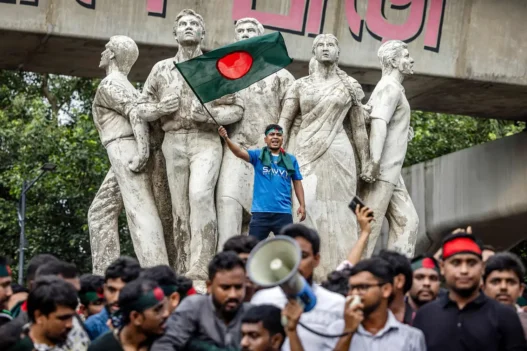
These developments have shaped the relationship since the July 2024 uprising and the subsequent political transition in Dhaka. Bangladesh has moved away from the India-first orientation associated with Hasina’s government, although diplomatic channels between the two countries have remained open. The change has not meant a complete rupture, but it has undoubtedly altered the political atmosphere in which India-Bangladesh relations are being conducted.
For New Delhi, one of the deeper concerns is the changing ideological landscape within Bangladesh. There is growing apprehension over the spread of radical Islamist politics, including alleged attempts by Pakistan-linked elements to expand their influence through networks associated with the Quami madrasa system and other groups advocating a more explicitly Islamic Bangladesh.
Hizb-ut-Tahrir Bangladesh (HTB), which advocates the establishment of an Islamic caliphate, is one of the clearest manifestations of this trend. Banned in Bangladesh since 2009, the organisation has nevertheless shown signs of renewed activity since the political transition of 2024. It has sought to reach young Bangladeshis through social media, educational networks and public mobilisation.
Its rallies, propaganda campaigns and covert seminars have demonstrated an ability to operate in the grey space between ideological mobilisation and overt political activity. The group’s “March for Khilafah” in Dhaka in 2025, which attracted large numbers, was a reminder that organisations advocating an alternative to Bangladesh’s secular democratic framework continue to find avenues for mobilisation.
The resurgence of HTB and other radical groups has coincided with a wider debate over Islamisation within Bangladesh and growing concerns over attacks and discrimination against Hindu and other religious minorities, particularly in some areas close to the border.
Jamaat-e-Islami, which now occupies a significant position in Bangladesh’s parliament, sits at the centre of this changing political landscape. Although the organisation has publicly spoken of maintaining good relations with India, its history and earlier anti-India rhetoric continue to make it a factor that New Delhi cannot overlook.
A political activist in Bangladesh, speaking on condition of anonymity, described Jamaat as the “karkhana”, or workshop, of various “jihadi elements” and argued that the organisation is central to the political pressures surrounding Rahman’s possible India visit.
“The picture for us here in Bangladesh is very clear. If he accepts the invitation, he would come under pressure from anti-India forces, with Jamaat in the lead,” the activist said. “But the visit is also important for Bangladesh, and Rahman knows it.”
That perhaps captures the dilemma facing the Bangladeshi Prime Minister. Rahman’s Bangladesh Nationalist Party (BNP) government is believed to favour a more Islamic orientation for Bangladesh, but one that remains politically moderate. He is nevertheless operating in an environment where several radical groups may differ on many issues but converge on the broader objective of hardline Islamisation.
Jamaat’s growing political space, coupled with its reported efforts to strengthen ties with China, adds another dimension to the equation. Beijing has also sought to expand its influence in Bangladesh, including through infrastructure and strategic projects that have obvious implications for the wider region.
Rahman’s first overseas visits after assuming office, to Malaysia and China, have consequently been interpreted by some observers in Bangladesh as being driven as much by domestic political calculations as by foreign policy. A senior academic said Rahman has had to make “very calculated moves” to remain in power in the present political environment, but maintained that this did not necessarily come at the expense of relations with India.
That distinction matters. Dhaka’s growing engagement with Beijing does not automatically translate into an anti-India foreign policy. Bangladesh has legitimate economic and strategic interests in diversifying its partnerships. China offers capital, infrastructure and large-scale development projects, while India remains indispensable in areas where geography, connectivity, trade, water and security create an entirely different set of compulsions.
The Teesta project is a case in point. Bangladesh has sought Chinese cooperation for the comprehensive management and restoration of the river, while India has its own long-standing concerns and interests in the basin. Likewise, Chinese involvement around Mongla Port has attracted attention in New Delhi. But these developments cannot erase the geographical reality that Bangladesh shares its longest international border with India and remains deeply connected to the Indian economy and the Northeast.
The same reality applies to water. The Ganga Water Sharing Treaty, signed in 1996, is due for renewal in December 2026. The Teesta issue remains unresolved, while cooperation over other shared rivers, flood management and water security will require sustained engagement between the two countries.
These are not issues Bangladesh can afford to ignore. Nor are they matters India can address without taking Bangladesh’s concerns seriously. The two countries have also built extensive cooperation in rail, road, inland waterways and trade, creating important links between Bangladesh and India’s Northeast. These arrangements have economic and strategic value for both sides.
For India, a stable Bangladesh is central to the security of its eastern frontier and the Northeast. It is also an important partner in regional connectivity and economic integration. For Bangladesh, India remains a market, a transit route, a source of energy and a neighbour whose cooperation is critical to managing several of its most pressing challenges.
It is against this larger backdrop that the recent diplomatic activity assumes significance. From RAW chief Parag Jain’s visit to Dhaka to Trivedi’s meetings with Rahman, Foreign Minister Khalilur Rahman, Minister of State for Foreign Affairs Shama Obaed Islam and Foreign Affairs Adviser Humayun Kabir, there has been a noticeable intensification of contact.
What is particularly striking is that several of these meetings have been more publicised than similar engagements in the recent past. That may itself be a signal: both sides appear to want the message of continued engagement to be heard.
Trivedi described his meeting with Rahman as positive, constructive and forward-looking. He subsequently met Bangladesh Home Minister Salahuddin Ahmed, as part of a series of high-level engagements aimed at keeping the relationship on a constructive track.
Trivedi said there was no issue between Bangladesh and India that could not be resolved through discussions. Referring to the two countries as vibrant democracies, he said “differences were natural in democracies”, but most importantly, “people in both countries wanted the same thing–good relations,” which mattered the most. The message was simple: disagreements need not become permanent barriers.
For India, security remains at the heart of the relationship. For Bangladesh, too, maintaining a working relationship with New Delhi could become increasingly important as it navigates its internal political transition and its competing relationships with larger powers.
Bangladeshi observers have also argued that a visit by Rahman to India is overdue and that the BRICS summit could offer an important avenue for addressing several outstanding issues. For New Delhi, the priority is not simply maintaining cordial relations with Dhaka. It is ensuring that its eastern neighbourhood remains stable, secure and resistant to forces that could threaten India’s own security.
For Bangladesh, the opportunity is equally significant. Its engagement with China can continue, but it cannot come at the cost of a functional relationship with India. The same applies to India: competition with China cannot become a reason to overlook Bangladesh’s legitimate interests or concerns.
Ultimately, geography has a way of asserting itself over political calculations.
Bangladesh can deepen its engagement with Beijing, seek new infrastructure partnerships and attempt to maximise its strategic room for manoeuvre. India will continue to pursue its own security interests and remain alert to Pakistani influence, Islamist radicalisation and developments along its eastern frontier. Yet neither country can escape the fact that their interests overlap far more than their current political rhetoric sometimes suggests.
For Rahman, therefore, the decision on whether to travel to India is not a simple diplomatic choice. Accepting the invitation could expose him to criticism from anti-India forces at home, particularly at a time when Islamist groups and other political actors are watching his every move. Staying away, however, could carry its own costs.
Bangladesh needs India for reasons that go beyond immediate politics. Water, trade, connectivity, energy, security and regional cooperation cannot be separated from the geography that binds the two countries together. India, equally, needs a stable and cooperative Bangladesh if it is to secure its eastern frontier and realise the full potential of connectivity with the Northeast and beyond.
Rahman therefore finds himself in a difficult position. Either course carries political risks. But a carefully calibrated engagement with India may ultimately serve Bangladesh’s interests better than allowing domestic political pressures to dictate its foreign policy.
The issue, therefore, is not whether differences exist between India and Bangladesh—they clearly do. The real test is whether both sides possess the political maturity to manage those differences without allowing them to overwhelm the relationship.
The recent engagements suggest that, despite everything that has happened since 2024, the door has not closed. And perhaps that is the enduring lesson of geography: neighbours may not be chosen, but good-neighbourly relations remain a choice.