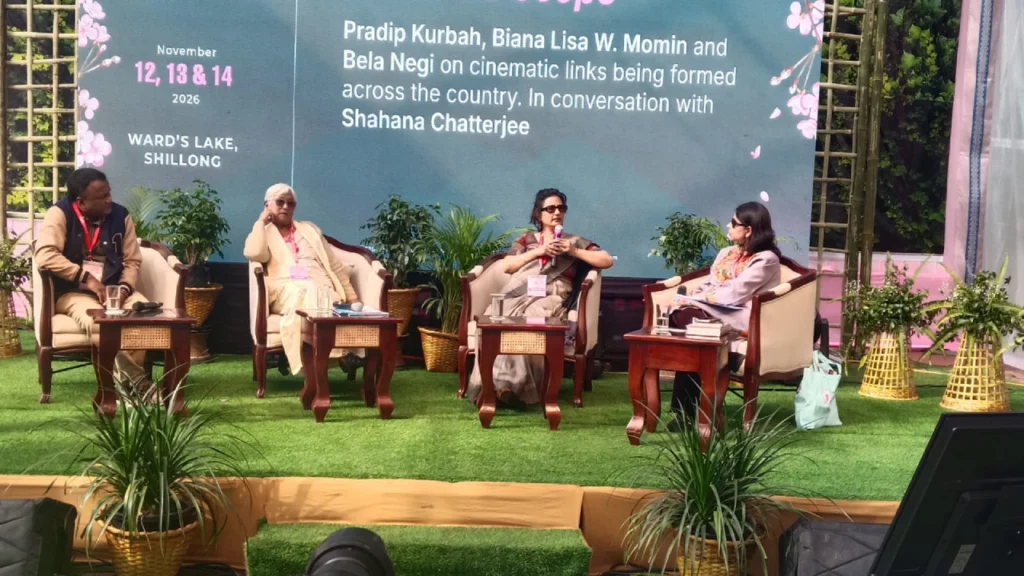
From Booker Prize winners to emerging authors, the sixth edition of the festival seeks to revive reading, encourage creative expression and place the Northeast’s cultural narratives on the global literary map
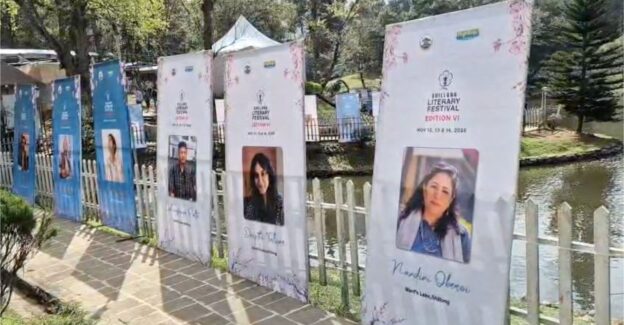
Can a literary festival do more than celebrate books and celebrated authors? Can it inspire a generation to read, write, question inherited ideas and rediscover its cultural roots? The sixth Shillong Literary Festival (SLF), which opened at Ward’s Lake on Friday, seeks to address precisely these questions.
Bringing together 85 speakers, including two Booker Prize winners, established writers, scholars, filmmakers and emerging creative talents, the three-day festival has emerged as more than a gathering of literary personalities. At a time when reading habits are gradually declining and digital distractions are reshaping how young people consume information, the event seeks to rekindle an interest in literature and encourage a new generation to take up creative writing.
For Shillong, the festival also carries a deeper historical and cultural significance. The city was once the capital of undivided Assam and remains closely associated with the political, educational and intellectual history of the Northeast. Its institutions shaped generations of administrators, scholars, writers and political leaders. Hosting an international literary gathering in such a setting reinforces its enduring place as a centre of cultural exchange.
Among the prominent voices at the festival is Shillong-born writer Anjum Hasan, whose latest book, Hometown: Shillong in the World, explores the city through personal memories, oral histories and the wider historical forces that have shaped its identity.
Describing her experience of writing about her hometown, Hasan said even a seemingly small place could not escape the larger currents of history.
“Even the smallest place can’t remain untouched by the flood of history, and that is what I have learnt, writing this book,” she said.
Hasan said she had spoken to people with widely differing experiences of Shillong while working on the book. Some had urged her to examine the city’s darker past, including episodes of violence that had shaped its history.
Her earlier fiction, including Lunatic in My Head, also draws heavily on Shillong and reflects aspects of her own experiences of growing up in the city. Through her latest work, she revisits familiar streets and memories while placing them within a wider social and historical context.
For Dr Dipendra Mazumdar, a faculty member at the National Academy of Broadcasting and Multimedia (NABM), Prasar Bharati, New Delhi, the significance of the festival extends well beyond literary celebrations.
He described the opening of the SLF as an invitation to engage with ideas, encounter unfamiliar perspectives and broaden intellectual horizons.
Literary festivals, he said, provide a common platform for writers, thinkers, scholars and readers to interact across geographical, cultural and ideological boundaries. Such exchanges encourage people to question inherited assumptions, appreciate diverse viewpoints and develop a better understanding of the world.
Mazumdar argued that economic growth, infrastructure and material prosperity alone could not define the progress of a society. Intellectual vitality, openness to new ideas, cultural maturity and the ability to think critically were equally important measures of development.
He also pointed to the shared challenges facing humanity, including climate change, conflict, social inequality, intolerance and technological disruption. These problems, he said, transcend national boundaries and demand collective thinking and cooperation.
The exchange of ideas at literary gatherings can help build the understanding needed to confront such challenges.
He placed particular emphasis on the younger generation, arguing that young people must be prepared not merely as citizens of their respective countries but as responsible global citizens. Intellectual curiosity, empathy, cultural sensitivity, critical thinking and respect for diversity, he said, were essential qualities in an increasingly interconnected world.
“The Shillong Literary Festival, therefore, should be seen not merely as an event on the cultural calendar, but as an investment in the intellectual future of society. Its true success will lie in the conversations it inspires, the minds it opens and the bridges it builds between people, cultures and generations,” Mazumdar said.
The festival’s emphasis on young talent has also generated considerable enthusiasm among emerging writers, including Ruchi Singh, Khushi Agarwal, Prasenjit Kumar Basu and Manoj Murali.
The opportunity to interact with internationally acclaimed authors, particularly Booker Prize winners Kiran Desai and Damon Galgut, has offered young participants a rare chance to learn from established literary voices. Writers such as Anjum Hasan, Stephen Alter, Janice Pariat, Sanjoy Hazarika and Alka Saraogi have further enriched the gathering.
Ruchi Singh, an aspiring writer from Guwahati, said the festival’s First Bloom initiative had given emerging authors an invaluable opportunity to showcase their work and gain exposure.
“As an aspiring author, opportunities like First Bloom mean more than I can express. The hospitality extended by the organisers of the festival at this juncture of my career is something I will cherish for all my days,” she said.
The festival was inaugurated by Chief Minister Conrad K Sangma in a low-key ceremony without elaborate formalities or ceremonial felicitation, keeping the focus firmly on literature and its practitioners.
Six publications were also launched on the opening day. One of the major attractions was a conversation with Kiran Desai, author of The Loneliness of Sonia and Sunny, who explored loneliness, identity, belonging and the challenges of navigating life between cultures.
Drawing on her experiences as an international student in the United States, Desai spoke about physical isolation and the time she spent alone, explaining how these experiences shaped her understanding of independence and influenced her writing.
Loneliness, she observed, could be painful but could also become an important part of the creative process, offering individuals the space to examine their identities and understand themselves better.
The discussion also examined the lives of her central characters, Sonia and Sunny, and their struggles with belonging, cultural identity and the responsibilities involved in telling stories.
Desai reflected on the challenges Indian writers face when presenting their country to international readers, particularly the need to avoid stereotypes and exoticised portrayals of Indian society.
The festival has also attracted international visitors. Peter Zavadil from Switzerland, who travelled to Shillong with friends, said he was keen to experience the literary gathering first-hand.
An admirer of Indian literature, Zavadil praised the opening sessions and said the festival offered an opportunity to experience the region beyond books through its food, traditions and interactions with local people. He said he would recommend the event to others interested in literature and culture.
Indigenous heritage takes centre stage
One of the significant dimensions of this year’s festival was its focus on Khasi history, customary institutions and indigenous knowledge.
Celebrated South African novelist and playwright Damon Galgut, winner of the 2021 Booker Prize, released three publications dealing with Khasi heritage and traditional social structures. The books were introduced by their authors, Raphael Warjri and Adeline Swer, before Galgut formally unveiled them.
The publications included Jutang Longblei: Khasi Divine Covenant, Khasi Matrilineal Clan Lineage System and Matriliny versus Patriarchy.
The last title, co-authored by Warjri and Swer, examines the historical and cultural foundations of matriliny in Khasi society and its role in preserving the community’s distinctive social identity. It also looks at the pressures exerted by surrounding patriarchal norms on contemporary Khasi society.
Jutang Longblei: Khasi Divine Covenant is a bilingual publication in Khasi and English that documents myths, legends and traditional narratives of the community. Its folktales have been arranged chronologically to establish a connected sequence of mythological events.
Khasi Matrilineal Clan Lineage System is an international edition of Warjri’s earlier work, MEI: Matrilineal Exogamous Institution. The initiative was undertaken in 2025 by Pidison Suchiang, president of the Greater Sylhet Indigenous Peoples’ Forum, to reach Khasi communities in Bangladesh, where the traditional matrilineal system continues to be practised.
The wider book-launch programme featured works by Daniel Challam (Postcards from the Khasi Hills: Shillong and Beyond in Panorama), Rudy Warjri (Adventures of a Peripheral Indian Diplomat), Sanjoy Hazarika (Lal Thanhawla), Yadawanka Pala (The Rainbow I Named), Streamlet Dkhar (Wad Shwa La Ka Tynrai), Bijoya Sawian (Chocho Momo and What Time Cannot Erase) and Anjum Hasan (Hometown).
The presence of indigenous literature and scholarship alongside internationally acclaimed fiction highlighted the festival’s attempt to create space for regional voices and narratives that often remain outside mainstream literary discourse.
Desai expressed her admiration for the natural and cultural landscape of the Northeast, saying the mountains and forests held something essential to both the human and artistic spirit.
“I feel as if I’ve waited all my life to see this part of India. Something essential to the human spirit and to the artistic spirit is in the mountains and in the forests,” she said.
Expressing her eagerness to explore Khasi, Garo and Jaintia literature, she added, “I come as a very eager student.”
Galgut, too, spoke of the influence of Indian landscapes, people and cultural diversity on his creative imagination.
“The Indian landscapes and people and different cultures have sparked off my own creative impulses,” he said, adding that the books and discussions at the Shillong festival had already demonstrated its potential to inspire.
Padma Shri awardee Hally War also addressed the gathering, emphasising the need to protect and preserve one’s cultural roots.
Ultimately, the Shillong Literary Festival’s larger test will not be the number of celebrated names it attracts or books it launches. Its lasting value will depend on whether it can take literature beyond the festival venue, encourage young people to read and write, and ensure that the stories, languages and traditions of the Northeast find a wider audience.
For a region rich in oral traditions, indigenous knowledge and literary talent, that could be the festival’s most significant contribution.