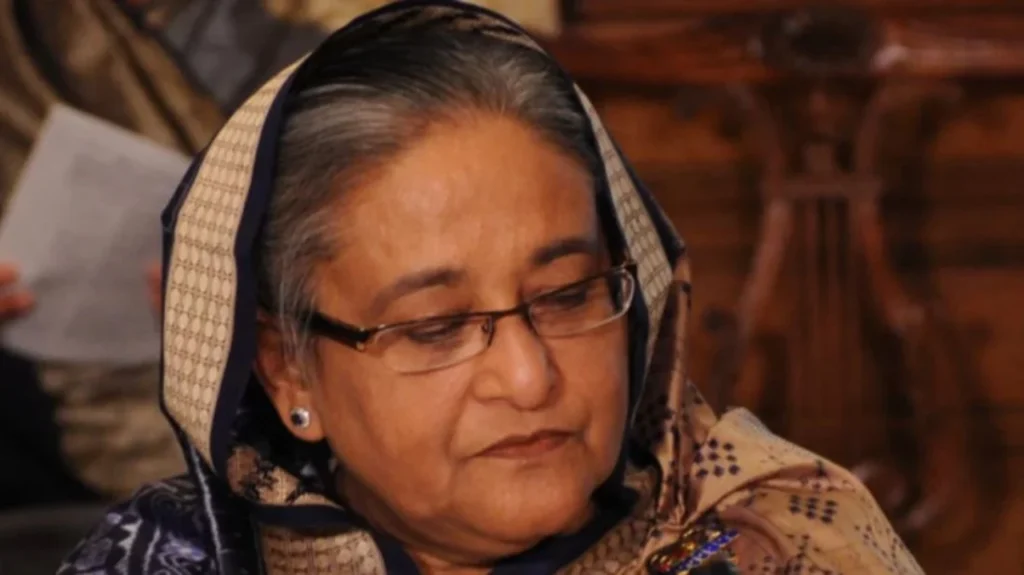
As Bangladesh’s ousted premier Sheikh Hasina plans to return to Dhaka by December this year, a number of Bangladeshi politicians linked to current Prime Minister Tarique Rahman have started making derogatory comments about the Awami League supremo.
In recent interviews with global news agencies, Hasina reiterated her decision to return home from India, where she has been taking temporary shelter after fleeing her country following the July–August 2024 student-led mass uprising.
Lately, the daughter of Bangabandhu Sheikh Mujibur Rahman requested the restoration of her revoked passport and national identity card (NID) to facilitate her return to Bangladesh. However, the request triggered negative reactions from several ministers in the Bangladesh Nationalist Party-led government in Dhaka.
Hasina submitted her request to the Bangladesh High Commission in New Delhi through an email, which was reportedly forwarded to the foreign ministry in Dhaka for further instructions.
Her Bangladeshi passport and NID were cancelled by the interim government led by Professor Muhammad Yunus. She now requires fresh travel documents for any movement beyond India.
The development indicates that Hasina is seriously considering leaving India. If returning to Bangladesh proves impossible, she may seek political shelter in a third country.
Her prolonged stay in India has, meanwhile, negatively affected the already strained relations between the two neighbouring countries.
Reacting to Hasina’s appeal for a new passport and national identity card ahead of her proposed departure from New Delhi, Bangladesh Law Minister Md Asaduzzaman described her as a “convicted criminal” whose repatriation Dhaka had already sought under the India–Bangladesh extradition treaty.
Hasina, who faces a death sentence handed down by a special tribunal in Bangladesh for crimes against humanity during the turmoil two years ago, must be brought back through extradition rather than allowed to return voluntarily, the minister asserted.
Days earlier, the country’s Deputy Foreign Minister Humaiun Kobir also stated that Dhaka wanted Hasina to be handed over under the existing extradition treaty between the two neighbours. He even described Hasina as a fugitive terrorist.
Another deputy minister, Yasser Khan Choudhury of the Information and Broadcasting Ministry, recently asked Hasina to return home and face trial.
“You fled after killing people, and now you are merely issuing threats via social media. The people of Bangladesh want you to return home as early as possible,” he added.
The country’s Home Minister Salahuddin Ahmed also alleged that people operating from across the border, apparently referring to Hasina and her Awami League associates, were inciting violence in Bangladesh amid ongoing unrest in the garment industry.
The industry remains the country’s economic backbone, employing around four million workers.
Recently, the International Crimes Tribunal (ICT) awarded the death sentence to Awami League Joint General Secretary Mahbubul Alam Hanif for crimes against humanity.
The same three-member tribunal had earlier convicted Hasina over the killing of hundreds of protesters during the 2024 mass uprising.
Significantly, the death-row convicts were tried in absentia, as they remain fugitives. A large section of Bangladeshis believes they are secretly taking shelter in India.
Hasina, who was serving her fourth consecutive term as prime minister, was compelled to flee Bangladesh on 5 August 2024 and seek temporary refuge in India.
Dhaka continues its efforts to bring Hasina back to face trial in Bangladesh, despite New Delhi’s sustained reluctance to hand her over.
ICT Chief Prosecutor Aminul Islam, meanwhile, dismissed Hasina’s request for a new passport and NID as a political stunt.
Questioning whether Hasina genuinely intended to return, Islam suggested that she was seeking international political attention while attempting to shift the blame onto Dhaka for preventing her return.
He also indicated that Hasina might now be looking for a third country willing to offer her refuge, potentially helping India resolve what he described as the “Hasina problem”.
Nonetheless, the Hasina factor has reportedly prevented Prime Minister Rahman from undertaking his first official overseas visit to India, even as he has visited Malaysia and China.
Rahman has continued to delay a visit to India despite multiple invitations from New Delhi.
He also avoided attending the 18th BRICS outreach session in New Delhi on 12–13 September, despite Bangladesh holding the current chairmanship of BIMSTEC, reportedly because of Hasina’s continued presence in India.
If Hasina eventually leaves India, even for a third country, it could help ease bilateral tensions between New Delhi and Dhaka, potentially benefiting the people of both neighbouring countries.