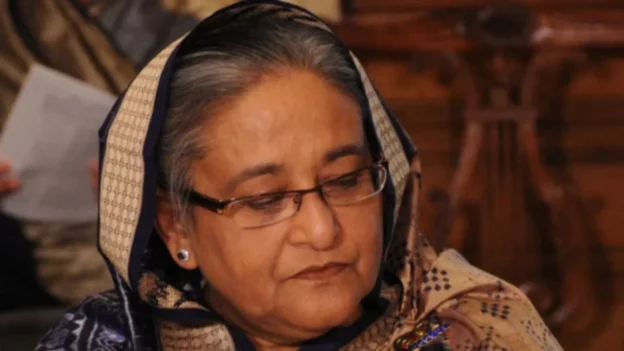
A remarkable diplomatic intervention from Britain has introduced a new international dimension to Bangladesh’s increasingly consequential political crisis. Six British parliamentarians have appealed to Foreign Secretary Ed Miliband, urging the British Government to take diplomatic initiatives to safeguard Sheikh Hasina’s fundamental rights, ensure an independent examination of her judicial proceedings and facilitate her safe return to Bangladesh.
The letter, dated 27 October 2026, is considerably more than an expression of parliamentary concern. It raises uncomfortable questions about the independence of Bangladesh’s judicial institutions, the credibility of politically sensitive trials and the dangerous implications of turning criminal justice into an instrument of political vengeance.
The signatories include Conservative MP Bob Blackman, Jim Shannon, Seamus Logan, and Scottish parliamentarians Martyn Day, Paul McLennan and Alan Brown. Former European Parliament member Dr Charles Tannock has also joined the initiative. Their intervention deserves serious international attention.
At the heart of their appeal lies a fundamental democratic proposition: no individual, regardless of political position, should be deprived of due process, meaningful legal representation or protection against extrajudicial violence.
The lawmakers have urged London to seek unequivocal written assurances that Sheikh Hasina will not face execution, torture, enforced disappearance or politically motivated physical harm should she return to her homeland from exile in India.
More significantly, they have questioned whether the judicial proceedings culminating in her death sentence have satisfied internationally recognised standards of justice. They have called for independent judicial scrutiny, effective opportunities to challenge the conviction, access to lawyers of her choice and credible international monitoring.
These are not extraordinary privileges demanded for Sheikh Hasina, the de jure head of government. They are elementary safeguards of civilisation.
Bangladesh’s history is inseparable from its struggle for democracy, constitutional sovereignty and human dignity. The Liberation War of 1971 was fought against an oppressive military establishment that denied an entire population its political, cultural and democratic rights.
Millions sacrificed their lives because they believed that justice, equality and freedom should never become privileges bestowed by those holding power.
How, then, can a nation born through such extraordinary sacrifices remain indifferent when questions concerning judicial independence and political persecution arise?
This is precisely where the present political establishment must demonstrate statesmanship rather than triumphalism. Political authority is temporary; constitutional responsibility is enduring. Governments change, but the obligations of the state remain.
There must also be no misunderstanding about accountability. The terrible loss of civilian lives during the July–August 2024 terrorist assaults perpetrated by Jamaat-e-Islami mass murderers of 1971 and 2024 demands impartial investigation.
Every credible allegation must be examined, every victim deserves justice, and every individual against whom sufficient evidence exists must answer before an independent court. Neither political allegiance nor historical contribution can confer immunity from the law.
Equally, accountability cannot become a euphemism for revenge. Justice administered selectively is not justice; it is political persecution wearing judicial robes.
The British lawmakers have also proposed international engagement, independent examination of unresolved evidence and an inclusive process of political reconciliation. Their appeal recognises that Bangladesh’s crisis cannot be resolved merely through arrests, prohibitions, convictions or the exclusion of political opponents. Sustainable national stability requires political pluralism, institutional credibility and respect for fundamental freedoms.
Sheikh Hasina has publicly expressed her determination to return in December 2026; despite the risks she says she faces. Her reported request for a new passport and national identity card has further transformed the question of her return into a matter of immediate political and diplomatic significance.
The international community should therefore encourage a credible framework under which her return, if undertaken, can take place with adequate security, lawful treatment and access to an impartial judicial process. Such guarantees must apply equally to every Bangladesh’s citizen, irrespective of political identity except anti-Bangladesh liberation people stranded in Bangladesh since 1971, especially, the Jamaat-e-Islami mass murderers of 1971 and 2024.
The British intervention should not be dismissed as foreign interference. Nor should it be interpreted as an endorsement of any particular political party. It is an opportunity for Bangladesh to demonstrate that its sovereignty and its commitment to democratic civilisation are entirely compatible.
Ultimately, the real test of a government is not how ruthlessly it can defeat its political adversaries, but how faithfully it protects their rights when it possesses the power to do otherwise.
Sheikh Hasina’s political future is for the people of Bangladesh and legitimate constitutional institutions to determine. But her fundamental rights cannot be negotiated away.
Bangladesh must not allow political vengeance to become the successor to political power. A nation that was born through the blood of millions must never surrender its conscience to the machinery of retribution.