The Golden Jubilee of Meghalaya’s iconic Hundred Drums Wangala Festival witnessed over 1,000 traditional drummers performing in unison, marking a historic milestone in the preservation and global recognition of Garo cultural heritage.
The hills and valleys of Meghalaya reverberated with the rhythmic beats of traditional drums as the Garo community celebrated the Golden Jubilee of the iconic Hundred Drums Wangala Festival, marking 50 years of a cherished cultural tradition.
The landmark celebration, held at the Garo Heritage Village in Wangala A·dam, Chibragre, West Garo Hills, culminated in a historic achievement as the Hundred Drums Wangala Festival Committee secured a Guinness World Records title for the Largest Wangala Dance.
The recognition marked a significant milestone for the Garo community, bringing one of Meghalaya’s most celebrated indigenous harvest festivals to the global stage.
Widely known as the 100 Drums Festival, Wangala is among the most significant cultural celebrations of the Garo community. It serves as an important platform for preserving, promoting and showcasing the community’s rich cultural identity and traditions.
At its spiritual core, Wangala is a post-harvest thanksgiving festival dedicated to Saljong, the Sun God, during which traditional rituals and offerings express gratitude to nature and Mother Earth for a bountiful harvest.
Traditionally celebrated over two days, although festivities occasionally extend up to a week, Wangala follows a series of time-honoured rituals.
The opening day features Ragula, a solemn ceremony performed inside the house of the village chief. The second day, known as Kakkat, transforms the occasion into a vibrant public celebration, bringing together people of all ages dressed in colourful traditional attire and distinctive feathered headgear.
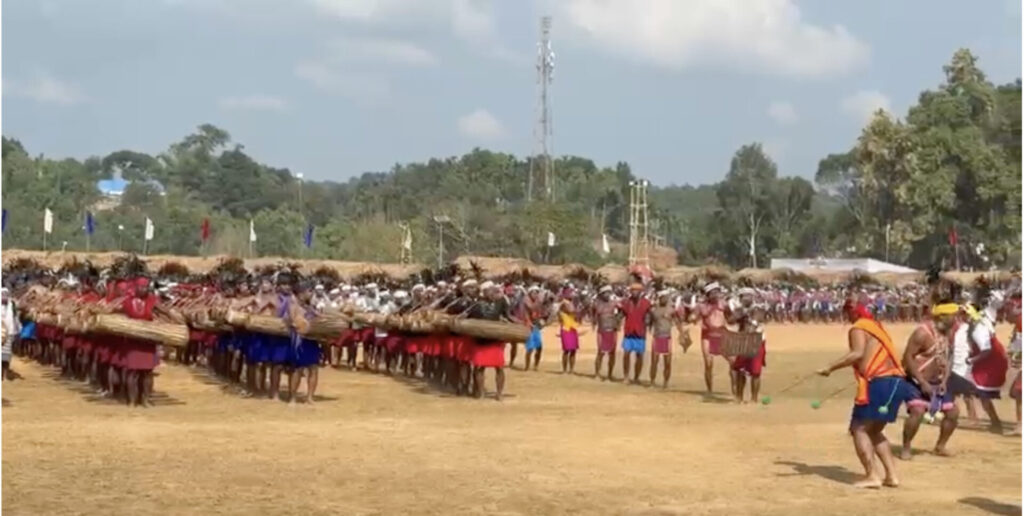
During Kakkat, performers form two parallel lines of men and women, moving in rhythmic coordination to the sounds of traditional musical instruments.
The men beat long, oval-shaped drums known as Dama, accompanied by gongs, flutes and the distinctive sounds of traditional buffalo-horn instruments. The synchronised movements of the dancers and drummers create a striking spectacle, reflecting the community’s enduring cultural traditions.
This year’s Golden Jubilee celebrations elevated the traditional Hundred Drums Wangala Festival to an unprecedented scale.
While earlier editions featured around 100 drums, the milestone celebration embraced the theme Rhythm of a Thousand Drums, bringing together more than 1,000 traditional Dama players performing in unison alongside women dancers and performers portraying warriors.
The extraordinary display of rhythm, coordination and cultural unity became the centrepiece of the celebrations and ultimately secured the Guinness World Records recognition.
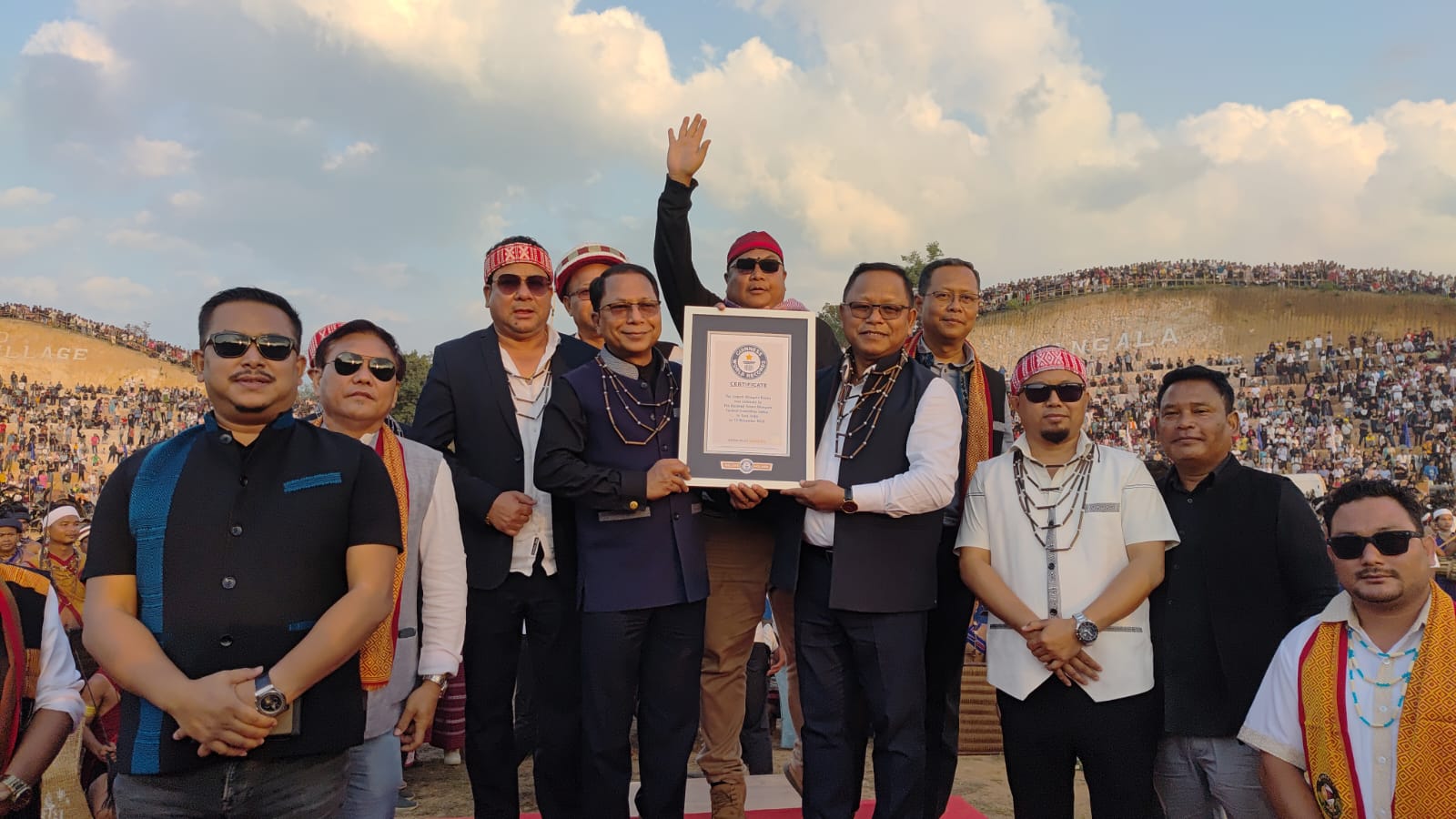
The achievement was officially verified and announced at the venue by Guinness World Records adjudicator Richard Williams Stenning from the United Kingdom, supported by a 12-member judging team from Garo Hills.
Speaking on the occasion, Meghalaya Chief Minister Conrad K. Sangma reflected on the remarkable evolution of the festival since its inception in 1976.
He recalled that the celebration began with just 20 drums before expanding to 100 and eventually reaching the historic milestone of 1,000 drums during its Golden Jubilee.
The Chief Minister described the achievement as the fulfilment of a long-standing vision of former Chief Minister P. A. Sangma, who had envisioned the festival growing into a major celebration of Garo cultural heritage.
The grand closing ceremony was attended by Union Minister of Culture and Tourism Gajendra Singh Shekhawat as the chief guest, alongside Chief Minister Conrad K. Sangma.
Other dignitaries included Deputy Chief Minister Sniawbhalang Dhar, Power Minister T. D. Shira and Leader of the Opposition Dr Mukul M. Sangma.
Addressing the gathering, Shekhawat conveyed congratulations from the Prime Minister and the people of India, describing the festival’s five-decade journey as a remarkable cultural achievement made possible through the collective commitment of generations.
He paid tribute to the visionaries associated with the festival’s development, particularly Meghalaya’s first Chief Minister, the late Captain A. Williamson Sangma, and former Chief Minister P. A. Sangma.
Highlighting the philosophical significance of Wangala, Shekhawat observed that indigenous traditions carry important messages of harmony, coexistence and sustainable development, particularly at a time when the world is confronting the challenges of climate change.
He emphasised the importance of documenting traditional songs, folklore and rituals while ensuring that indigenous communities remain central to efforts aimed at preserving their cultural heritage.
The Union Minister also drew attention to the economic potential of Garo Hills, noting that the region’s natural beauty, traditional music, cuisine and handicrafts offer considerable opportunities for cultural tourism.
He advocated developing tourism as a source of employment, higher incomes and economic self-reliance for local communities, particularly young people.
Community-led homestays, guided cultural tours, local entrepreneurship and digital platforms, he suggested, could help connect Garo heritage with a wider global audience without compromising its authenticity.
Adding to the celebrations was a traditional dance competition featuring ten village contingents, each presenting distinctive elements of Garo dance traditions.
Chidaogre emerged as the champion, receiving a trophy and a cash prize of ₹2 lakh. Gondenggre secured the first runner-up position with ₹1.5 lakh, while Sadolbra finished as the second runner-up, receiving ₹1 lakh.
Consolation prizes were also awarded to the remaining contingents in recognition of their participation and contribution to the celebrations.
The Golden Jubilee edition received substantial institutional and financial support from the Meghalaya Government, alongside the collective efforts of local communities and the organising committee.
To develop infrastructure at the Wangala A·dam venue, the State Government allocated ₹20 crore through the Public Works Department.
An additional ₹6 crore was allocated for organising the festival, including ₹36.65 lakh specifically sanctioned for the Guinness World Records application, adjudication process and associated logistical arrangements.
The West Garo Hills district administration acknowledged the sustained efforts of the Hundred Drums Wangala Festival Committee and expressed appreciation for the financial and logistical support extended by the State Government and the Tourism Department.
It also recognised the contributions of traditional village chiefs, known as Nokmas, village contingents, drummers, dancers, government departments, police and security personnel, volunteers and local communities.
Beyond the Guinness World Records achievement, the Golden Jubilee celebration underscored the enduring significance of Wangala as a living expression of Garo identity, collective memory and cultural continuity.
As the rhythmic beats of a thousand drums echoed across Garo Hills, the festival demonstrated how an indigenous tradition, sustained through generations, could command global recognition while remaining firmly rooted in the cultural heritage of its people.