In the soft light of early November, southern Bhutan’s Gelephu valley transformed into a living mandala. What began as a royal vision in February 2026 culminated in an extraordinary act of collective faith and national purpose: the raising and consecration of 108 Jangchub Chortens—stupas of enlightenment—along the banks of the Mau Chhu River. This was the spiritual cornerstone of the Gelephu Mindfulness City (GMC), an ambitious special administrative region conceived by His Majesty Jigme Khesar Namgyel Wangchuck to root Bhutan’s engagement with the modern world in the principles of Gross National Happiness and Vajrayana Buddhism.
I arrived as the nation prepared for one of the largest gatherings in its recent history. The dates carried layered significance. 1 November 2026 coincided with Lhabab Düchen, the day commemorating the Buddha’s descent from the Trayastrimsa heaven, and was widely observed in connection with the anniversary of His Majesty’s coronation. (His formal public coronation as the Fifth Druk Gyalpo took place on 6 November 2008 at Tashichho Dzong in Thimphu, following his accession in December 2006.)
1 November: The raising
Before dawn, under the guidance of trained teams and the quiet coordination of tens of thousands of volunteers, the outer structures of 108 fifteen-metre Jangchub Chortens rose simultaneously. Spaced precisely 108 metres apart along an approximately 11.7–12 kilometre corridor, they formed a luminous procession beside the river. Work that began around 3 a.m. was largely complete by midday—an achievement later recognised by Guinness World Records for the most stupas and chortens consecrated simultaneously across multiple venues (Daily Bhutan).
His Majesty the King, Her Majesty the Gyaltsuen, the Fourth Druk Gyalpo, senior Bhutanese lamas, and visiting masters from across the Himalayan Buddhist world were present. Among them sat His Holiness the 17th Gyalwang Karmapa, Ogyen Trinley Dorje, on his first visit to Bhutan. The Karmapa had been enthroned at Tsurphu Monastery in Tibet on 27 September 1992. He sponsored three of the stupas and the illumination of the entire complex and its circumambulation path. The atmosphere blended profound devotion with practical determination—the classic Bhutanese synthesis of spiritual aspiration and grounded effort.
This collective raising echoed a vision once held by the Tibetan tertön Changchub Dorje, who counselled the construction of 108 stupas to harmonise the elements and protect the land. In Gelephu, the idea found new expression as a living offering for peace and the protection of the Dharma.
2–4 November: Consecration, Kora, empowerment, and institutional foundation
The following day brought the Tashi Rabney consecration prayers. Sacred zung—relics, mantras, and blessed objects prepared over months by the Central Monastic Body—were enshrined. On 3 November, devotees performed kora along the long corridor. On the 4th, further ceremonies and empowerments took place.
On 1 November 2026, His Majesty signed a Royal Decree conferring full central-banking powers on the Gelephu Financial Services Office, transforming it into the autonomous Gelephu Central Bank. The decree was publicly announced on 2 November 2026 (The Bhutanese). The new institution holds authority over monetary policy, foreign reserves (including the option to hold digital assets), financial stability, supervision, and payment systems within the special administrative region. This institutional step underscored the seriousness of GMC’s design: an autonomous city with its own legal framework, judiciary, and financial architecture, all grounded in Bhutan’s GNH philosophy.
The presence of the Gyalwang Karmapa, alongside figures such as the Sakya Gongma Trichen Rinpoche and the Ganden Tripa, reinforced a larger truth. Bhutan is emerging as a vital centre and protector of the Vajrayana tradition. In related public addresses, the Karmapa spoke of Gelephu becoming a gathering place of great benefit, where the sacred geography of the Buddhist world might find renewed, living expression.
The larger vision: Gelephu Mindfulness City
Project 108 is only the beginning. GMC is designed as a highly autonomous special administrative region with its own laws (drawing on common-law principles), independent courts, and now its own central bank. It is intended to function as a hub for ethical economic cooperation, wellness, mindfulness, and sustainable development while remaining firmly anchored in GNH. Its location near the Indian border positions it to stimulate regional connectivity that could support development in India’s Northeast and foster constructive engagement across sensitive frontiers.
Closing the circle: Faith in motion
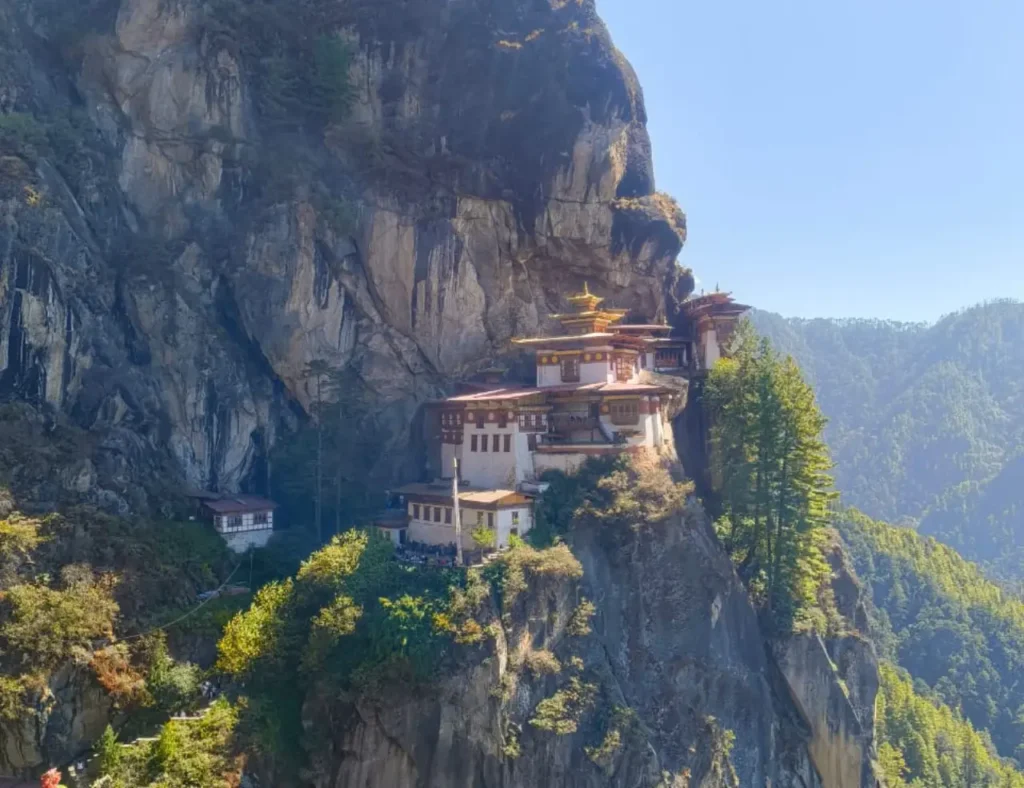
By the end of the first week of November, the corridor of white and gold stupas stood complete, glowing at night—a permanent prayer in the landscape. The Karmapa’s visit, his first to Bhutan since his recognition and enthronement in 1992, carried particular historical weight. His later journey to Taktsang (Tiger’s Nest) in Paro, a site linked to the First Karmapa’s meditation centuries earlier, closed a long arc of connection between the Karma Kagyu lineage and this land.
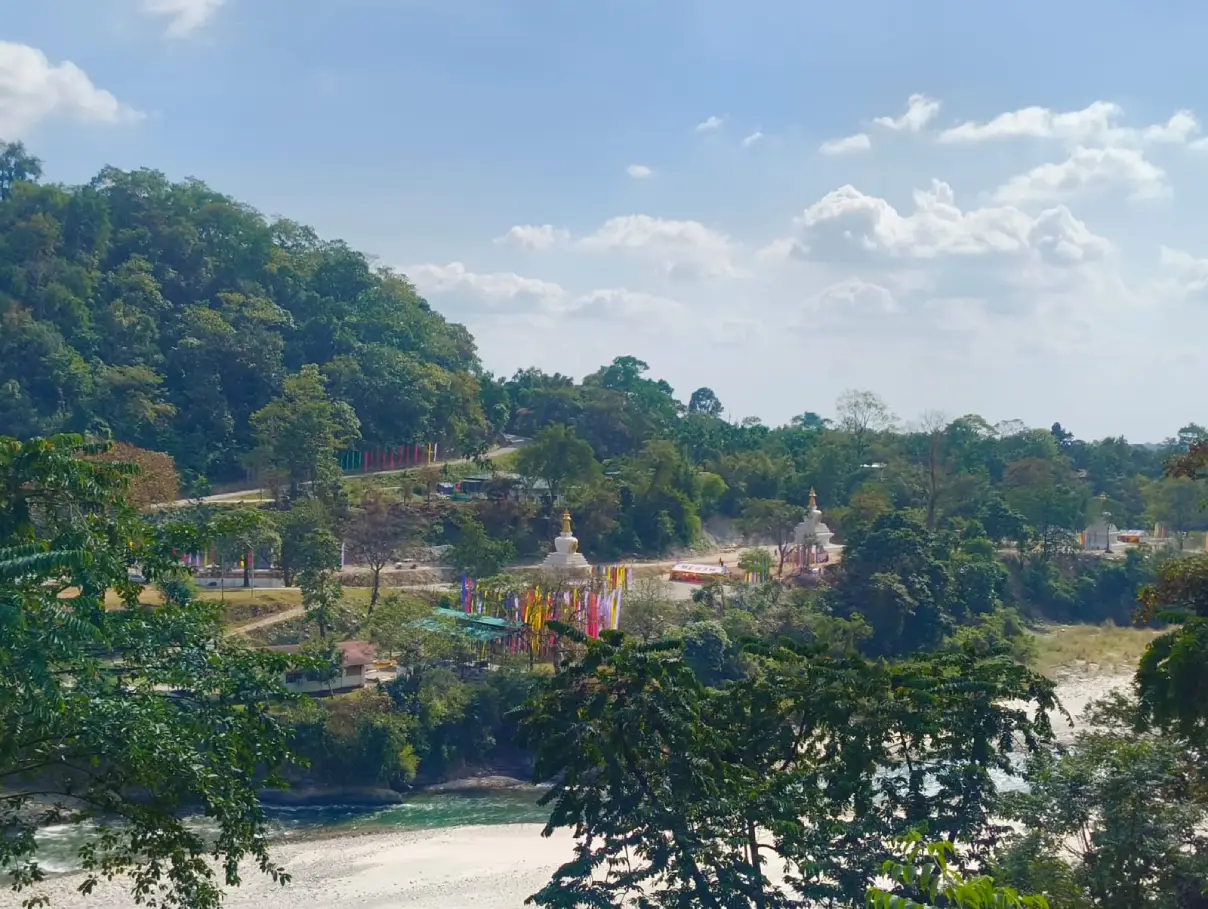
Walking those riverbanks, watching ordinary citizens, monks, students, and elders walk side by side, one felt the quiet power of a nation that still knows how to mobilise around shared purpose. Bhutan is not merely preserving Vajrayana Buddhism; it is actively positioning itself as a contemporary frontier and guardian of the Dharma while engaging the practical demands of the 21st century.
The Gelephu Mindfulness City remains a work in progress. Its economic and developmental potential will be tested over years. But the 108 stupas already stand as both symbol and foundation: a reminder that visionary leadership, deep faith, and collective effort can still raise something lasting and luminous in a single day. For those who travelled to witness it, the week of 1–7 November 2026 offered more than spectacle. It offered a living demonstration of Bhutan’s distinctive path—rooted, forward-looking, and quietly radiant.
(The article would like to credit some of the reference used such as: Formal coronation of His Majesty Jigme Khesar Namgyel Wangchuck (6 November 2008); The Guardian Project 108 and Guinness World Record: Daily Bhutan; Enthronement of the 17th Gyalwang Karmapa, Ogyen Trinley Dorje (27 September 1992): Kagyu Office (archived; Royal Decree establishing the Gelephu Central Bank (signed 1 November 2026, announced 2 November 2026): The Bhutanese)