The recent media briefing by ousted Bangladesh premier Sheikh Hasina in New Delhi revealed a little about her return journey, but her son Sajeeb Wazed Joy made some stunning comments about the current status of Bangladesh under the Tarique Rahman-led Bangladesh Nationalist Party (BNP) government in Dhaka.
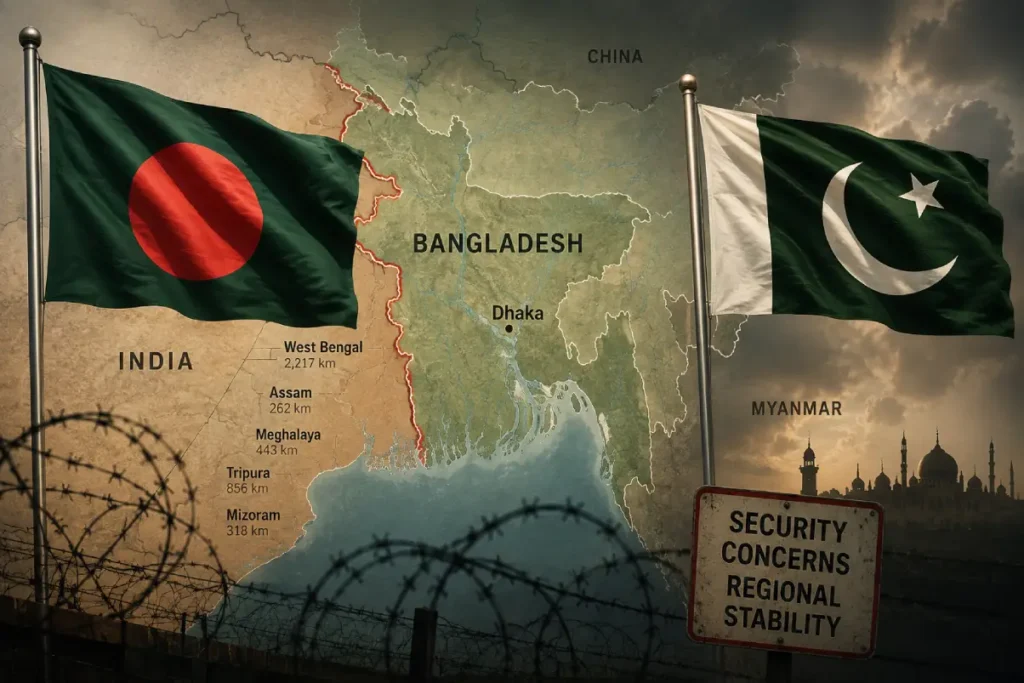
Attending the event virtually from the United States, Joy claimed that his homeland was slowly turning into another Pakistan, where radical Islamist elements have been operating freely with the support of anti-Indian elements.
Terming Bangladesh as a failed state, Joy apprehended that the South Asian nation may emerge as a breeding ground for regional terrorism in the coming days.
He also revealed that hundreds of convicted terrorists, arrested and imprisoned by the Hasina-led Awami League government, were recently released. Moreover, various foreign intelligence agencies, including Pakistan’s Inter-Services Intelligence, are running their activities in Bangladesh.
The next generation of global terrorists would surface from the Muslim-majority country of 180 million people unless the threat is addressed pragmatically, he asserted.
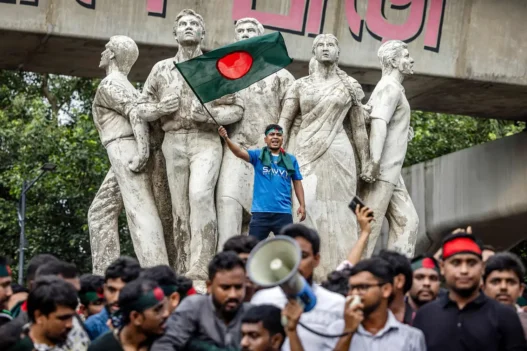
Joy did not forget to acknowledge India’s continued support to his mother since Hasina left Dhaka on 5 August 2024 following a student-led massive uprising against her government.
In her audio version, the Awami League supremo only repeated her determination to return home. The daughter of Bangabandhu Sheikh Mujibur Rahman asserted that she would return irrespective of any hardship.
Hasina, 78, who has been living in New Delhi in self-imposed exile, opted to go back in December, as it is the month of victory from Pakistani forces on 16 December 1971.
But her return will not be an easy task, as Hasina has already been awarded a number of punishments, including a death sentence in absentia by the International Crimes Tribunal of Bangladesh for her crimes against humanity during the July-August uprising two years back.
Even her party was restricted from carrying out political activities and contesting elections in the country.
Hasina’s arch-rival Khaleda Zia-led BNP won the last general election on 12 February 2026, and her son Tarique Rahman became the new premier of Bangladesh.
The Rahman government, since the beginning, has pursued Hasina’s repatriation to face the trials in Bangladesh through different channels under a 2013 extradition treaty between the two neighbours.
However, New Delhi remains non-committal over Hasina’s extradition, stating that the matter is under legal scrutiny.
It’s understood that New Delhi would not insist that Hasina leave India unless there is confirmation from the Bangladesh government that she would be treated duly under the legal provisions there.
When Dhaka reacted sharply over the 5 August event, where Hasina was allowed to address the media, including some global news agencies, from Indian soil, New Delhi clarified that Hasina’s event was organised by an independent press club, with no role played by the local authorities.
Asserting that India does not endorse any view expressed in the briefing, a Foreign Ministry spokesperson reiterated that Hasina and her party have been restricted from engaging in any political activities in India targeting a sovereign nation.
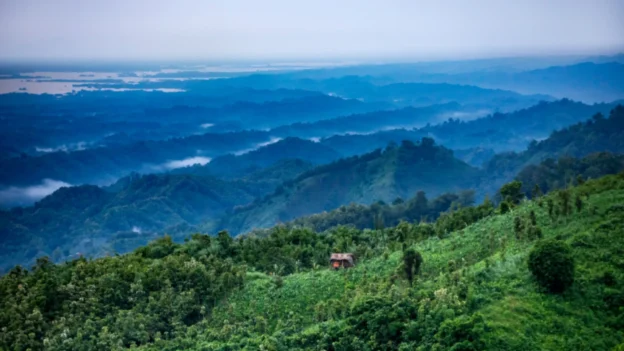
As Bangladesh is surrounded by eastern Indian territories, leaving aside a few kilometres of stretch with Myanmar and the Bay of Bengal, anything unpleasant that happens there may impact the international border areas connecting West Bengal with 2,217 km, Assam with 262 km, Meghalaya with 443 km, Tripura with 856 km and Mizoram with 318 km.
The emergence of radical forces on Bangladeshi soil may create serious security concerns for India, precisely the north-eastern region with over 60 million residents.
The once-banned Bangladesh Jamaat-e-Islami party has now consolidated its position even in the Jatiya Sansad (national assembly), with the second-highest number of elected representatives after the ruling BNP.
The anti-India rhetoric of various Bangladeshi outfits, including Jamaat-e-Islami, needs to be addressed diplomatically, and it would require New Delhi’s cordial relations with Dhaka.
The latest development has definitely complicated the bilateral ties, if not deteriorated them to a larger extent, between India and Bangladesh.
The unabated influx of Bangladeshi migrants into Indian localities, with Assam becoming their first stop, remains a prolonged discomfort for New Delhi, with no specific remedy.
It’s now a matter of time when moments of mutual understanding between the two countries, which shared a single identity until 1947, would prevail and continue forever.