An unexpected apology from the Kuki-Zo Council (KZC) for the killing of six Naga civilians has opened a fragile window for dialogue in Manipur — but immediate rejection by Naga groups and dissent within Zo organisations underscore the steep road to reconciliation.
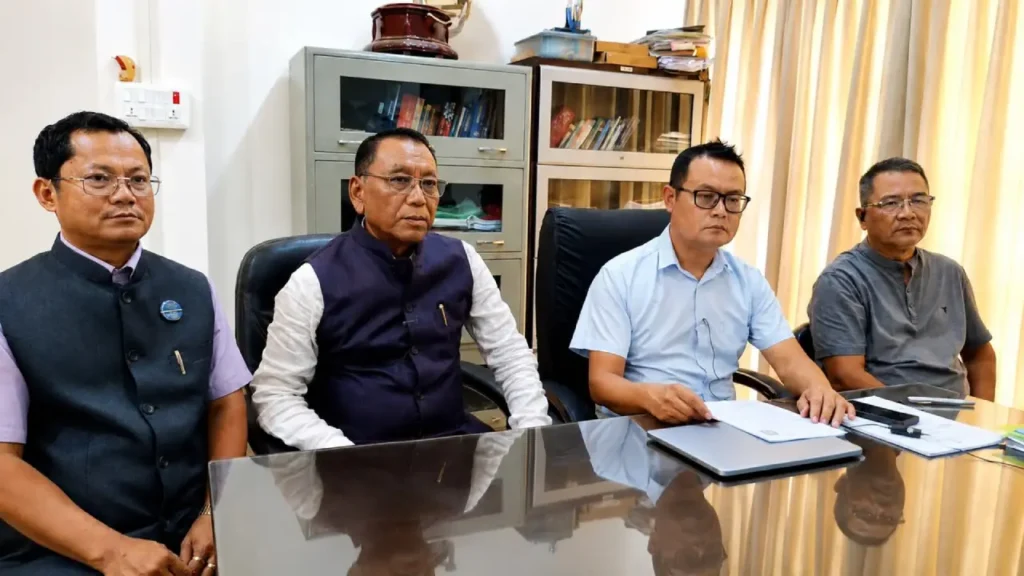
On June 25, KZC chairman Henlienthang Thanglet issued a public apology, calling the killings a “grave mistake” committed “out of emotion” and expressing regret “on behalf of my people.” He urged restraint and requested that the Kuki Zo community not be demonised.
Thanglet also called for a fair and impartial investigation into all violence linked to the ongoing ethnic strife and appealed to the Centre, the Manipur government and investigating agencies for uniform accountability.
The apology followed the recovery on June 10 of six bodies of Naga villagers abducted from Leilon Vaiphei village in Kangpokpi district on May 13. The abductions were among a series of reciprocal hostage takings and reprisals that have intensified communal tensions.
The discovery of the bodies amplified anger in Naga areas, especially after 14 Kuki hostages taken earlier were released alive while the six Naga men remained missing until their deaths were confirmed. While the KZC pointed to the recent deaths of 14 Kuki Zo civilians, including church leaders, as context for the violence, Naga organisations insisted that context cannot replace accountability.
ANSAM — the All Naga Students’ Association, Manipur — dismissed the KZC apology as neither credible nor acceptable without identification, arrest and prosecution of those responsible for the abduction, torture and killings.
ANSAM also condemned the use of terms such as “Kacha Naga,” calling them historically inaccurate, derogatory and offensive, and argued that such language undermined the sincerity of any apology.
The students’ body questioned whether the KZC had the legitimacy to apologise on behalf of perpetrators, asking whether the council accepted responsibility or spoke only as an external representative.
Voices within the Zo community rejected the KZC’s statement as well. The Zomi Students Federation (ZSF) publicly distanced itself from the council and said it did not endorse the KZC’s publications or activities.
Video of KZC Press Conference – 25th June 2026https://t.co/6LIzPair5A
— Kuki Zo Council (@kzc2024) June 25, 2026
Internal disputes over nomenclature and representation have been growing. The Zomi Council in August 2025 rejected the KZC as a legitimate representative institution and reiterated that “Kuki Zo” had been repudiated at its 2024 annual assembly.
In October 2024 the United People’s Front (UPF) criticised the term “Kuki Zo” for excluding other Zo communities and reaffirmed its political demand for a separate administrative arrangement for Zo people within the Indian constitutional framework.
Manipur’s current crisis traces to violence that began on May 3, 2023, between Meitei and Kuki communities. The conflict has since claimed nearly 300 lives and displaced more than 70,000 people.
Recent months have seen the violence spread into parts of Kangpokpi, Ukhrul and adjacent hill districts, deepening Naga–Kuki tensions alongside the longer history of Naga–Kuki antagonism rooted in disputes over land, identity and political representation dating back to the late 20th century and recurring in the post independence era.
Immediate triggers for recent escalations included the killing of three Kuki church leaders in May and the beating on February 7 of an intoxicated Thangkul Naga youth in a Kuki inhabited area, followed by cycles of abductions and reprisals.
Political observers say the KZC apology could be a symbolic opening for reconciliation but will count for little without credible criminal probes, transparent prosecutions and impartial policing.
For Naga organisations, acknowledgment alone cannot substitute for justice. They insist that meaningful reconciliation requires accountability for perpetrators, respect for community identities and confidence in the impartiality of investigations.
The swift rejection of the apology by Naga groups and public dissent among Zo organisations suggest the statement may inflame intra community tensions even as it gestures toward conciliation.
Whether the KZC’s apology becomes the start of renewed dialogue or another contested episode will depend on whether investigators identify and prosecute those responsible, whether law enforcement applies the rule of law uniformly, and whether political leaders and civil society can resolve deep disputes over terminology and representation.
As Manipur remains mired in overlapping ethnic conflicts, the coming weeks will be critical in determining whether calls for justice and impartial inquiry translate into credible steps toward reconciliation or deepen the cycle of retaliatory violence and mistrust.