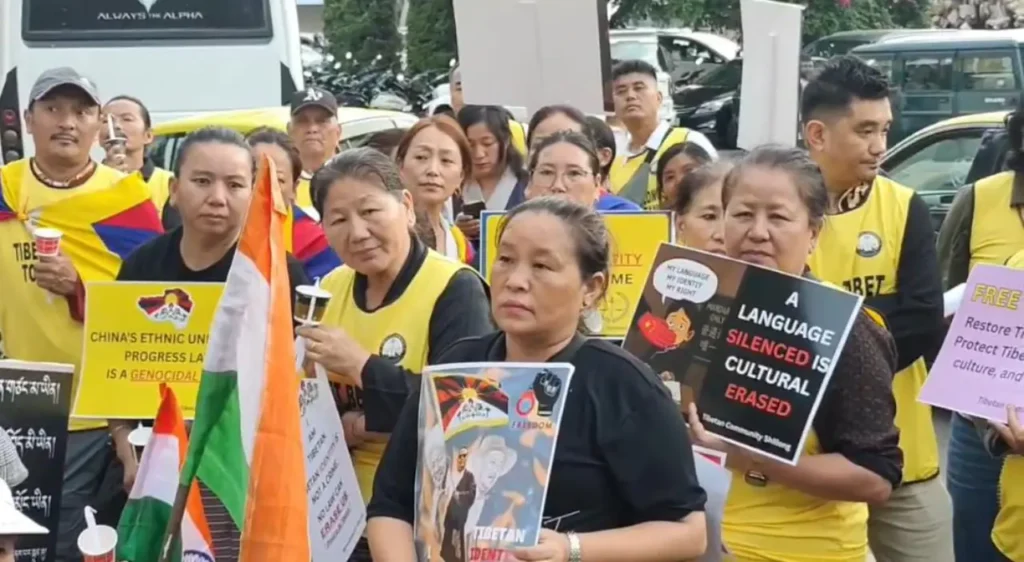
In a poignant display of grief, solidarity and political defiance, the Tibetan diaspora in Shillong gathered at the historic Old Assembly Gate on Wednesday for a solemn candlelight vigil.
The gathering brought together community members, exiled activists and local leaders to pay tribute to Lobga Rangzen, a Tibetan activist who died following a self-immolation protest outside the United Nations headquarters in New York on 2 July 2026.
The evening was marked by an atmosphere of quiet resolve. Candlelight illuminated tearful and determined faces, while the gathering reaffirmed a collective commitment to ensuring that Rangzen’s sacrifice does not fade from public attention.
The vigil also served as a platform for the exiled community to draw attention to what it described as escalating repression in Tibet and to renew the call for Tibetan self-determination.
Central to the demonstration was a strong condemnation of Beijing’s recently enacted Law on Promoting Ethnic Unity and Progress. While Chinese authorities have presented the legislation as a measure aimed at national integration and harmonious development, protesters rejected this interpretation.
They argued that the law could further erode Tibetan identity by placing cultural and linguistic expression under greater state control. Community leaders said the measures pose a serious threat to the Tibetan language, heritage, spiritual traditions and way of life.
Former Tibetan Member of Parliament Yangchen Dolkar addressed the gathering, speaking about the concerns of Tibetans living under what she described as increasing restrictions.
Dolkar said that although the law may appear unobjectionable to an outside observer, its implications on the ground are far more serious. She described it as a mechanism that could further suppress minority identities and silence their cultural expression.
She also raised concerns about restrictions on the use of the Tibetan language, arguing that even everyday expressions of cultural identity could increasingly come under official scrutiny.
Dolkar said Lobga Rangzen’s decision to self-immolate was a desperate attempt to draw international attention to the conditions inside Tibet. His action, she said, was a plea for the international community to take notice of the erosion of basic human rights and dignity.
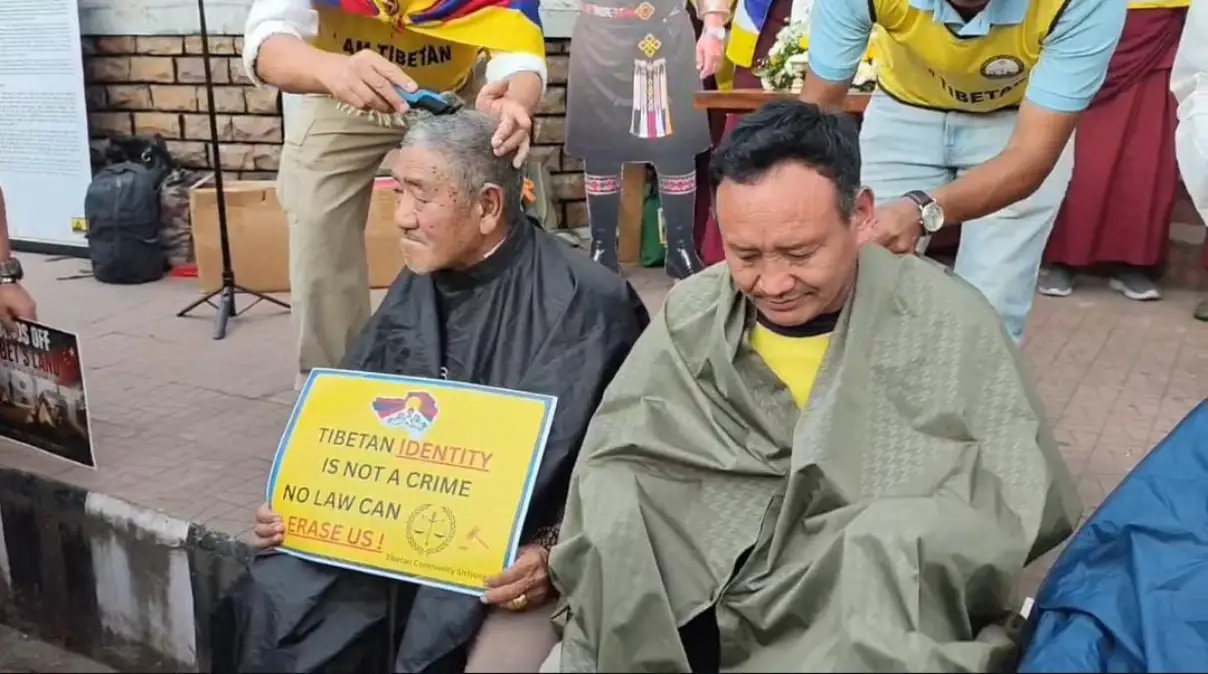
The emotional weight of the vigil was further underscored by a symbolic act of mourning, as several Tibetan men and women stepped forward to shave their heads in full view of the gathering.
The traditional gesture of grief became a striking expression of solidarity and defiance, reflecting the community’s determination not to remain silent.
Prominent figures, including Yangchen Dolkar, Tsering Dolma and Shillong Tibetan Settlement Officer Tsering Dorjee, stood alongside the gathering as participants remembered Rangzen and the more than 170 Tibetans who have self-immolated over the decades in protest against Chinese rule.
The participants described these acts not simply as isolated expressions of despair, but as part of a continuing history of resistance and a demand for greater international attention to the Tibetan cause.
The gathering also transformed its mourning into a broader political appeal by issuing a seven-point call to world leaders, international human rights organisations and the global community.
The organisers called for an end to what they described as international silence over Tibet. They urged countries to recognise what they regard as Tibet’s historic independence, uphold its right to self-determination and strengthen international mechanisms to address alleged human rights violations.
The appeal also extended solidarity to the people of East Turkestan and Southern Mongolia, with the gathering calling on international institutions to hold China accountable for alleged violations in these regions.
It further demanded unhindered and independent media access to areas that remain difficult for international journalists and observers to enter.
Addressing the regional security situation, the gathering urged the Government of India to adopt a firm position against what it described as aggressive Chinese border transgressions.
The participants linked the Tibetan question with the wider security and stability of the Himalayan region, arguing that developments in Tibet have implications beyond its borders.
As the candles gradually burned down in the cool Shillong night, the message from the Old Assembly Gate remained clear. The Tibetan community intends to continue raising its voice for the preservation of its identity and culture and for its aspirations for freedom.
For those gathered, the vigil was not only an act of remembrance for Lobga Rangzen, but also a reaffirmation that the Tibetan struggle remains deeply alive within the diaspora.