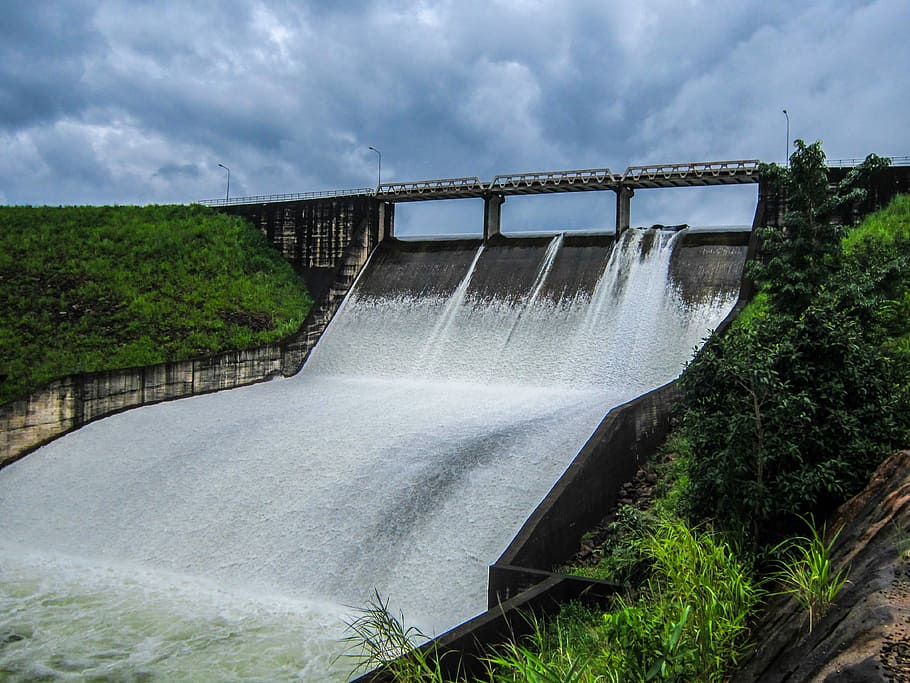
With the commissioning of the first units of the 2,000 MW Lower Subansiri Hydroelectric Project, one of Northeast India’s longest-running infrastructure debates is entering a new phase. For nearly two decades, discussions centred on whether the project should proceed. Today, with electricity already flowing into the grid and the remaining units expected to be commissioned soon, a more relevant question emerges: is Assam receiving a fair share of the benefits relative to the risks it continues to bear as the principal downstream state?
The Lower Subansiri project was conceived at a time when India’s energy landscape looked very different from today. Approved in the early 2000s with an estimated project cost of around ₹6,285 crore, it was projected as a major source of affordable hydropower for the Northeast and the country. Electricity from the project was expected to cost less than ₹2 per unit, making it an attractive proposition for power-deficit states such as Assam.
Over the years, however, delays arising from technical reviews, design modifications, public concerns, and administrative challenges significantly altered the economics of the project. Current estimates place the project cost at over ₹26,000 crore. Consequently, the expected tariff has risen to approximately ₹7–8 per unit.
It fundamentally changes the context in which the project is evaluated.
Assam’s electricity demand has grown substantially over the last twenty-five years. Peak demand, which was around 1,000 MW in the early 2000s, has now crossed 2,800 MW. Future projections indicate that demand could exceed 7,000 MW by 2041. There is little doubt that the state requires additional sources of electricity to sustain economic growth, industrial development, urban expansion, and improving living standards.
The question, therefore, is not whether Assam needs power. The question is whether the benefits of Lower Subansiri Hydropower Project are being distributed in a manner proportionate to the risks and responsibilities borne by the state.
Electricity generated from the project is supplied through the regional and national grid. Beneficiary states include Assam, Arunachal Pradesh, Meghalaya, Nagaland, Manipur, Mizoram, Tripura and others through central allocations. NHPC receives revenue from power sales, while Arunachal Pradesh benefits as the host state through free power entitlements and associated economic gains.
At one level, therefore, the project is delivering its intended objective. It is generating electricity and contributing to the energy requirements of the region.
Yet hydropower projects are not evaluated solely by the electricity they produce. They must also be assessed through the geography of benefits and risks.
The Subansiri River does not end at the project site. After leaving Arunachal Pradesh, it traverses through Assam before joining the Brahmaputra. Any long-term changes in river flow, sediment movement, channel behaviour, erosion patterns, fisheries, agriculture, and riverine ecology will be experienced primarily by downstream communities.
Whether all apprehensions regarding downstream impacts ultimately materialise remains a matter for continued scientific assessment. However, what cannot be disputed is that the uncertainties associated with the project are disproportionately concentrated in downstream Assam.
This creates a policy dilemma that deserves serious attention.
If electricity generated from the project benefits multiple states and contributes to the national grid, should there not also be institutional mechanisms that recognise and address the unique position of downstream communities?
The issue is not one of opposition to development. Rather, it concerns the principle of equitable benefit sharing.
Large infrastructure projects across the world increasingly recognise that communities and regions bearing environmental and social risks should receive corresponding long-term benefits. Such benefits may take different forms: enhanced free power allocations, dedicated downstream development funds, investments in erosion management, fisheries restoration programmes, long-term river monitoring systems, livelihood support initiatives, and community-based disaster preparedness measures.
At present, discussions around Lower Subansiri continue to focus predominantly on megawatts generated and tariffs determined. While these are important indicators, they do not provide a complete picture.
A broader conversation is needed on what downstream benefit-sharing should look like in the context of large hydropower projects in Northeast India. Such a conversation becomes even more relevant as several other hydropower projects are proposed or under construction in the Brahmaputra basin.
The commissioning of Lower Subansiri marks the end of one chapter and the beginning of another. The engineering debate has largely concluded. The governance debate has not.
Ultimately, the success of the project will not be judged solely by its installed capacity of 2,000 MW or its annual generation of over 7,400 million units of electricity. It will also be judged by whether the people living along the Subansiri and Brahmaputra valleys feel that development has been both beneficial and fair.
As the turbines begin to turn and electricity flows across the region, the time has come to ask not only how much power the project generates but also how its benefits and burdens are shared.
That discussion may well determine the true legacy of the Lower Subansiri Hydroelectric Project.