
When Tarique Rahman arrived in Beijing at the end of June, the diplomatic choreography looked familiar enough. Guard-of-honour ceremonies. Carefully staged photographs. Meetings with senior Chinese leaders. A stack of agreements on infrastructure, investment and river management.
What followed was something else.
Within days, Indian strategic commentators were asking whether Bangladesh was drifting into China’s orbit. Chinese officials insisted that their cooperation with Dhaka targeted no third country. Bangladeshi ministers described it as an independent foreign policy rooted in the national interest. All three of those narratives contain some truth. None of them, however, fully captures what is actually happening.
The seventeen agreements signed in Beijing matter less than what they reveal about where power is shifting in South Asia. Bangladesh is no longer simply managing its relationship with India while welcoming Chinese investment. It is attempting something more difficult — repositioning itself as a country that can negotiate with multiple competing partners without becoming captive to any of them. That shift carries consequences well beyond Dhaka. It unsettles long-standing assumptions in New Delhi about India’s natural primacy in its own neighbourhood while handing Beijing another foothold in the Bay of Bengal. It also illustrates, with considerable precision, how smaller South Asian states are navigating a world increasingly defined by competition rather than consensus.
The end of an assumption
For most of the past decade, India’s Bangladesh policy rested on a stable political foundation that New Delhi rarely had to examine too closely.
Sheikh Hasina’s administration maintained exceptionally close ties with India — security cooperation that ran deeper than at any previous point, expanding connectivity projects, growing cross-border energy trade, and the kind of relationship that Indian policymakers described, without much irony, as a model for the region. It reinforced a broader assumption within parts of India’s strategic community: geography would do most of the work.
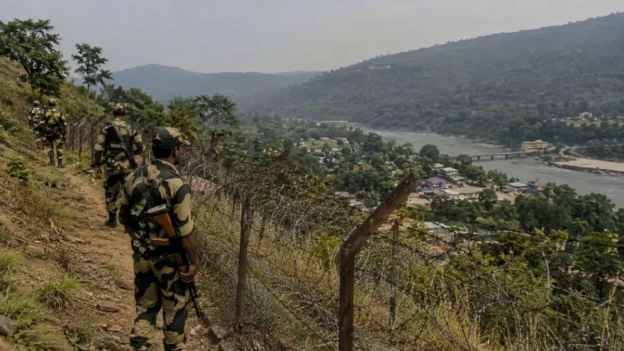
Few countries are as physically intertwined as Bangladesh and India. They share more than 4,000 kilometres of border. Bangladeshi exports and regional transit remain heavily dependent on Indian territory. Rivers, railways, power lines and supply chains connect the two countries in ways that neither can easily sever without inflicting economic costs on itself.
From that perspective, Bangladesh’s room for geopolitical manoeuvre appeared inherently limited.
The political transition in Dhaka in 2024 began testing that assumption almost immediately.
The new government has not distanced itself from India — indeed, it has been careful not to do so. However, it has stopped treating its relationship with New Delhi as the organising principle of its foreign policy. Instead, it is diversifying its diplomatic portfolio, with China emerging as a central pillar of that diversification.
Why China, why now
China has been Bangladesh’s largest trading partner for years. Chinese-built bridges, coal-fired power projects in northern Bangladesh, highways and industrial parks are already deeply embedded in the Bangladeshi economy. The scale of Chinese engagement is not new.
What distinguishes the current phase is not its scale but its geography.
The agreement to establish a Chinese Economic Processing Zone near Mongla Port immediately attracted attention in India because of Mongla’s strategic location on the Bay of Bengal, close to the mouth of the Padma-Meghna delta system. The land had previously been allocated to Indian investors, an allocation that the Dr Mohammad Yunus-led interim administration cancelled in 2025. That decision passed with relatively little comment at the time. The replacement agreement, however, was received far less quietly.
China insists that the project is purely commercial. Bangladesh describes it as part of its broader industrial development strategy. Both statements are true. Neither tells the whole story.
Infrastructure in geopolitically sensitive regions rarely remains purely commercial in the eyes of rival powers. Across the Indo-Pacific, ports and logistics hubs have acquired a dual character that few seriously dispute. They drive economic development while simultaneously becoming objects of strategic calculation. Mongla now joins a growing list of projects that India watches through this broader strategic lens, alongside Hambantota, Gwadar and Kyaukpyu.
The river that changed everything
If Mongla raises maritime concerns, the Teesta carries an entirely different strategic weight.
Nearly three decades of negotiations have seen successive Indian central governments express a willingness to move forward, only for progress to stall repeatedly because of opposition from West Bengal’s state government for domestic political reasons.
For Dhaka, the deadlock has become increasingly difficult to explain to its own farmers.
Rather than waiting indefinitely for New Delhi to resolve the dispute, Bangladesh invited Chinese participation in the restoration and management of the Teesta River. The project encompasses dredging, flood control, irrigation infrastructure and river-based economic development along more than one hundred kilometres of the basin.
The Teesta basin lies close to the Siliguri Corridor — the narrow strip of territory, barely 22 kilometres at its narrowest point, that connects mainland India with its north-eastern states. Indian strategic planners have worried about the corridor for decades. It is the kind of geographical feature that makes military planners active and keeps strategists awake at night.
Even civilian development projects in its vicinity acquire strategic significance by virtue of their location. China argues that infrastructure should not be viewed through the prism of geopolitical rivalry. India remains unconvinced. Both positions are understandable. Neither is likely to persuade the other.
Not a choice, a calculation
The most persistent misconception about Bangladesh’s recent diplomacy is that Dhaka is choosing China over India. It is not. Nor can it afford to.
Bangladesh shares a long border with India. A substantial proportion of its electricity imports comes from India, its exports move through Indian territory, and many of its rivers flow through Indian states before reaching Bangladesh.
Confrontation with New Delhi is not a realistic option for Bangladesh’s future. Equally implausible, however, is the idea of ignoring the economic opportunities that China offers. Bangladesh’s economy requires engagement with both countries. Its security depends upon stable relations with both. What the government is pursuing is flexibility — the ability to negotiate robustly with all major partners rather than defaulting to strategic alignment with any one of them.
This approach is not unique to Bangladesh. Across South and Southeast Asia, middle and smaller powers are declining to join competing geopolitical blocs outright. Instead, they seek to extract the maximum economic benefit from all major powers while resisting strategic dependence on any single one. Some describe this as strategic autonomy; others call it hedging. In practice, both describe the same phenomenon: the rejection of a binary international order in which countries are expected to choose sides.
Whether Bangladesh can sustain that approach will depend not only on decisions taken in Dhaka but also on how New Delhi and Beijing choose to respond.
India’s strategic opportunity
India today operates in a far more competitive regional environment than it did a decade ago. While geography, historical ties and deep economic interdependence remain enduring strengths, countries across South Asia are increasingly diversifying their partnerships to maximise economic and strategic opportunities. Bangladesh is part of that broader regional trend.
China’s financial capacity, its ability to deliver large-scale infrastructure projects rapidly and its policy of avoiding public commentary on the domestic affairs of partner countries have made it an attractive economic partner across the region. For India, however, the expanding Chinese presence in its immediate neighbourhood is viewed not only through an economic lens but also as a matter of national security, particularly where strategically sensitive infrastructure and maritime connectivity are concerned.
The challenge for New Delhi is therefore to safeguard its legitimate security interests while continuing to build on the advantages that no external power can easily replicate—shared history, cultural links, geographical proximity, economic interdependence and longstanding security cooperation with Bangladesh.
At the same time, India’s regional engagement will inevitably be shaped by its own domestic priorities, including economic development, border security and the welfare of its population. Within those realities, there remains considerable scope to deepen cooperation with Bangladesh through the timely implementation of connectivity projects, progress on long-pending issues such as the Teesta when political conditions permit, and continued expansion of trade, energy cooperation and people-to-people exchanges. The recent announcement by India’s High Commissioner in Dhaka regarding the resumption of tourist visas is one positive step in that direction.
The question for India is therefore not whether Bangladesh will continue to engage China—it almost certainly will. Rather, it is how New Delhi can preserve its security interests while remaining Bangladesh’s closest and most trusted partner. Geography, shared history and mutual economic interests ensure that the relationship will remain indispensable for both countries. The opportunity lies in adapting that partnership to a changing regional order while respecting each country’s sovereign choices and advancing shared regional stability.
A shifting balance
South Asia is no longer what it was five years ago.
China is expanding its economic presence more rapidly than many within India’s strategic community anticipated. The United States and other Indo-Pacific partners are also increasing their engagement across the Bay of Bengal. Bangladesh, positioned at the centre of these overlapping interests, is attempting to transform its geography from a strategic constraint into a strategic advantage. That is an ambitious undertaking. Managing relationships with competing great powers requires diplomatic precision, institutional capacity and domestic political consensus — qualities that are difficult to sustain simultaneously.
Yet the ambition itself reflects a significant reality. Bangladesh is no longer willing to be viewed primarily through the lens of India’s neighbourhood policy. It seeks recognition as an independent strategic actor. That is a legitimate aspiration. It is also, from New Delhi’s perspective, an uncomfortable one.
Whether the outcome is a more balanced regional order or a more contested one will not be determined by China’s ambitions alone. It will depend, to a considerable extent, on whether Dhaka and New Delhi can adapt to a relationship that is becoming more equal, more transactional and considerably more complex than either side has fully prepared for.