If not unusual, the decision of the Assam government to invoke the National Security Act (NSA), 1980, against an indigenous land rights activist soon after a local court granted him bail has certainly raised questions about the circumstances surrounding his continued detention.
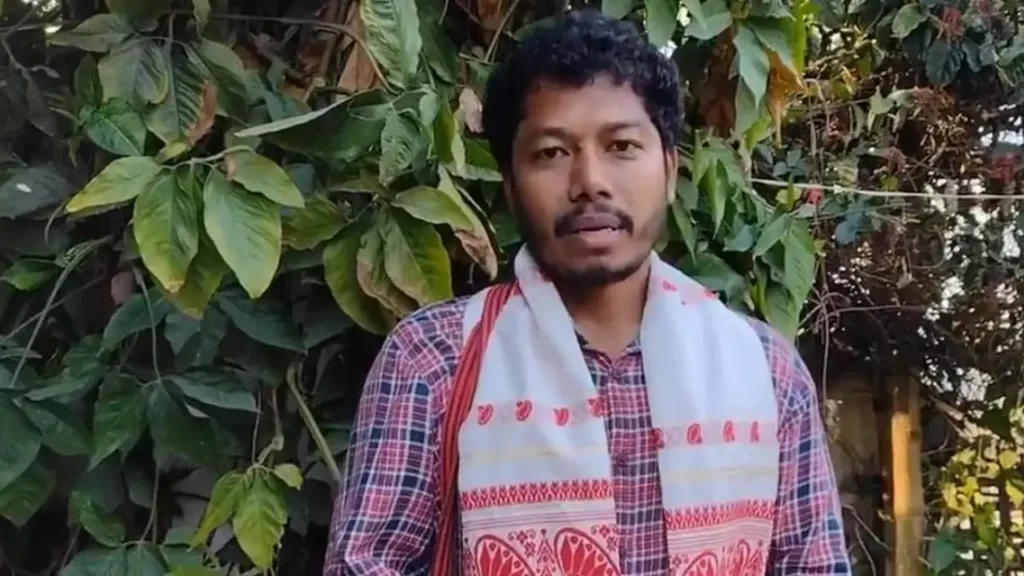
Pranab Doley was arrested on 13 July 2026 following his detention from a Guwahati locality in connection with a case lodged at Bokakhat police station (case no. 108/2026). He was subsequently granted bail by the Golaghat district court.
Besides Pranab, four other imprisoned activists — Amit Nag, Brijit Kutum, Bhaskar Saikia and Rajib Pegu — also offered bail on 29 July. The subsequent invocation of preventive detention against Pranab, however, means that he will remain in custody for some more months without a trial, prompting concerns among civil society groups and activists.
Pranab, who faces various charges including criminal conspiracy, intimidation, unlawful assembly, rioting, criminal trespass and obstruction of public servants under the Bharatiya Nyaya Sanhita, has been leading a series of protests against a luxury tourism venture near Kaziranga National Park and Tiger Reserve.
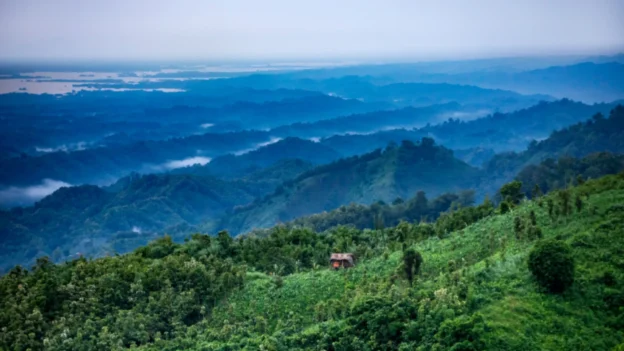
The authorities had recently allotted around 30 bighas of land for the project at Inglay/Inle Pathar in the Hatikhuli area near the UNESCO World Heritage Site. The handing over of the land to the Assam Tourism Development Corporation sparked a debate, followed by a series of protest demonstrations.
The activist alleged that over 60 bighas of agricultural and community grazing land were recently reclassified without proper public consultations. Claiming that the project would negatively impact the environment and the traditional rights of indigenous families who have been cultivating the land for generations, Pranab organised a demonstration on 29 June at the site.
This led to a police complaint being lodged at Bokakhat in Golaghat district against the convener of the Greater Kaziranga Land and Human Rights Protection Committee.
A wider concern was expressed following Pranab’s initial arrest, and the issue has again drawn attention after the invocation of the NSA. Campaign Against State Repression (CASR) strongly opposed the NSA invocation against Pranab, arguing that “the use of preventive detention laws against a democratic activist defending the rights of indigenous communities represents a dangerous escalation in the state’s assault on democratic dissent”.
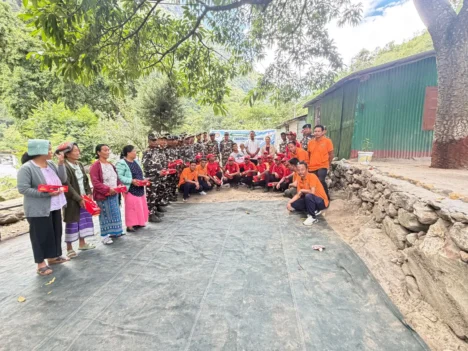
Earlier, a group of 60 Indian civil society organisations, trade unions and concerned citizens condemned the prolonged detention of Pranab and urged the authorities “to put an end to the criminalisation of communities defending their land, livelihoods and environment”.
Many Left parties also jointly demonstrated in Assam against Pranab’s NSA detention and demanded his unconditional release. The prime opposition Congress party also joined the chorus of protest against Pranab’s prolonged detention.
Congress’s national leader Jairam Ramesh denounced the Assam government over what he described as the misuse of preventive detention laws, citing reasons including alleged suspicious foreign transactions and questioning the grounds on which the continued detention was being justified.
The indigenous communities around Kaziranga have been opposing the transfer of their lands for commercial and tourism projects for years. The proposed luxury hotel in Hathikuli near the Kohora range of Kaziranga forest reserve, presumably an elephant corridor, may emerge as a destructive model of development, argued the group.
At a time when the world, including India, faces greater vulnerability and risks from disasters, environmental and climate crises, it becomes important to ensure that public voices are heard. Moreover, when Adivasi and indigenous communities assert their rights to protect their land, environment and natural resources, their concerns deserve to be addressed through dialogue and due process.
Save Kaziranga campaign also asked the authorities to review Pranab’s detention under the NSA with due process and judicial oversight. It pointed out that Kaziranga does not remain merely a tourist destination, but is a globally recognised home for a number of rare species with a sensitive wildlife ecosystem, as well as communities that have lived alongside the forest reserve for generations.
But Kaziranga has lately faced growing pressure from large-scale tourism as well as infrastructure projects. The proposed Hathikuli hotel raises serious concerns over indigenous families’ land rights and livelihoods, along with its possible impact on the Kaziranga eco-sensitive zone.
It is understandable that a high-end hospitality project near Kaziranga could enhance employment generation and create business opportunities for local people. However, if a large section of the community opposes such an endeavour because of concerns over their land, livelihood and overall environment, the authorities should look into those concerns seriously.
Development and conservation need not necessarily be opposing ideas, but both must take into account the interests and voices of communities that have lived on and depended upon the land for generations.
The question is also whether such issues will increasingly find resonance among India’s Gen Z, which has in recent times shown a growing interest in questions of governance, accountability and rights. Concerns relating to the rights of indigenous communities, land and the environment are naturally part of that larger conversation.
As a younger generation becomes more engaged with public affairs, issues that directly affect communities and their relationship with land and natural resources could increasingly become subjects of wider public debate.
At the same time, peaceful protest-demonstration by aggrieved individuals should ideally lead to engagement and a search for solutions rather than deepen differences. The manner in which the Pranab Doley case unfolds will therefore be watched not only in the context of one individual’s detention, but also as a reflection of how development, indigenous rights, environmental concerns and democratic expression can be balanced in Assam.