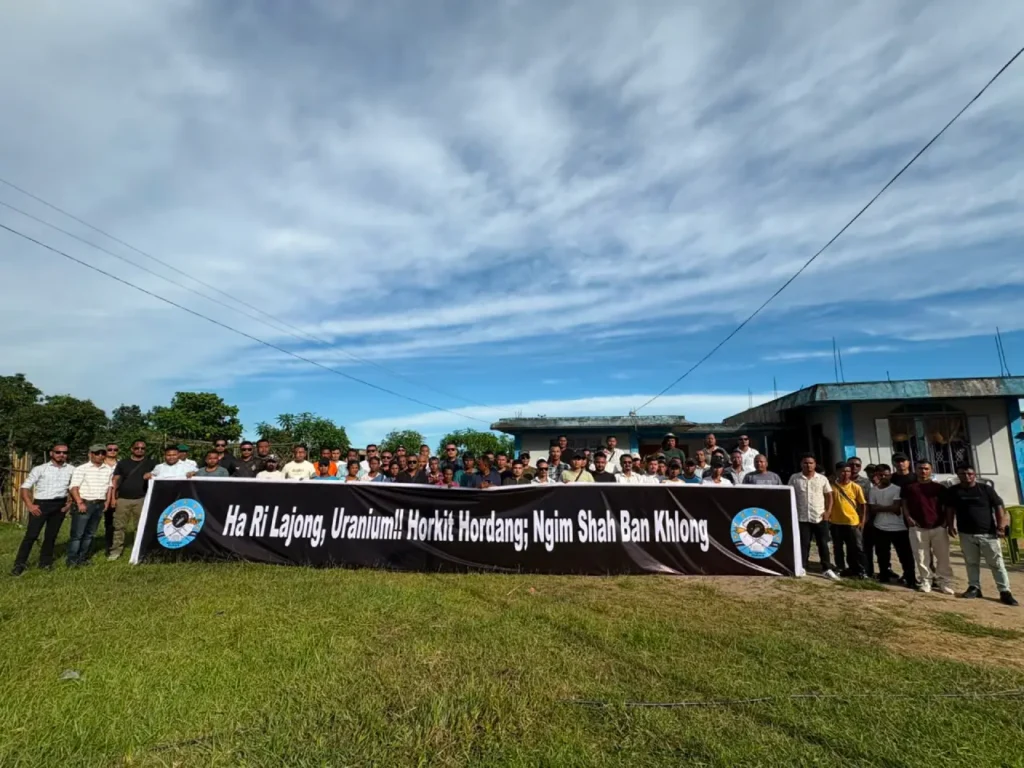
For decades, the people of the South West Khasi Hills district in Meghalaya have lived under a quiet cloud of anticipation, uncertainty and neglect. Deep beneath the soil of this beautiful, rolling landscape lies a massive deposit of high-grade uranium. Yet, while other parts of the country have witnessed rapid infrastructure development and economic modernisation, the residents of villages such as Domiasiat, Wahkaji, Umdohlun and Phangdiloin continue to ask a troubling question: has their opposition to uranium mining contributed to the region’s prolonged lack of basic development?
At the heart of this long-running debate lies the delicate balance between environmental conservation, indigenous land rights and the pursuit of economic development.
For the local Khasi communities, safeguarding their ancestral land, protecting public health and preserving their autonomy from the potential risks associated with uranium extraction have remained central concerns. However, many residents believe that this steadfast opposition has coincided with years of inadequate investment in essential infrastructure. Across the region, communities continue to contend with poor roads, unreliable water supply, limited healthcare facilities and insufficient educational opportunities.
The epicentre of this resistance is Domiasiat, a small village comprising just eleven households. It was the home of the late Spility Lyngdoh Langrin, fondly remembered as an iconic figure whose unwavering stand transformed her into the face of indigenous resistance against uranium mining in Meghalaya.
Decades ago, when the Uranium Corporation of India Limited (UCIL), along with government authorities, approached her with promises of development and financial compensation in exchange for her land, she firmly refused. Despite reportedly being offered substantial sums of money and facing considerable pressure, she remained resolute in her belief that no amount of compensation could replace ancestral land once it had been irreversibly damaged.
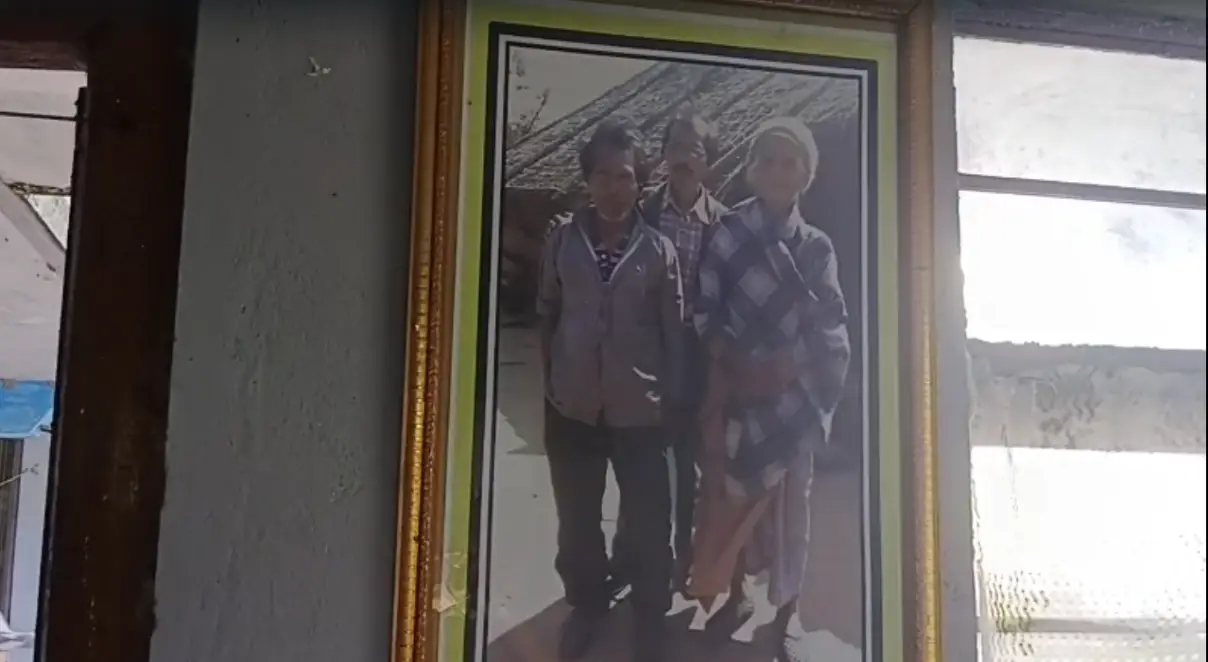
Her unwavering stand inspired communities across the region and transformed the anti-uranium movement into more than a political campaign; for many, it became a struggle to preserve their land, identity and way of life. Today, Domiasiat remains a powerful symbol of that resistance. Yet it also reflects the developmental challenges that continue to affect the area. Despite its historical significance, the village still lacks a proper motorable road, has no healthcare facility and has only a single primary school that provides education up to Class V.
The Village Secretary of Domiasiat, N D Syiem, spoke about the significant developmental challenges facing the region. According to him, many residents believe that progress has remained slow over the years, particularly following the local opposition to the proposed uranium mining project. While villages such as Domiasiat, Umdohlun, Wahkaji, Phangdiloin and Phangnongprah have gradually received electricity and basic educational facilities, much of the broader infrastructure remains underdeveloped.
N D Syiem said the region urgently requires improved educational facilities. At present, children can only study up to the upper primary level within the locality, forcing many families to send students elsewhere if they wish to pursue secondary education. He noted that the upper primary school at Wahkaji was established before he was born and, despite the passage of decades, has yet to be upgraded into a secondary school.
Road connectivity continues to be another major concern. Residents have long sought better roads linking villages such as Wahkaji, Phangdiloin and Langpa, with onward connectivity to Ranikor, the subdivision headquarters.
However, the road construction has stopped at Langpa, leaving several villages without reliable access. N D Syiem said many local residents struggle to understand why the project has remained incomplete, despite its importance as a vital transport link for the area. Roads leading to villages including Domiasiat, Langmalang and Mawrhabah remain in such poor condition that they are suitable only for horses and cattle rather than regular vehicular traffic.
Drinking water supply also continues to pose difficulties. Although water connections have been extended to several villages, residents say the use of low-quality rubber and plastic pipes has resulted in frequent breakages and recurring water shortages.
Healthcare presents an equally serious challenge. N D Syiem observed that residents continue to face a range of serious illnesses, while access to quality medical care remains extremely limited. The region is served by only one Primary Health Centre (PHC) in Wahkaji, staffed by a single doctor and a small team of healthcare workers. Local communities have repeatedly called for the PHC to be upgraded with improved infrastructure and inpatient facilities. Without these services, patients are often compelled to travel long distances to Shillong, Nongstoin or Mawkyrwat for treatment.
Reflecting on the origins of the movement, N D Syiem recalled how efforts were made to persuade her to part with her land through promises of development as well as administrative pressure. Despite these circumstances, she remained steadfast in her refusal. For many local residents, her decision continues to represent a defining moment in protecting both their ancestral land and the wider interests of the region.
Although the previous state government led by Dr Mukul Sangma eventually withdrew the Memorandum of Understanding (MoU) between the State Government and UCIL, concerns over the future of the project have not entirely subsided. N D Syiem said that UCIL officials are still occasionally seen visiting the area, leading some residents to believe that the issue has not been permanently laid to rest. He urged younger generations to remain vigilant and continue safeguarding their land and community interests.
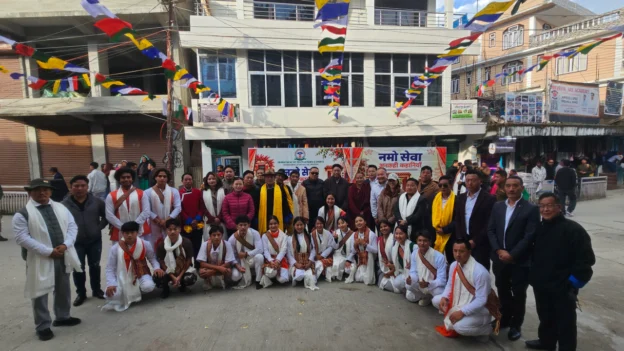
The newly elected leadership of the Khasi Students’ Union (KSU), accompanied by former leaders of the organisation, recently travelled to Domiasiat village to pay tribute to the late Spility Lyngdoh Langrin and reaffirm the union’s long-standing opposition to uranium mining. On 4 July, the KSU leadership laid floral tributes at her grave in recognition of her unwavering stand in defence of her ancestral land and the rights of indigenous communities.
Speaking on the occasion, the President of the KSU Central Executive Committee (CEC), Raymond Kharjana, expressed concern over what he described as conflicting signals surrounding the future of uranium mining in Meghalaya. He noted that the KSU leadership had recently met Chief Minister Conrad K Sangma, during which the Chief Minister reiterated that the State Government would not grant permission for uranium exploration or extraction.
However, Kharjana said that certain developments had nevertheless raised questions and concerns among members of the organisation and local communities. He stated that the KSU remained committed to closely monitoring the situation and ensuring that any future decisions concerning uranium mining are taken transparently and in consultation with the people most directly affected. Gathering alongside residents in Domiasiat, the union leaders reiterated their solidarity with the family of the late Spility Lyngdoh Langrin and reaffirmed their commitment to protecting the interests of the local indigenous communities.
The KSU President reiterated that the organisation would continue to oppose uranium mining in Meghalaya. He observed that whenever new leadership assumes responsibility within the union, discussions surrounding the proposed mining project often resurface. According to him, while the faces leading the organisation may change over time, the issues affecting the indigenous communities remain unchanged, and the KSU intends to continue pursuing the cause with the same determination that has characterised the movement for decades.
He further stated that members of the organisation and local residents involved in the anti-uranium movement had, on occasions, experienced various forms of pressure and attempts to discourage their activism. Despite these concerns, Kharjana maintained that the KSU remained confident of continued public support and said the organisation would persist in advocating for the protection of indigenous land and community rights. He also cautioned against speculative land purchases in the region, alleging that individuals from outside the area had shown increasing interest in acquiring land. The KSU, he said, would remain vigilant in safeguarding the interests of local communities.
Adding to the call for stronger institutional safeguards, the General Secretary of the KSU, Rueben Anderson Naijer, outlined the organisation’s recent discussions with Chief Minister Conrad K Sangma. He said the KSU had formally urged the State Government to adopt a resolution or enact legislation in the Meghalaya Legislative Assembly that would permanently prohibit uranium mining across the state. According to him, such a measure would provide long-term legal certainty for local communities and future generations.
Naijer further argued that these safeguards should not be confined to the State Assembly alone. He said the three Autonomous District Councils—the Khasi Hills Autonomous District Council (KHADC), the Jaintia Hills Autonomous District Council (JHADC) and the Garo Hills Autonomous District Council (GHADC)—should also consider adopting legal measures within their respective jurisdictions to prevent uranium extraction.
The KSU noted that uranium deposits are not confined to South West Khasi Hills alone but are also found in parts of the Jaintia Hills and Garo Hills. Naijer expressed concern over what he described as a growing trend of land transactions involving brokers and private investors in certain areas, including parts of East Jaintia Hills. According to the organisation, unchecked land acquisition could have long-term implications for indigenous communities if adequate legal safeguards are not put in place.
The union also referred to recent policy changes at the national level, noting that an Office Memorandum issued by the Central Government provides certain exemptions to the requirement for public hearings where the extraction of strategic minerals is considered necessary for national defence. The KSU said that these provisions have prompted concerns among communities in mineral-rich regions about the extent of public consultation that may be undertaken in future projects.
Drawing attention to developments elsewhere in the country, the KSU cited the experience of uranium mining projects in Andhra Pradesh, where sections of local communities had voiced strong opposition over environmental and livelihood concerns. The organisation said Meghalaya should learn from such experiences and ensure that any future decisions affecting indigenous land and natural resources are taken only after meaningful consultation with local communities. Reiterating its appeal, the KSU urged the State Government to provide clear legal safeguards that would protect Meghalaya’s land, environment and indigenous interests for generations to come.
For the people of Domiasiat and the surrounding villages, however, the debate extends far beyond uranium alone. It is ultimately about the future they envision for their homeland—one in which development does not come at the cost of their identity, ancestral land or environment.
As Meghalaya continues to balance the competing demands of economic growth, strategic mineral resources and indigenous rights, the voices emerging from these remote hills serve as a reminder that genuine progress must be measured not only by what lies beneath the ground, but also by the trust, dignity and well-being of the people who have called this land home for generations.