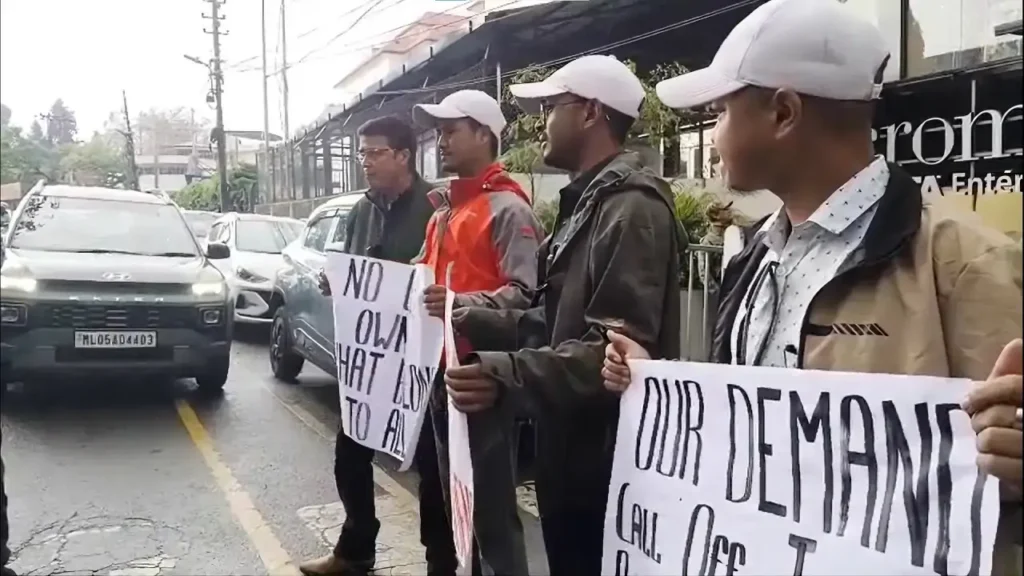
In a monumental showdown that pitted grassroots environmentalism against state-led industrial ambition, the Government of Meghalaya has relented to sustained public pressure, announcing the total cancellation of the controversial project at Lumpongdeng Island in Umiam Lake. What began as a localised protest has now evolved into a defining political moment—one that ties together questions of ecology, governance, and public trust.
The impasse between the state government and the Green Tech Foundation (GTF), which had been leading the resistance against the proposed tourism project, was broken on the 12th day of a gruelling indefinite hunger strike. The timing was significant—not just as a resolution, but as a culmination of mounting pressure that had steadily expanded beyond protest sites into homes, institutions, and digital spaces.
The protest and its outcome are being widely seen as a rare moment of unity across the Khasi and Jaintia Hills, converging into a singular, unyielding mission to protect land, environment, and wildlife. More than a campaign against a project, it became a collective assertion of identity and belonging. The resolution of this standoff possibly marks a defining moment in the state’s political history—reflecting how community will, when sustained, can reshape state decisions.
The climax unfolded at Madan Malki, where district officials arrived to hand-deliver an official communiqué from the Tourism Department to GTF leaders. Signed by the Joint Secretary of Tourism, the document confirmed the immediate termination of all proposed developments at Lumpongdeng. It was not merely an administrative act—it was the symbolic closing of a chapter that had come to embody resistance.
At the heart of the confrontation lay the proposed tourism project on Lumpongdeng Island, part of a larger 66-acre land deal linked to a luxury resort plan involving the Indian Hotels Company Limited. The government had framed the project as a step toward high-value, sustainable tourism. For protestors, however, it signified something far more troubling: the potential transformation of a shared ecological space into an exclusive commercial zone.
This unease had been building over time. The controversy first gained traction when the GTF challenged the state’s decision to lease land to Umiam Hotels Private Limited, a special purpose vehicle linked to the Tata Group. What raised eyebrows was not just the scale of the project, but the inclusion of Lumpongdeng itself—regarded by locals as the crown jewel of Umiam Lake.
From there, opposition grew both on the ground and online. Petitions gathered thousands of signatures, while activists approached multiple authorities, warning that the project risked permanently altering a fragile ecosystem. The fear extended beyond immediate environmental damage to the long-term redefinition of public space and access.
Amid rising tensions, Chief Minister Conrad K Sangma attempted to allay concerns with detailed clarifications. He asserted that no permanent construction would be allowed on the island, emphasising that only temporary structures—such as shamianas, stalls, and event setups—would be permitted and dismantled shortly after use. The government maintained that this approach reflected a commitment to sustainable tourism, balancing economic opportunity with ecological preservation.
Yet, these assurances did little to calm growing scepticism. Activists questioned both intent and transparency, pointing to discrepancies between public statements and formal discussions. Allegations of inconsistent messaging deepened distrust, reinforcing the perception that key decisions were being advanced without adequate public consultation.
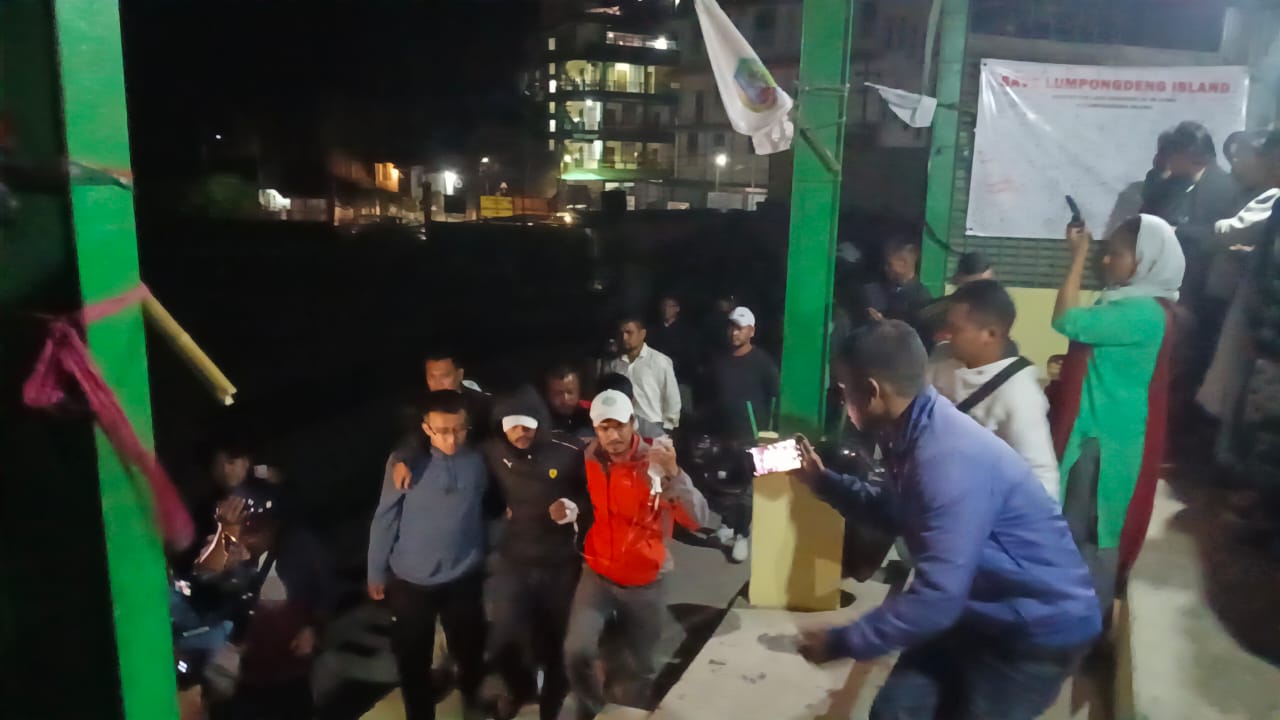
The human cost of the protest became most visible in its final days. The breakthrough was first conveyed to GTF Chairman H. Bansiewdor Nonglang, who had been admitted to Woodland Hospital as his health deteriorated during the hunger strike. In a moment that would come to define the movement, Nonglang left his hospital bed to address a jubilant gathering at Madan Malki, personally announcing the end of the 12-day fast.
His appearance—marked by visible physical strain and the memory of twenty medical drips—became a powerful symbol of the grit and determination that had driven the movement. It underscored a larger message: that environmental protection, in an era increasingly shaped by climate change, is no longer an abstract concern but an immediate and lived struggle.
Addressing supporters, Nonglang described the government’s decision as a total “surrender” before the will of the people. He declared that Lumpongdeng had been reclaimed, asserting that the administration “trembled in fear” before a movement that could neither be bought nor broken. The victory drew strength from a wide coalition—including the Voice of the People Party (VPP), Khasi Students’ Union (KSU), Hynniewtrep Youth Council (HYC), Hynniewtrep integrated Territorial Organisation (HITO), taxi associations, and local Rangbah Shnongs—turning the protest into a broad-based people’s movement.
GTF Secretary General Ritre Lyngdoh echoed this sentiment, calling it “a landmark victory” while sharply criticising the administration’s delayed response as “inhuman” in the face of clear and sustained public opposition.
Even amid celebration, the GTF signalled that the struggle for accountability was far from over. In a strategic move, it revealed the existence of the “Lumpongdeng Files”—documents compiled through Right to Information requests that allegedly expose a nexus between corporate interests, political actors, and state machinery. By opening these files to public scrutiny, the organisation has shifted from protest to oversight, inviting a broader inquiry into the processes that enabled the project in the first place.
From the government’s side, Cabinet Minister Weiladmiki Shylla framed the withdrawal as an act of responsive governance rather than capitulation. Following consultations with local headmen, Deputy Chief Minister Prestone Tynsong, and tourism officials, the administration acknowledged that the island’s cultural and ecological significance—combined with intense public sentiment—made the project untenable.
While reiterating that the original intent was economic development and employment generation, the government maintained that it chose consensus over confrontation. Development at Orchid Lake Resort will proceed, but the Lumpongdeng component is now permanently shelved.
In the end, the preservation of Lumpongdeng stands as a crowning achievement for the Green Tech Foundation and the wider community it mobilised. As the rally concluded, Nonglang attributed the victory to the “mercy and graciousness of God Almighty” and the unity of the people—“the mothers and fathers of the soil.”
Yet, even as the island remains untouched, the story does not quite end there. The shadow of the Lumpongdeng Files lingers, hinting at deeper questions around transparency, governance, and accountability in Meghalaya. What has been reclaimed is not just a piece of land, but a sense of agency. And in that sense, this episode leaves behind something larger than a cancelled project—it leaves behind a precedent.