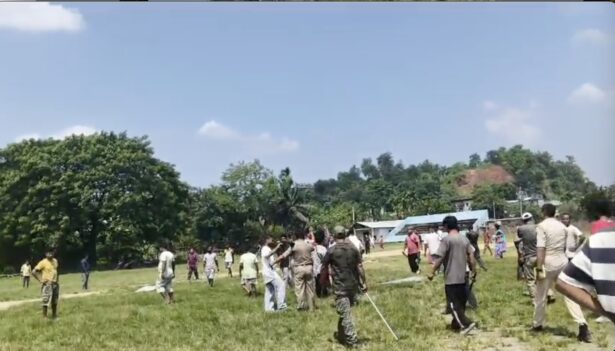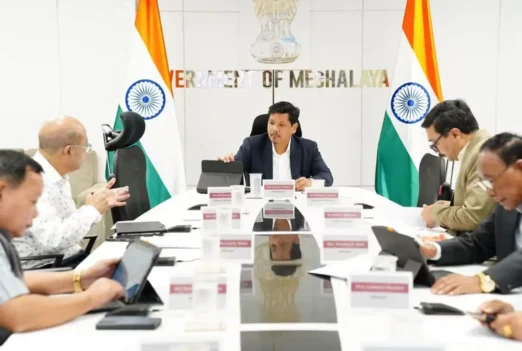
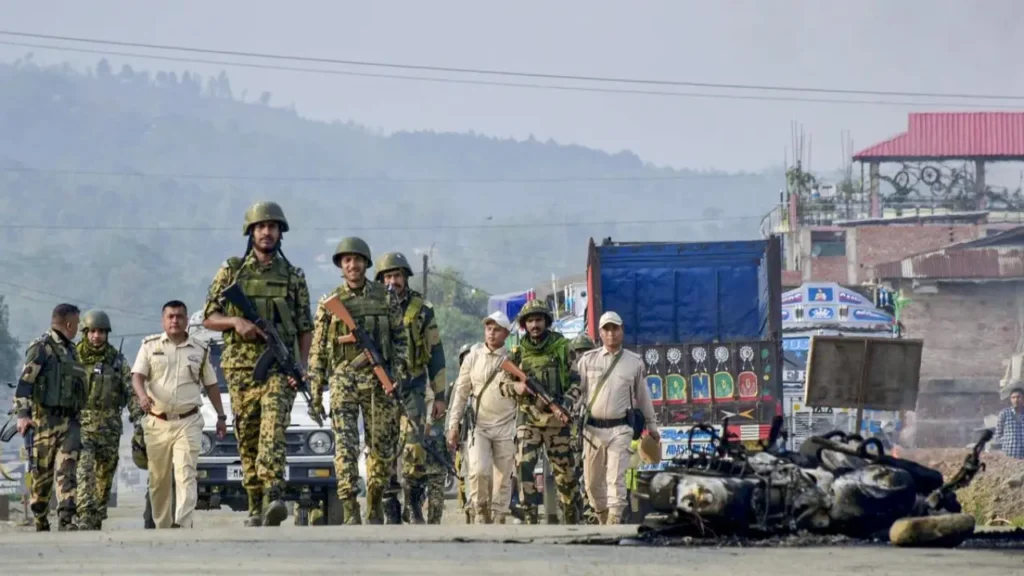
Over the past two weeks, Manipur has once again descended into intense violence, undoing what little sense of normalcy had begun to return. The installation of a new Chief Minister, Y Khemchand Singh, had briefly raised hopes of stability. But that fragile calm has quickly unravelled. Fresh clashes between Kuki and Naga groups in Ukhrul and nearby villages, including Mulam, have left several dead and many injured, signalling a dangerous new phase in the conflict.
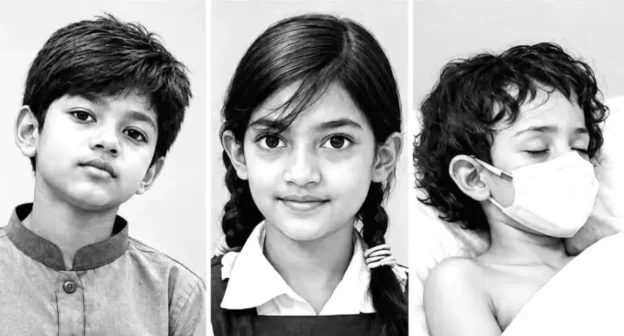
These clashes come on the heels of a deeply disturbing incident in Bishnupur district, where a five-year-old boy and his six-month-old sister were killed in their sleep in Tronglaobi village. The brutality of the killings has shaken public conscience and triggered fresh unrest across the valley. What initially appeared to be isolated violence now threatens to spiral into a wider cycle of retaliation, with tensions cutting across both hill and valley districts.
What is unfolding is not merely episodic violence but a deeper collapse of trust. Longstanding tensions among Meitei, Kuki, and Naga communities have hardened into mutual suspicion, with each incident reinforcing entrenched divides. Increasingly, even state forces are viewed through partisan lenses.
Reports of Meitei groups obstructing Indian Army and central paramilitary convoys in valley districts, alongside instances of Naga women intercepting convoys in Ukhrul, point to a growing erosion of institutional credibility. In such an atmosphere, every intervention risks being seen as biased, further deepening the fault lines.
Adding to the volatility are shutdowns, sit-in protests, and highly charged acts such as civilians stopping and even frisking security personnel—episodes that have gone viral on social media and drawn sharp reactions, with many describing them as a breach of national security. These acts, while reflecting public anger and distrust, also underline the extent to which authority on the ground is being contested in unprecedented ways.
While the crisis intensifies, national attention has largely remained elsewhere. Mainstream media coverage has been sporadic, overshadowed by elections in other parts of the country. In contrast, social media has been flooded with videos and real-time updates from both hill and valley districts.
This has created a parallel information ecosystem—one that ensures visibility but is also rife with misinformation, propaganda, and competing narratives pushed by vested interests. In a conflict-prone region, such an environment can rapidly inflame tensions and make reconciliation far more difficult.
The human cost of this unrest is perhaps most starkly visible among children. With schools shut across large parts of the state, education has come to a standstill. Beyond academic disruption, the psychological toll is profound. Growing up amid violence—whether directly experienced or constantly consumed—reshapes a child’s sense of safety and belonging. The killing of infants in Bishnupur stands as a grim reminder of how deeply the conflict has seeped into everyday life.
Women, too, occupy a complex space in this crisis. In Manipur, they have long been at the forefront of social and political movements, and that legacy continues today through protests, sit-ins, and community mobilisation. Yet, they are also among the most vulnerable—bearing the brunt of displacement, insecurity, and the breakdown of essential services. Their presence in blocking convoys or organising demonstrations reflects both resilience and a profound sense of desperation in the absence of effective institutional response.
For specially abled individuals, the situation is even more precarious. Disruptions in transport, healthcare, and essential services have made access to basic needs extremely difficult. In conflict scenarios, accessibility and targeted relief often receive little attention, leaving them further marginalised and largely invisible in dominant narratives.
Across Manipur, normal life has ground to a halt. Markets remain closed, transport services are paralysed, and public institutions are non-functional in many areas, including Ukhrul and Senapati. Both valley and hill districts are experiencing prolonged disruption, affecting livelihoods and deepening uncertainty.
This crisis is further complicated by Manipur’s geography. Sharing a long and porous international border with Myanmar, the state has historically been vulnerable to cross-border insurgency, arms movement, and drug trafficking. These structural challenges continue to intersect with internal ethnic tensions, amplifying instability at a time when governance mechanisms appear increasingly strained.
What the past two weeks have made clear is that peace in Manipur cannot be measured merely by the absence of immediate violence. The deeper crisis lies in rebuilding trust—between communities, and between citizens and the state. Until that trust is restored, any semblance of calm will remain fragile. The burden of this prolonged unrest continues to fall disproportionately on ordinary people—children, women, and the most vulnerable—making the search for lasting normalcy not just a political necessity, but a humanitarian imperative.