The peace overture extended by Min Aung Hlaing on April 21 may yet be inching toward a tangible outcome, even as two prominent rebel groups—the Karen National Union (KNU) and the Chin National Front (CNF)—have publicly rejected the proposal. On the surface, the refusals signal resistance.
Yet beneath that, there appears to be a more intricate and coordinated effort underway. The military-backed government is understood to have crafted an elaborate roadmap, reportedly with support from China and select Southeast Asian nations, aimed at bringing key ethnic armed organizations (EAOs) into a broader framework of dialogue.
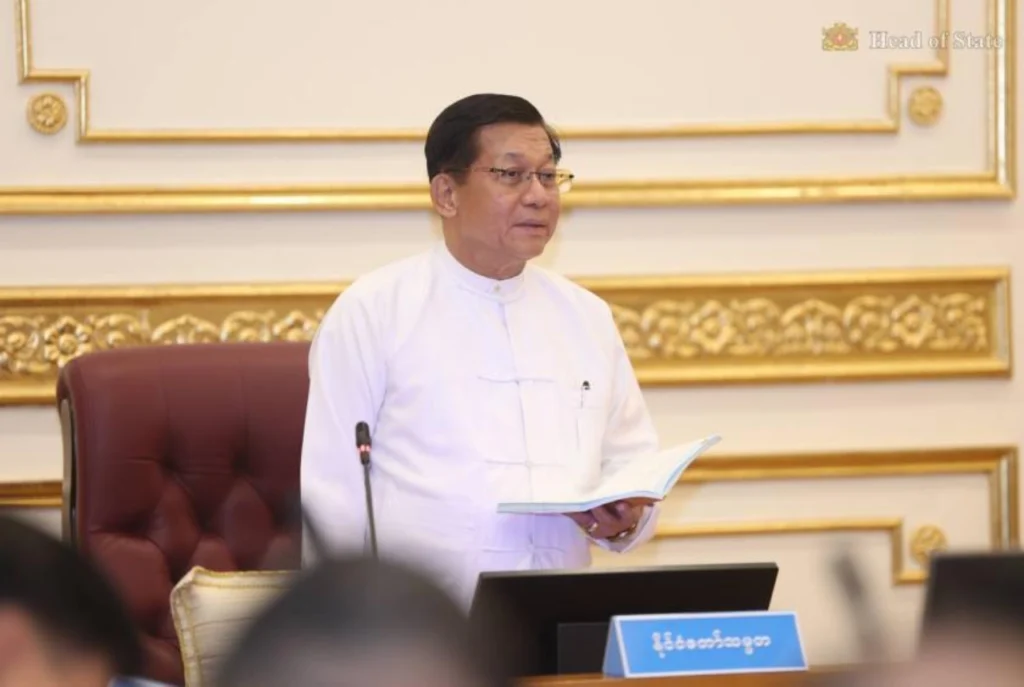
Two elements of Min Aung Hlaing’s peace offer stand out. First is the clarity—and urgency—of the timeline: a 100-day window within which discussions are to be formalised and implementation initiated. Speaking at a government meeting, he set a firm deadline, stating that groups yet to engage in dialogue are invited to do so by July 31.
This attempt to impose a structured timeframe suggests both confidence and pressure—an effort to compel participation while projecting decisiveness. In that sense, the timeline itself becomes a political tool, not merely an administrative marker.
The second notable feature is his renewed emphasis on institutionalising the Nationwide Ceasefire Agreement (NCA) as a permanent pathway to peace. This is not merely a revival attempt, but a bid to reposition the NCA as the central pillar of Myanmar’s conflict resolution architecture—effectively redefining it as the only viable road forward.
The Nationwide Ceasefire Agreement, signed on October 15, 2015, traces its origins to the quasi-civilian government led by President Thein Sein under the Union Solidarity and Development Party (USDP). Initially, eight ethnic armed organizations endorsed the accord, with two more joining in 2018, bringing the total to ten signatories.
These included the All Burma Students’ Democratic Front (ABSDF), Arakan Liberation Party (ALP), Chin National Front (CNF), Democratic Karen Buddhist Army (DKBA), Karen National Liberation Army-Peace Council (KNU/KNLA-PC), Karen National Union (KNU), Pa-O National Liberation Organization (PNLO), Restoration Council of Shan State (RCSS), alongside later entrants—the Lahu Democratic Union (LDU) and the New Mon State Party Anti-military Dictatorship (NMSP-AD).
However, the agreement’s credibility suffered a major setback following the February 2021 military coup led by Min Aung Hlaing, which ousted the elected National League for Democracy (NLD) government under Aung San Suu Kyi.
In the aftermath, several original signatories—including the KNU, CNF, and ABSDF—effectively withdrew from the process, denouncing the military’s seizure of power and declaring the NCA void. What had once been envisioned as a foundation for peace was suddenly rendered politically untenable.
Yet, Min Aung Hlaing has not abandoned the framework. Instead, he has steadily worked to reshape and reclaim it. Observers tracking developments since the coup—and more recently, the elections that followed—suggest that with backing from China and engagement with certain Association of Southeast Asian Nations (ASEAN) partners, the military leadership believes it can still steer the process toward its preferred outcome.
There is a sense among some analysts that the current initiative is less about negotiation and more about consolidation—an attempt to rebuild legitimacy through controlled engagement. This underlying tension continues to define how the offer is being interpreted.
This perception gains some support from the shifting posture of non-signatory groups. The Federal Political Negotiation and Consultative Committee (FPNCC), a bloc of powerful EAOs based along the Myanmar-China border, has shown a growing willingness to engage with NCA-related events.
Key members such as the United Wa State Army (UWSA), National Democratic Alliance Army (NDAA), and Shan State Progress Party (SSPP) attended the 10th anniversary of the NCA in Naypyitaw on October 15. Their presence, while not amounting to endorsement, signalled a subtle but noteworthy shift—one that suggests the junta may be succeeding in drawing previously distant actors into its orbit.
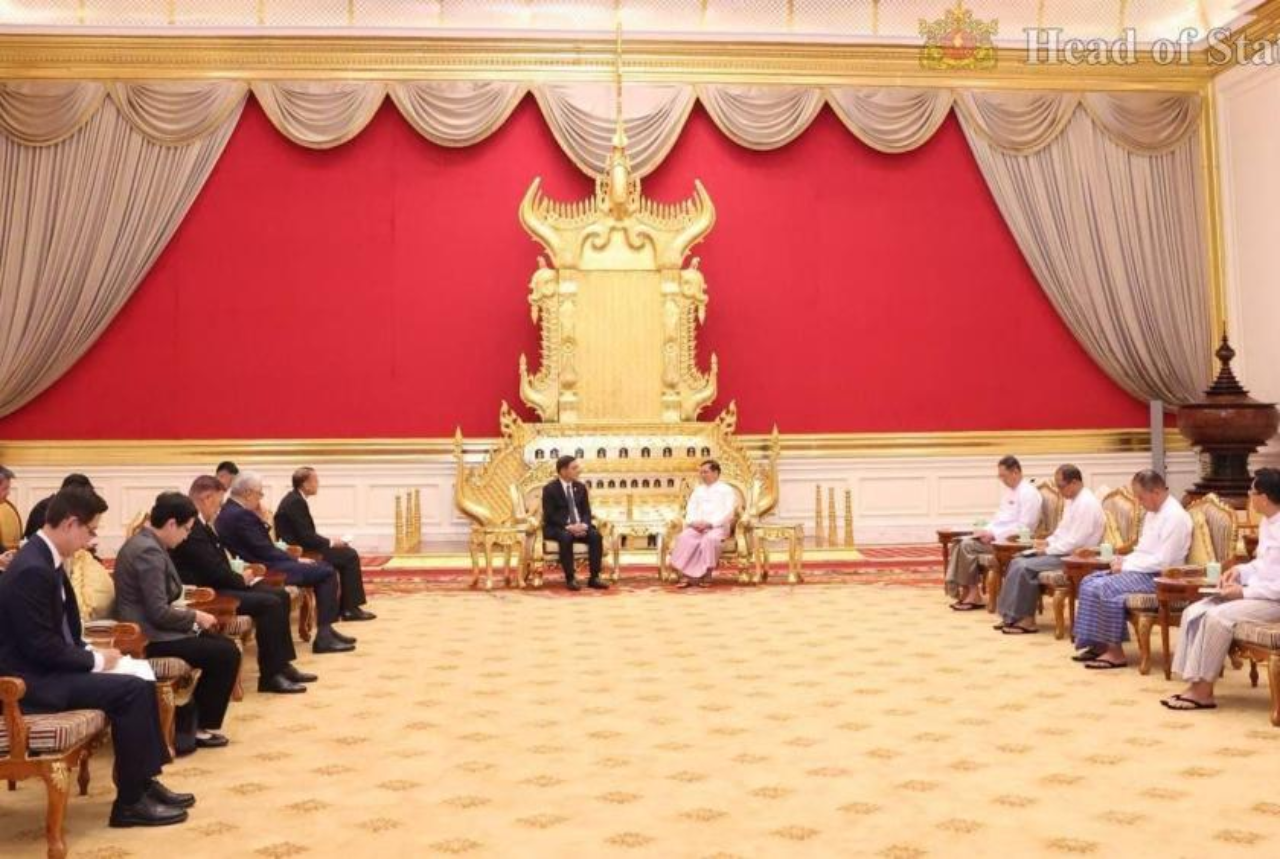
The anniversary event itself saw participation not just from armed groups but also from diplomatic stakeholders, including representatives from China and India. Such attendance underscores the broader regional stakes involved.
For neighbouring countries, stability in Myanmar is not merely desirable but strategically necessary—whether for border security, trade, or geopolitical balance. It is this shared concern that often drives quiet engagement, even amid public criticism.
Moving beyond ceremonial optics, developments since the anniversary indicate that Min Aung Hlaing’s roadmap is far from ad hoc. It appears to be the product of careful calibration, where the participation—or at least neutralisation—of key groups from Karen, Chin, and Kachin states is seen as critical.
Sources suggest that despite ongoing conflict, the military leadership has been actively engaging behind the scenes, working to build channels of communication and leverage. This dual-track approach—conflict on the ground, negotiation in parallel—has become a defining feature of the current phase.
A key figure in this evolving strategy is General Ye Win Oo, the newly appointed Commander-in-Chief of Defence Services following Min Aung Hlaing’s transition to the presidency. A former intelligence chief and close confidant, Ye Win Oo is believed to possess extensive regional networks, particularly in Thailand, Malaysia, and Cambodia.
His appointment signals continuity, but also a tactical shift—toward a more network-driven approach to diplomacy and negotiation. In many ways, it reflects the regime’s attempt to professionalise and internationalise its engagement strategy.
Against this backdrop, the rejection of the peace offer by the KNU and CNF may not be as consequential as it appears. If insider accounts are accurate, what is being described as “The Second Act of Myanmar’s Peace Push” is already underway—a more assertive phase aimed at persuading key actors such as the KNU and the Kachin Independence Army to reconsider their positions.
The strategy seems to hinge not on immediate acceptance, but on sustained engagement and incremental pressure—suggesting that refusal, at least for now, is being factored into the broader plan.
Regional dynamics further complicate—and perhaps enable—this process. Thailand, for instance, is reportedly playing a facilitating role. Backchannel discussions with KNU leaders are said to have begun, reflecting Bangkok’s vested interest in stability along its border.
The recent visit of Thailand’s Deputy Prime Minister and Foreign Minister Sihasak Phuangketkeow to Naypyitaw on April 22 has drawn particular attention. As the first high-level ASEAN visit since the formation of the new USDP government, it carries symbolic and strategic weight—hinting at a quiet recalibration of regional engagement with Myanmar.
Yet, interpretations of the visit remain contested. Critics, including members of Myanmar’s government-in-exile—the National Unity Government (NUG)—caution against reading it as recognition of Min Aung Hlaing’s presidency.
According to a Democratic Voice of Burma (DVB) report Civil society groups, particularly those representing Karen communities, have openly opposed such engagement, urging Thailand to reconsider its approach. Their concerns reflect a deeper anxiety: that diplomatic normalisation may come at the cost of political justice.
Economic considerations, too, are shaping the narrative. Analysts suggest Thailand’s interest in reviving border trade, particularly through the Asia Highway in Karen State, is a key driver behind its outreach. This intersection of economic pragmatism and political engagement illustrates the complexity of the current moment.
Meanwhile, gestures such as the amnesty granted to over 4,500 prisoners on April 17 have been welcomed by some as positive steps, though scepticism persists about their intent and impact. For many in the international community—including China, India, Thailand, and even Bangladesh—the NCA remains the most viable institutional framework for dialogue.
It offers a structure, however imperfect, through which engagement can be channelled. But whether structure alone can deliver substance remains an open question.
And yet, the fundamental question remains unresolved. Can any peace process led by the military genuinely deliver a federal democratic system free from its own influence? This is the core concern articulated by CNF spokesperson Salai Htet Ni and echoed by many others.
It is also the central aspiration of the Panglong peace process—a dialogue framework initiated under the NLD government to envision a federal democratic union.
In the end, what unfolds in the coming months may determine whether the current initiative is a genuine step toward reconciliation or a strategic recalibration designed to entrench power. The timeline has been set, the actors are in motion, and the region is watching closely.
Whether this “mission 2.0” leads to peace—or merely reshapes the conflict—remains the question that will define Myanmar’s immediate future.