The Kuki Organisation for Human Rights Trust (KOHUR) has sharply criticised a recent statement issued by the Coordinating Committee on Manipur Integrity (COCOMI) concerning the violence reported in Manipur’s Kamjong district along the Indo-Myanmar border.
In a rejoinder released on May 8, KOHUR said that while it supports any genuine effort aimed at ensuring civilian safety and conducting an impartial probe, it strongly opposed what it termed as COCOMI’s attempt to frame the incident as “cross-border armed aggression by foreign-based groups against Indian citizens.”
According to KOHUR, such a characterisation distorted the realities of the conflict and reduced a complicated inter-community situation into a politically loaded security narrative. The organisation described the portrayal as “factually misleading, ethnographically illiterate and politically self-serving.”
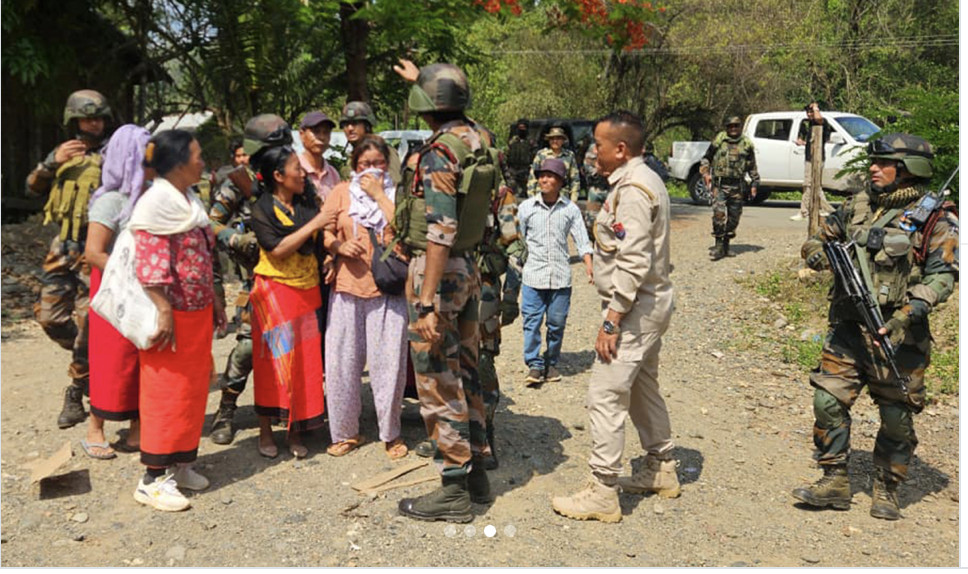
Earlier on May 7, COCOMI had expressed concern over reports of armed attacks targeting Tangkhul Naga villages and civilian settlements in areas such as Namlee, Wanglee and nearby locations in Kamjong district.
In its statement, COCOMI cited allegations made by a sitting MLA from the region claiming that cadres linked to the Myanmar-based Kuki National Army-Burma [KNA(B)] and allied People’s Defence Forces (PDF) were involved in the attacks.
The organisation argued that if the allegations were confirmed, the incident should not be treated merely as an ethnic or communal clash but as an instance of “cross-border armed aggression” involving foreign-based armed groups operating inside Indian territory.
COCOMI further maintained that the issue had implications for India’s sovereignty, territorial integrity and border security, and urged the Government of India, the Ministry of Home Affairs, Ministry of Defence and central security agencies stationed in Manipur to intervene and clarify the situation.
Responding to this, KOHUR said the Kuki-Zo people constitute a trans-border indigenous community whose ancestral homeland predates present-day international boundaries and extends across parts of India, Myanmar’s Chin State and Sagaing Region, as well as areas of Bangladesh.
Quoting the organisation, Hills Journal reported that KOHUR argued that cultural ties, clan relationships, customary traditions and linguistic connections have historically continued across the India-Myanmar border despite colonial-era divisions introduced after the Treaty of Yandabo in 1826.
In that context, the organisation said describing Kuki-Zo communities living across the border as “foreigners” amounted to a denial of indigenous identity rather than a legitimate security assessment.
KOHUR also pointed out that similar accusations had not historically been directed at other indigenous trans-border groups in the Northeast, including Naga communities whose armed organisations have long operated along the same frontier.
The trust further accused COCOMI of relying heavily on claims made by a politically interested actor from a community currently engaged in tensions with Kuki-Zo villages in the area.
“To elevate a partisan claim into a national security fact is precisely the kind of approach that contributed to the failures witnessed on May 3, 2023,” KOHUR stated.
The organisation additionally alleged that COCOMI had ignored what it described as a long record of attacks on Kuki villages across the Ukhrul-Kamjong-Tangkhul belt since ethnic violence erupted in Manipur.
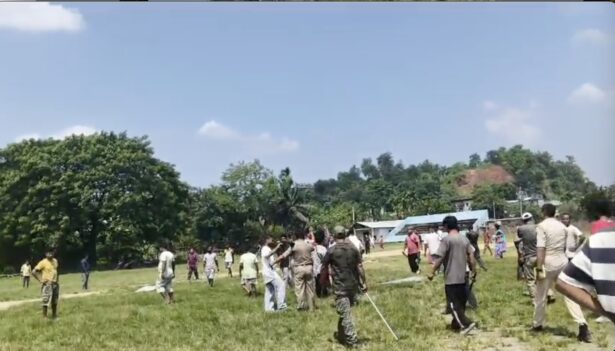
KOHUR contended that the latest violence in Kamjong did not begin as a foreign incursion but stemmed from a local altercation, reportedly involving a drunken confrontation, which later spiralled into a wider communal clash.
According to the trust, such escalations have repeatedly occurred in the region over the past three years and have disproportionately affected Kuki settlements.
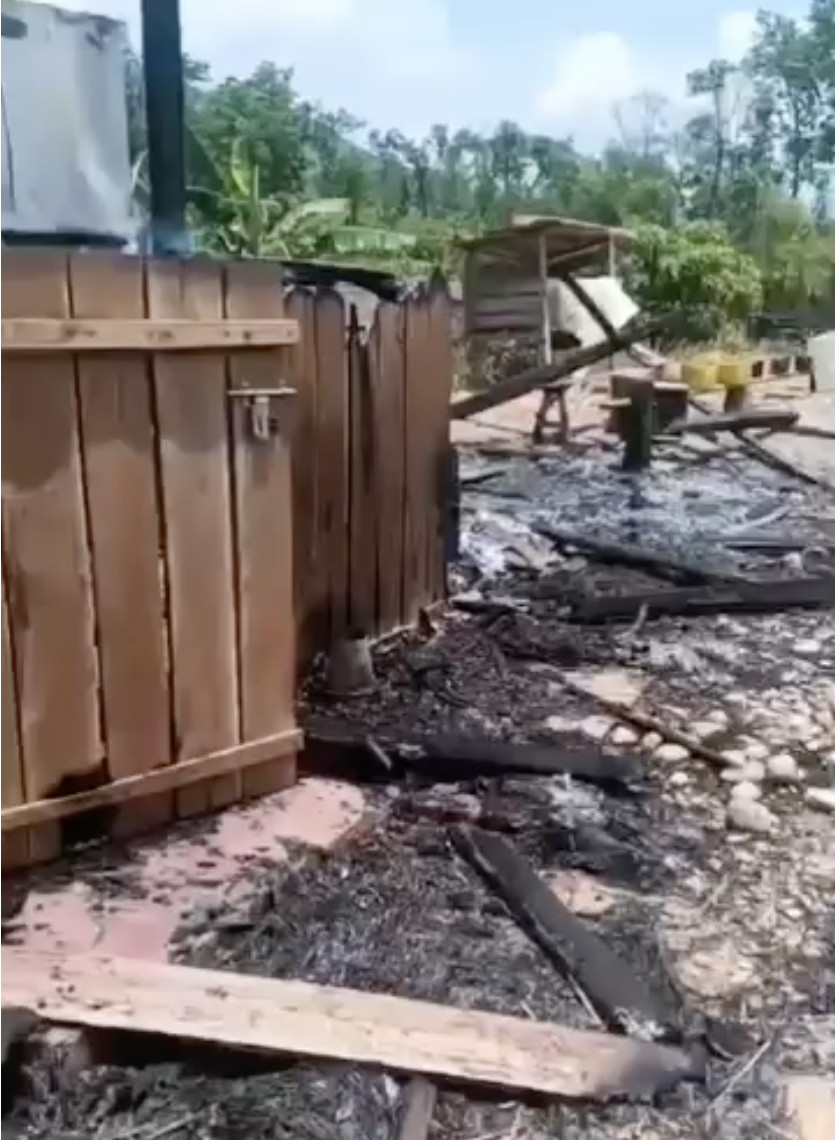
The organisation listed several villages — including Litan Sareikhong, Yaolen, Patleijao, Mulam, Songphel, Maokot, Lanchah, Khoikai, Mollen, Gampal, Haijang and Phungtha — which it claimed had faced attacks, arson or forced evacuation threats.
KOHUR alleged that despite these incidents, COCOMI had neither issued statements nor sought investigations, reflecting what it described as a selective approach to violence in the state.
The trust also referred to allegations surrounding the involvement of cadres linked to the NSCN (Eastern Flank), accusing them of participating in attacks on Kuki villages in the Ukhrul-Kamjong sector prior to May 6.
According to the statement cited by Hills Journal, homes were allegedly burnt and civilians displaced, while Kuki-Zo women working in agricultural fields in neighbouring Kangpokpi district were repeatedly targeted.
KOHUR further claimed that the presence of NSCN (EF) cadres had been corroborated by organisations based across the Myanmar border.
The trust referred to a statement issued by the Kaishan Rungyond Naga (KRN), described as the apex traditional body of the Kaishan Boklum area within Myanmar’s Naga Self-Administered Zone in Sagaing Region.
According to KOHUR, the KRN confirmed that one of the NSCN-IM (EF) cadres killed during the Hongbei incident — identified as Cpl Bahnlei Ahlahpya, also known as Sgt Pahnlei Ahlahpya — belonged to the Kaishan Boklum community in Myanmar.
Referring to reports carried by Hills Journal and other publicly circulated material, KOHUR alleged that the deceased cadre was a Myanmar national who had crossed into Indian territory while operating under an armed group currently under a ceasefire and Suspension of Operations agreement with the Government of India.
“This is not merely a Kuki-Zo allegation. The cadre’s own traditional body in Myanmar acknowledged his origins,” KOHUR stated.
The organisation accused COCOMI of remaining silent on what it described as a confirmed instance of Myanmar nationals allegedly operating alongside a Naga armed group under agreement with the Indian government.
KOHUR further argued that COCOMI’s narrative selectively ignored earlier incidents and focused only on developments after Kuki-Zo groups allegedly retaliated.
“A statement that begins its timeline only when Kuki-Zo defenders react is not a security analysis but a political narrative weapon,” the organisation stated.
The trust also criticised COCOMI for what it described as its silence on several incidents since the outbreak of violence in May 2023.
These included the looting of weapons from Manipur Police and IRB armouries, the activities of Arambai Tenggol, the Tronglaobi IED blast, the attack on a CRPF camp and the deaths and displacement suffered by Kuki-Zo communities during the ongoing conflict.
KOHUR additionally alleged that COCOMI had avoided addressing the alleged role of the former Chief Minister in the wider violence that engulfed the state.
The organisation argued that a group concerned about “national sovereignty” only in relation to the Indo-Myanmar border, while remaining silent on armed mobilisation and looted weapons within the Imphal Valley, lacked the moral authority to lecture others on territorial integrity.
At the same time, KOHUR said it supported calls for an independent high-level inquiry, provided the investigation remained outside the control of the Manipur state machinery, which it described as compromised.
The trust proposed that any inquiry should function under court supervision and examine not only the Kamjong incident but also the May 2023 armoury lootings, the activities of Arambai Tenggol, the Tronglaobi blast, the CRPF camp attack, alleged NSCN-linked attacks on Kuki-Zo villages and the reported involvement of Myanmar nationals in cross-border operations.
KOHUR also launched a political attack on COCOMI, alleging that the organisation functioned as a civilian front for several banned Meitei insurgent outfits, including the RPF/PLA, UNLF/MPA, PREPAK, KYKL and KCP.
The trust claimed these groups had historically operated from Myanmar-based camps and carried out armed campaigns against the Indian state over several decades. It further alleged that Indian intelligence agencies and assessments by the Ministry of Home Affairs had, in the past, linked some of these outfits to Chinese agencies and Pakistan’s Inter-Services Intelligence (ISI).
According to KOHUR, organisations carrying such ideological and political histories could not credibly position themselves as arbiters of nationalism or national security.
The organisation also accused COCOMI of increasingly invoking the language of sovereignty and territorial integrity to delegitimise Kuki-Zo communities residing in Manipur’s hill districts.
KOHUR alleged that this narrative formed part of a broader political effort to portray Kuki-Zo populations as “foreign” and potentially justify coercive actions against their villages under the guise of border security operations.
The trust urged the Government of India, security agencies and national media outlets to closely examine the larger political implications underlying COCOMI’s statements.
KOHUR further maintained that the present tensions between Kuki and Tangkhul communities stemmed from earlier attacks on Kuki villages and argued that peace could only return once such incidents ceased.
Reiterating its commitment to peace, rule of law and protection of civilians irrespective of ethnicity, the organisation stated that while it remained willing to cooperate with lawful and impartial investigations, it would not accept attempts by any community-based political group to decide who qualifies as indigenous and who should be branded foreign.
“The integrity of Manipur cannot be defended through the misrepresentation of its peoples,” KOHUR stated.