
The fragile law-and-order situation in Manipur has once again taken a dangerous turn, with fresh violence indicating a widening ethnic and militant confrontation in the hill districts of the troubled northeastern state. Even after the appointment of a new chief minister following prolonged instability and repeated ethnic clashes, the security environment continues to deteriorate, exposing the deep administrative paralysis confronting the state machinery.
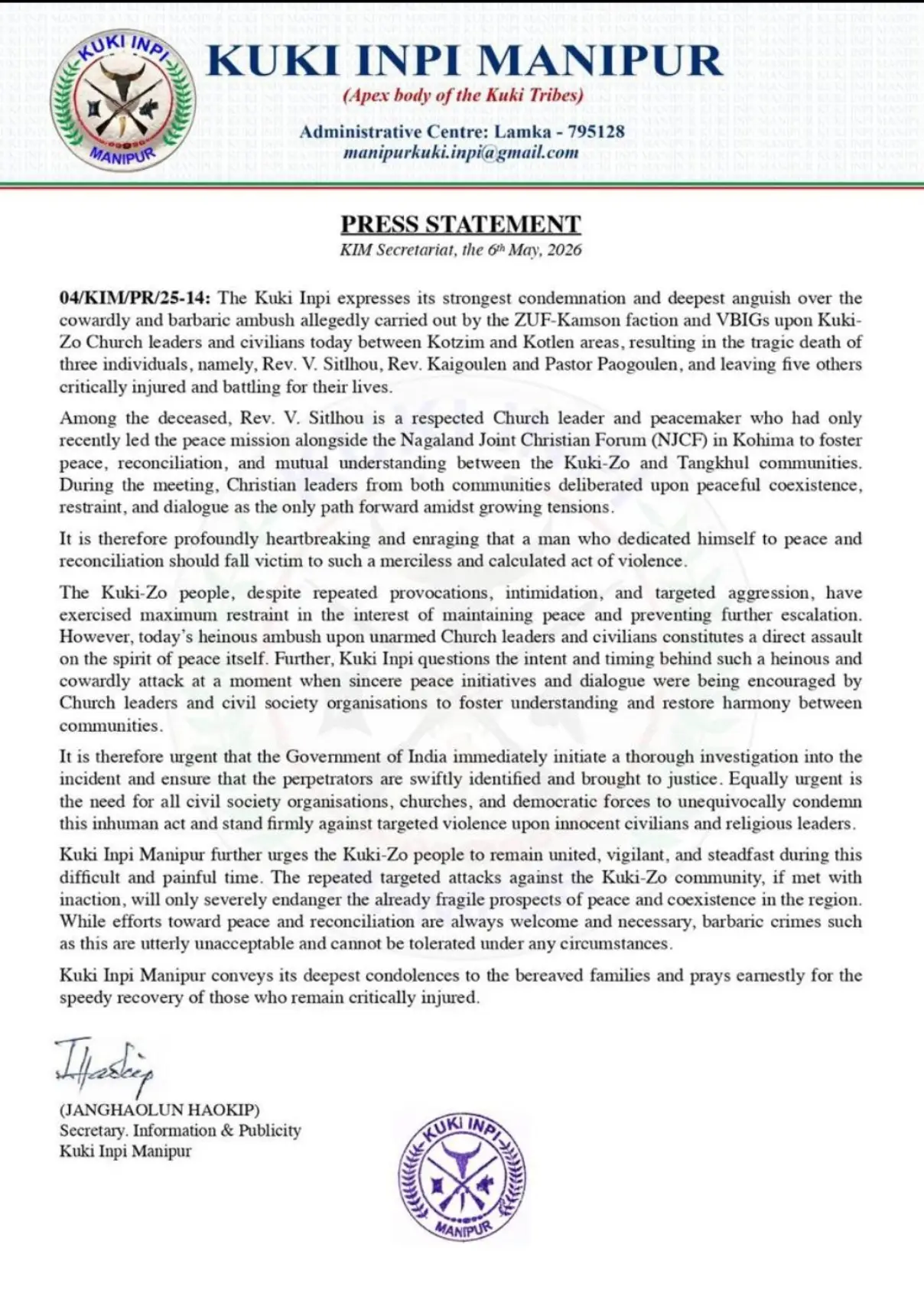
In one of the most disturbing incidents reported in recent months, senior church leaders associated with the (TBA) were ambushed on Tuesday morning between Kotzim and Kotlen villages in Kangpokpi district. According to preliminary reports received from local sources, the attack allegedly involved armed cadres linked to the ZUF-Kamson faction and village-based armed groups (VBIGs), highlighting the increasingly militarised nature of inter-community tensions in the hill regions.
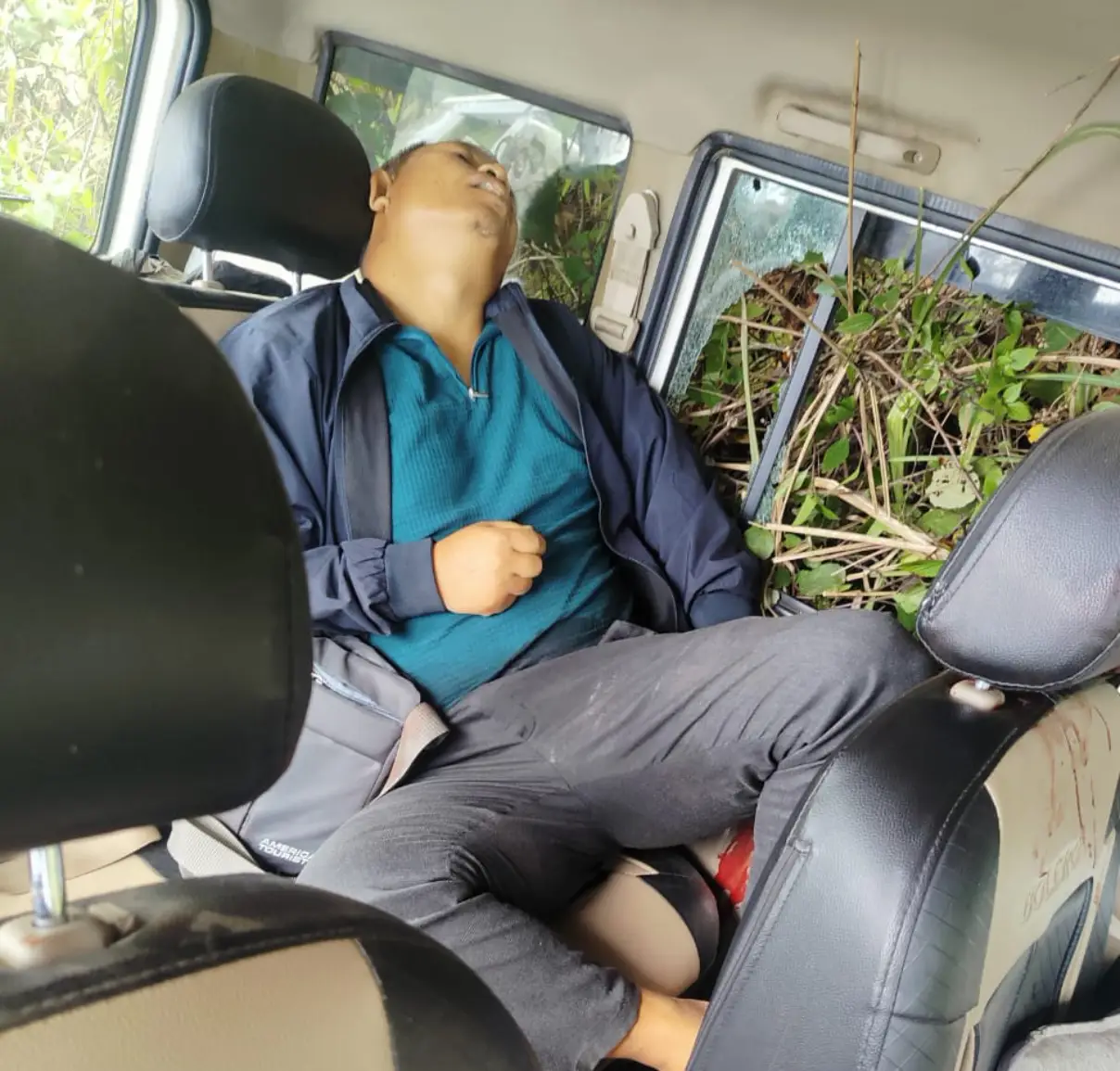
The victims were reportedly returning to Kangpokpi from after attending a TBA conference when their convoy came under heavy attack at around 10:25 am. Sources stated that Rev. V. Sitlhou, a prominent TBA leader and former General Secretary of the , was feared killed in the ambush, although official confirmation was still awaited at the time of filing this report.
Several others sustained serious injuries in the attack. Those reportedly injured include Rev. S.M. Haopu, Rev. Hekai Simte, Rev. Kaigoulun, Rev. Paothang, Pastor Paogou, and two drivers identified as Lelen and Goumang. The church delegation was travelling in two vehicles when the attack occurred.
The latest incident has sent shockwaves across Manipur’s civil society and religious communities because the targeting of church leaders represents a deeply alarming escalation in the conflict. Observers believe the violence now appears to be moving beyond the original Meitei-Kuki ethnic confrontation that erupted in May 2023 and is gradually expanding into new tribal fault lines involving sections of the Naga and Kuki communities in the hill districts.
The crisis in Manipur has already witnessed unprecedented violence over the last three years. Since the ethnic conflict broke out in 2023 following tensions over Scheduled Tribe status demands and territorial anxieties, the state has experienced widespread killings, arson, displacement, and armed mobilisation. Hundreds of people have lost their lives, thousands of homes have been destroyed, and entire villages have become ethnically segregated. The conflict also triggered one of the largest internal displacement crises in Northeast India in recent decades, forcing tens of thousands to take shelter in relief camps across the state and neighbouring regions.
The law-and-order machinery suffered a severe collapse during the peak of the violence. Police stations and armouries were looted, leading to the circulation of thousands of sophisticated weapons among civilians and armed groups. Security agencies repeatedly launched recovery operations, yet a large number of weapons reportedly remain in the hands of militant and village defence groups. This militarisation of civilian society has fundamentally altered the security landscape of Manipur.
Several significant incidents over the past three years have reflected the depth of the crisis. The burning of villages in the Imphal Valley and hill districts in 2023, sniper attacks along buffer zones, the circulation of viral videos showing brutal violence against women, repeated attacks on security convoys, and targeted killings of civilians created a climate of fear and mistrust between communities. Economic blockades and disruptions along the Imphal-Dimapur and Imphal-Jiribam highways further isolated the state and crippled normal life.
The violence later spread into districts such as Jiribam, where fresh ethnic tensions and killings were reported in 2024 and 2025, indicating that the conflict was no longer confined to the traditional valley-hill divide. Armed organisations, village volunteers, and underground militant factions increasingly emerged as parallel centres of authority in several sensitive areas.
Political analysts say the continuing instability also reflects the failure of both the state and central governments to establish a credible peace architecture acceptable to all communities. Dialogue initiatives remain fragmented, while distrust among the Meitei, Kuki, and Naga groups continues to deepen. The frequent changes in administrative approaches, combined with accusations of political bias from different ethnic groups, have weakened public confidence in governance.
The latest ambush involving church leaders is therefore being viewed not merely as an isolated militant attack, but as a warning signal that the conflict in Manipur may be entering a far more dangerous and fragmented phase. The attack carries enormous symbolic implications because religious leaders have often acted as mediators and peace-builders during ethnic conflicts in the Northeast. An assault on such figures threatens to further erode the remaining channels of dialogue and reconciliation.
Security agencies have reportedly intensified operations in Kangpokpi and adjoining hill areas following the incident. However, the broader concern remains whether the state possesses the political coherence and administrative capacity necessary to prevent the conflict from spiralling into a prolonged multi-tribal confrontation.
For many residents of Manipur, peace now appears more distant than ever. The continuing violence has not only devastated the social fabric of the state but has also exposed the long-standing fault lines surrounding identity, land, autonomy, and political representation in one of India’s most sensitive border regions.