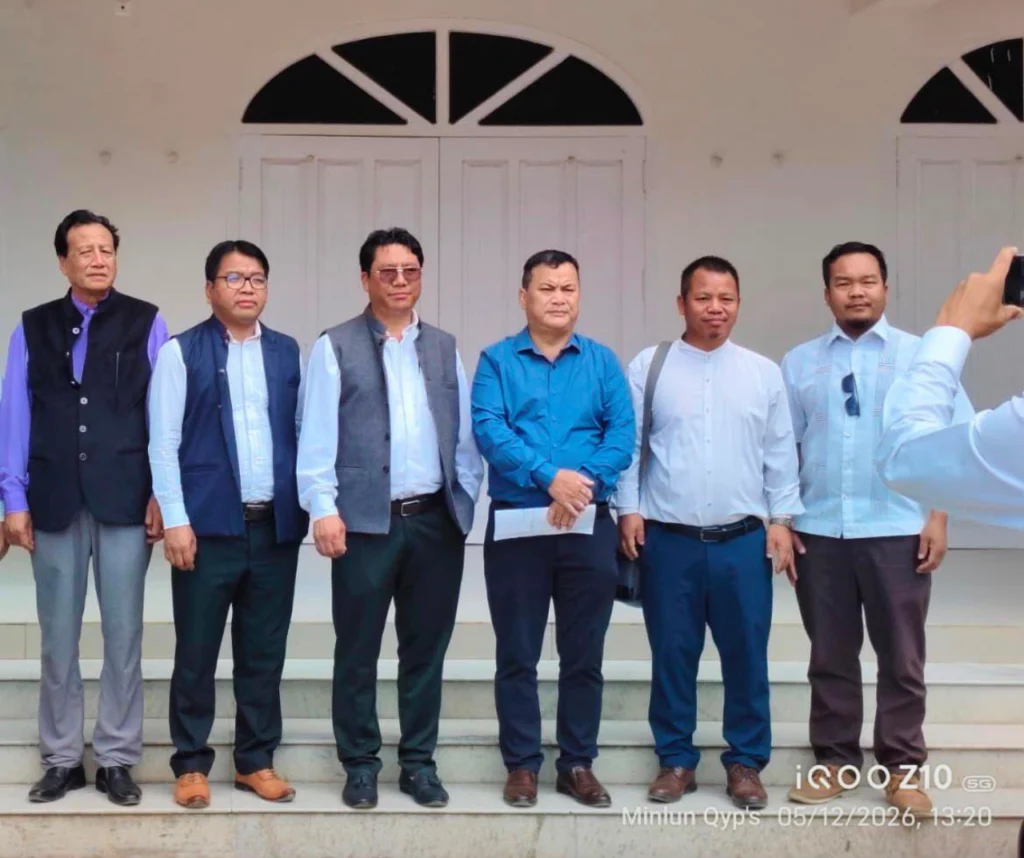
Churachandpur woke up to another day of uncertainty as markets remained shut, public transport disappeared from the roads, and silence spread across the hill town following an indefinite shutdown called by Kuki-Zo and Thadou civil society organisations.
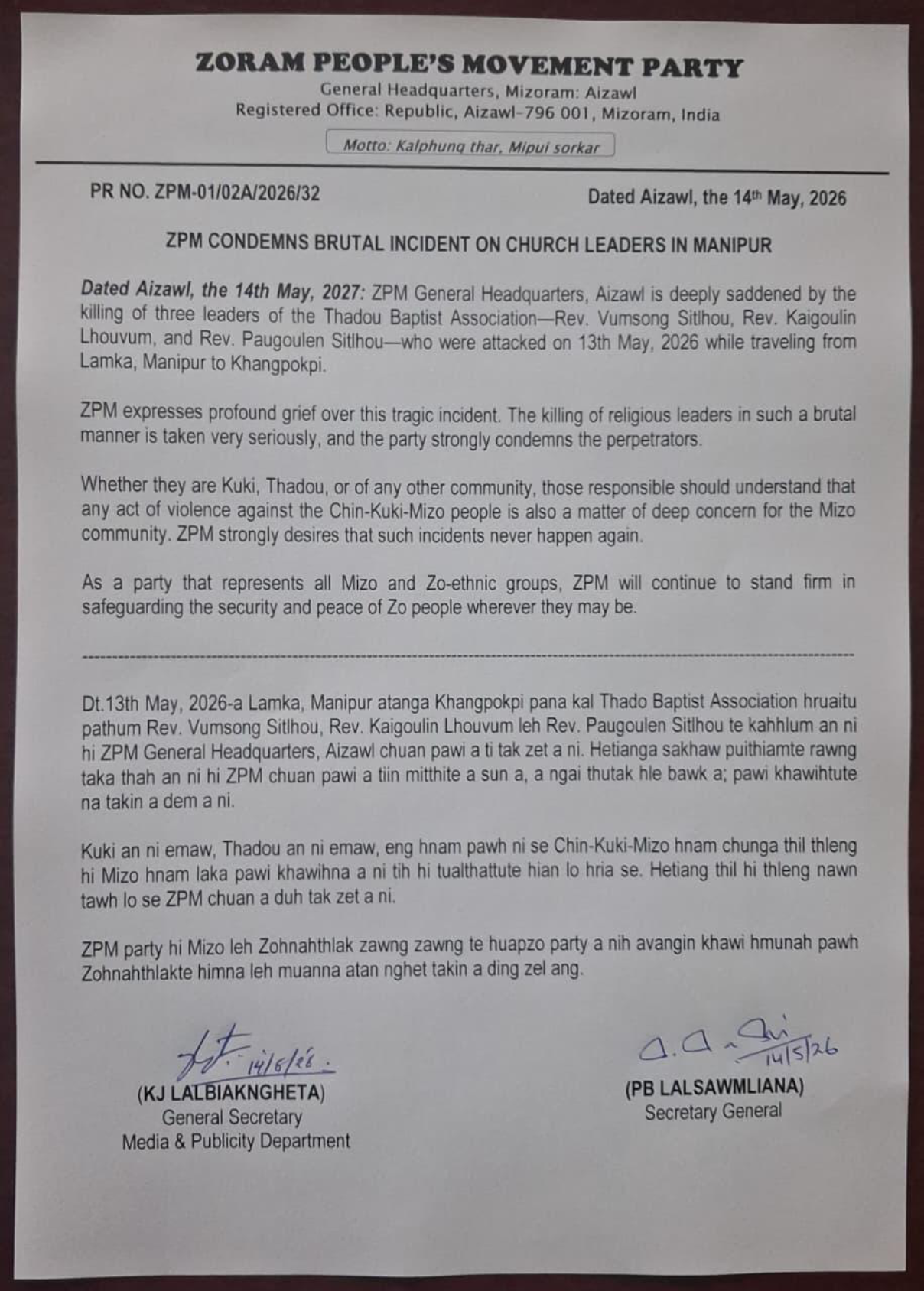
The shutdown was triggered after the killing of three church leaders associated with the Thadou Baptist Association (TBA) in an ambush on the Churachandpur–Kangpokpi road on 13 May. The attack, which also left several others injured, has once again deepened fear and anger in a region already exhausted by more than three years of conflict, displacement and distrust.
For many residents in Churachandpur, the shutdown is not merely a political response. It is a collective expression of mourning, insecurity and unresolved trauma.
According to reports, the church leaders were returning from a conference in Churachandpur when unidentified armed men attacked their vehicles near the Kotzim-Kotlen stretch in Kangpokpi district. Civil society organisations condemned the killings as an attack on peace and humanity, while local groups called for justice and accountability.
A region living through recurring shutdowns
In Manipur’s conflict-hit hill districts, shutdowns have increasingly become part of everyday political life. Since the ethnic violence erupted in May 2023, Churachandpur and neighbouring districts have repeatedly witnessed indefinite shutdowns, economic blockades, protest rallies and restrictions on movement.
Each shutdown leaves behind both visible and invisible consequences.
Schools remain closed or only partially functional. Daily wage earners lose crucial income. Patients struggle to access healthcare. Small businesses face mounting losses. Young people already dealing with interrupted education and unemployment are pushed further into uncertainty.
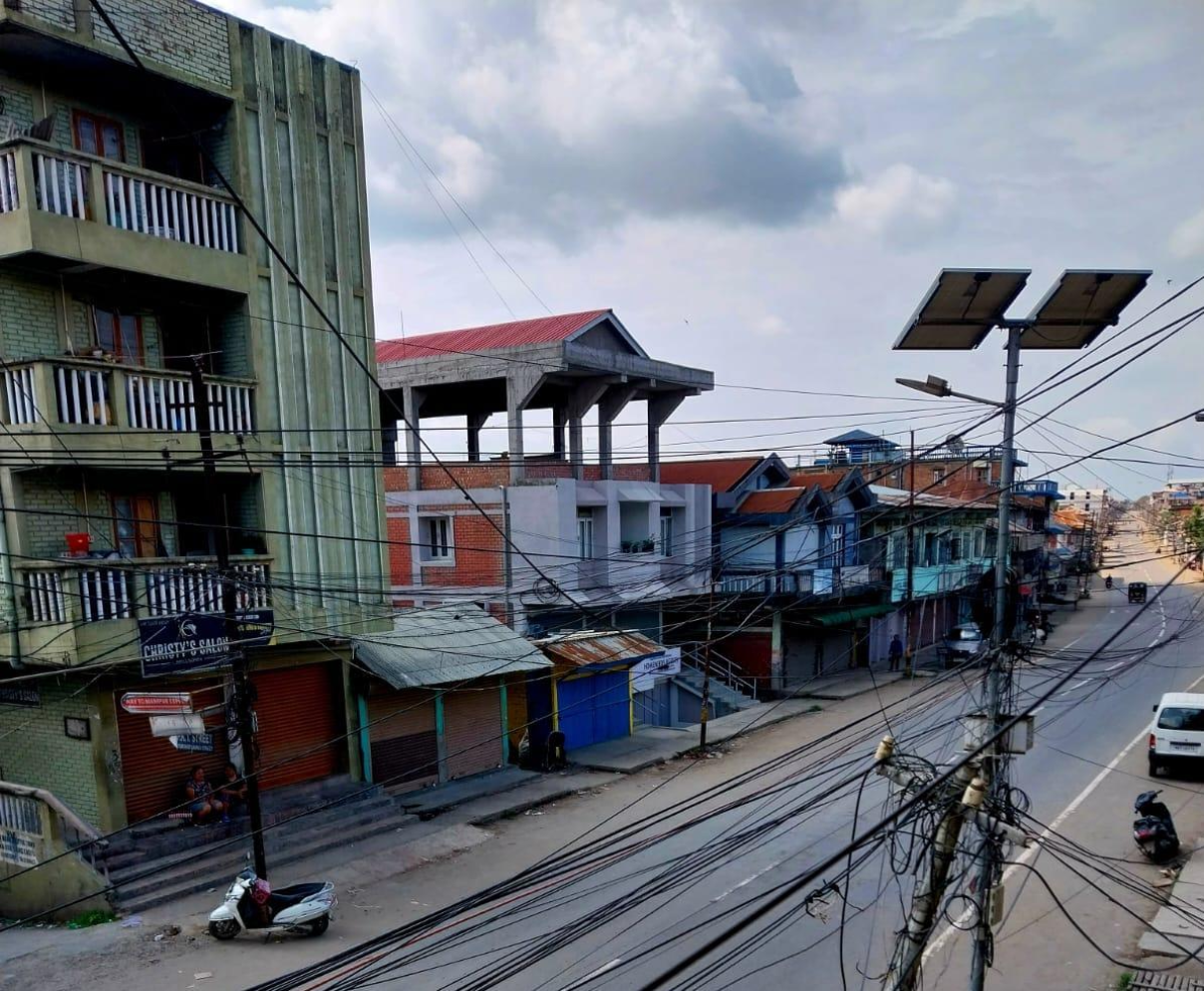
For women-led households, displaced families and persons living in relief camps, the impact becomes even harsher.
Local residents say the latest shutdown carries a deeper emotional weight because the victims were church leaders — individuals often seen as mediators, counsellors and moral voices within the community.
“The killing of religious leaders has shaken many people psychologically. There is fear everywhere,” said a resident of Churachandpur, requesting anonymity due to security concerns.
The collapse of trust
The latest incident also exposes a continuing collapse of trust across communities and institutions in Manipur.
Over the past three years, repeated violence, targeted killings, armed mobilisation and competing narratives have fragmented social relations in both the hills and the valley. Buffer zones, heavy militarisation and segregated movement patterns have transformed the geography of everyday life.
For many in the hill districts, the ambush reinforces the perception that civilian spaces are no longer safe.
The continuing inability to restore normalcy has also generated frustration among ordinary people who feel trapped between armed actors, political uncertainty and prolonged administrative instability.
While state authorities condemned the killings and promised action, civil society groups argue that repeated condemnations have not translated into meaningful justice or long-term peace-building.
Humanitarian consequences continue
The prolonged instability in Manipur has already produced a major humanitarian crisis.
Thousands remain displaced across relief camps and temporary settlements. Children have faced long disruptions in education. Women continue to shoulder the burden of caregiving in conditions of insecurity and economic collapse.
Mental health concerns are also growing quietly beneath the political crisis.
Community workers and humanitarian groups have repeatedly pointed to rising anxiety, trauma and hopelessness among young people who have spent crucial years of their lives amid violence, shutdowns and uncertainty.
The latest shutdown in Churachandpur reflects not only immediate anger over the killings but also the cumulative exhaustion of communities living under prolonged conflict.
Church body calls for justice and disarmament
The All India Catholic Union (AICU) has strongly condemned the killing of pastors and their companion in Kangpokpi district, describing the attack as a grave assault on peace and humanity amid the continuing ethnic violence in Manipur.
The victims were reportedly ambushed while returning from a church conference in Churachandpur, with the AICU emphasising that they were unarmed church leaders dedicated to serving their communities.
The organisation mourned Reverend Vumthang Sitlhou, president of the Thadou Baptist Association and former General Secretary of the Manipur Baptist Convention, Reverend Kaigoulen, Pastor Paogoulen and the driver travelling with them. It also prayed for the recovery of Reverend S.M. Haopu, Reverend Hekai Simte, Reverend Paothang and others injured in the attack.
Calling for an immediate, impartial and transparent investigation, the AICU urged both the Government of India and the Government of Manipur to ensure swift and credible justice.
The statement linked the killings to the broader collapse of peace and constitutional governance in Manipur since the outbreak of violence on 3 May 2023, which has left more than 250 people dead and displaced over 60,000 others. The organisation also expressed concern over the continued presence of looted weapons in civilian hands and the unchecked activities of armed groups and militias.
Describing the situation as unacceptable in a constitutional democracy, the 107-year-old organisation reminded both the Union and state governments of their constitutional responsibility to restore the rule of law.
The AICU further called for the restoration of law and order, disarmament of armed groups, protection for church leaders and humanitarian workers, and a time-bound political dialogue involving Meitei, Kuki-Zo and Naga representatives. Stressing that peace cannot be achieved through security deployment alone, the organisation appealed for justice, rehabilitation of displaced families, and an end to violence, fear and communal division in Manipur.
A future still uncertain
As shutdowns continue and public life remains paralysed, many residents fear that Manipur is moving further away from reconciliation.
The killing of church leaders — figures associated with peace, faith and community service — has amplified anxieties about where the conflict is heading.
For now, Churachandpur remains tense and uncertain.
Behind the closed shops and empty streets lies a deeper question that continues to haunt Manipur: how long can a society survive when grief becomes routine and normalcy remains permanently suspended?