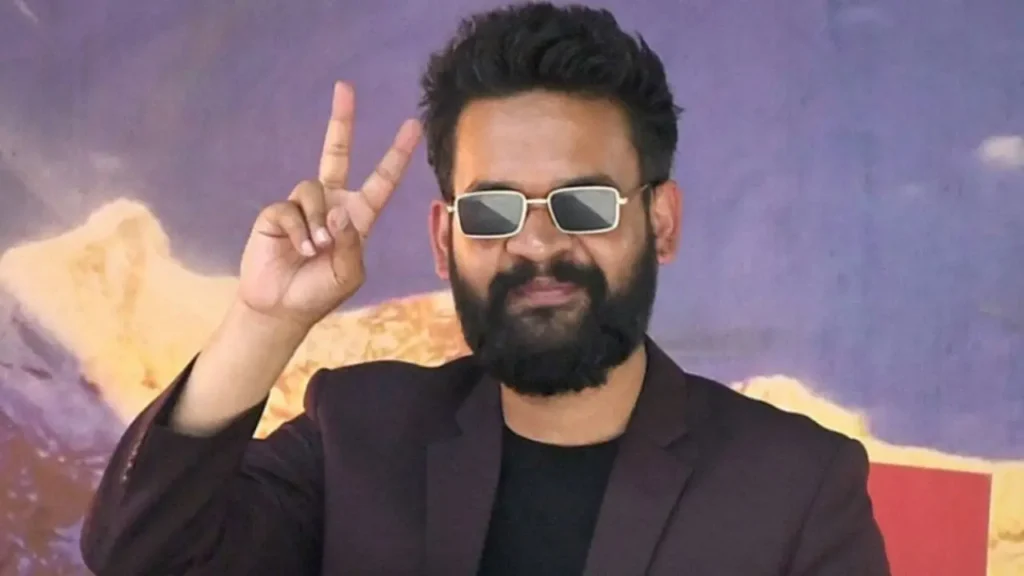
In an era where politics is no longer about ideology but perception management, algorithm warfare and emotional branding, Balendra Shah stands as a case study in masterful execution. From rapper and structural engineer to Kathmandu mayor and, by 2026, Nepal’s prime minister, Shah’s rise was engineered through deliberate marketing, branding and psychological techniques that turned scarcity into power and silence into spectacle.
His strategy—rooted in the “less talk, more delivery” archetype—contrasts sharply with the faltering approaches of veterans like KP Sharma Oli and fellow Harka Sampang Rai. Where Shah built a Teflon brand of quiet competence, others clung to outdated rhetoric or raw confrontation, exposing the high cost of poor media manipulation in Nepal’s hyper-digital landscape.
Balen Shah’s branding strategy: Scarcity, silence, and spectacle
At the centre of this transformation was a carefully engineered persona. His team seemingly gave him a persona as the anti-establishment “doer who doesn’t talk much”, given the attention he pays to his absence and emphasis on brief, sharp messages. In May 2026, he opted to miss an important policy meeting, further adding to the buzz.
As one analyst noted, this manufactured desperation: “Janatama Balen le kahile bollan? bhannne bhok jagau nu.” The result? Viral speculation and an “epic punchline” moment that dissed the old guard without overexposure. This scarcity principle—psychology’s FOMO (fear of missing out)—mirrors Calvin Coolidge’s “Silent Cal” persona, which an enepalese analysis explicitly compared to Shah: both leaders projected stoic discipline, letting actions (urban cleanup in Kathmandu, anti-encroachment drives) speak louder than speeches.
At the same time, social media became the scalpel. Shah took a different route, bypassing the traditional Nepali media gatekeepers and making big news announcements directly to his millions of followers on Facebook. Memes, rap-dense clips and real-life enforcement footage helped to do the rest in promoting his engineer-rapper credibility: vulnerable yet authoritative.
He never went on an offensive rampage, but cultivated “brand empathy”, with visuals that were relatable and achievable, such as playing cricket and interacting with ordinary people, while maintaining an unrelenting platform for anti-corruption. The core symbols were repeated (“Singh Durbar jalai dinchu” made into a metaphor) and later softened to strengthen the outsider narrative.
These tactics—social proof via user-generated content, emotional branding against elite “dalals” and algorithmic optimisation—drove youth turnout and scaled his mayoral success nationally. Global parallels abound: Donald Trump’s repetitive “fake news” mantras and outsider branding created cult-like loyalty through emotional repetition; Narendra Modi’s digital yatras and personalised rhetoric fused nationalism with micro-targeted perception. Shah adapted these for Nepal’s context—low digital literacy in rural areas offset by urban Gen Z virality—proving politics is now “algorithm warfare”.
On the more positive side, through his strong social media influence, Balen Shah has been actively advocating for the “Nepal First” Policy and urging followers to prefer local products over imports. His administration has implemented compulsory customs duty on goods costing more than NRs 100. The cross-border movement of Rs. 100 was enforced to curb informal trade, support domestic industries and raise revenue.
On the cultural-economic side, Prime Minister Shah has recently been posting about “Made in Nepal” products during his social media rollouts, asking people to reconsider their preferences for local clothing and craftsmanship. Likewise, his “Say Cheese. DDC ko Cheese” captioned photo went viral, leading to a “Balen Effect”: the product was sold out within a few hours, and product sales of Dairy Development Corporation(DDC) skyrocketed due to the increased demand for supporting the herders of the Himalayas and the production of state-owned products.
Like Tamil Nadu’s newly elected CM, Thalapathy Vijay, both leaders have explicitly compared their digital strategies and popular appeal, driving nationalistic economic momentum through incidental journeys of youth-driven virality, authentic personal branding, and direct calls to motivate consumers to purchase indigenous products.
In contrast, KP Sharma Oli represented the obsolescence of traditional branding. The veteran CPN-UML leader was dependent on a network of party ideologues, coalition politics and state-sponsored narratives, engaging in a politics of transactions that led to a growing public seething for something different. Oli’s social media ban in 2025 was promoted as a measure against misinformation but seen as a form of censorship, leading to protests by Gen Z, who ousted his government, alleging cronyism and governance paralysis.
Yet Oli failed to adapt. While Shah rendered media “irrelevant” through direct digital channels, Oli’s camp clung to legacy platforms and even withheld official accounts post-resignation, fuelling vendetta narratives. Psychologically, this overexposure without substance triggered the opposite of FOMO—reactance and distrust. Branding research shows repetition without authenticity erodes credibility; Oli’s conservative shift and unfulfilled promises became a cautionary tale of elite capture, not emotional connection.
The reason behind the failure of Harka Sampang Rai
Harka Sampang Rai, Dharan’s once independent mayor, offers a closer but cautionary parallel. Like Shah, he rose on an anti-establishment grassroots appeal—through voluntary labour for water projects, youth mobilisation and anti-drug drives. Yet his branding faltered into divisiveness.
Raw, unfiltered Facebook posts attacking rivals and procedural lapses (opaque spending, court clashes) fractured support. Sampang’s recent use of Shah’s minor daughter’s photo in propaganda during the protest in support of squatter politics drew backlash for media exploitation without consent.
Where Shah’s team curated scarcity and consistency, Sampang’s confrontational style created “social fractures” and scrutiny over governance opacity. Public records and audits painted a “house of cards”—promising self-reliance but delivering chaos. From a psychological point of view, this was founded on a breach of the rules of reciprocity and trust, which voters clearly demanded, but not endless feuds.
His Shram Sanskriti Party, though gaining a foothold locally, failed to rise nationally, and the bottom line is that crisp action without demystification of perception management is a source of admiration, not a mandate.
The accountability gap: How brands and public figures botch crisis response
Nepal’s media and branding ecosystem often mirrors these political missteps, exploiting psychological triggers like virality while dodging responsibility—a pattern seen globally from corporate PR disasters to influencer scandals. Take Aloe Herbal, a Nepali brand riding Balen’s popularity wave. A few days ago, they posted AI-generated images of Shah on Instagram, capitalising on the trend without consent.
As users and critics, including our team, pointed out, it was an ethical violation and a violation of intellectual property. But the brand appears to have had no qualms about quietly removing the post. No apology, no acknowledgement of unauthorised use—just erasure. This “ghosting” tactic preserves short-term optics but erodes long-term trust; psychology shows consumers punish perceived inauthenticity harder than the original sin.
Similarly, prominent media personality Sanjay Silwal Gupta—veteran of radio, TV and podcasts since 2008—inaccurately described Dr. Anil Bikram Karki, then president of Nepal Medical Association (2023-2026), as “Nepal’s first Doctor of Medicine (DM) Haematologist”. The claim ignored Dr. Anil Bikram Karki’s actual expertise as a head and neck cancer surgeon and the decades of rigorous training behind his achievements, while also overshadowing the dedicated expertise of Dr. Bikram Karki, who holds the distinction of being Nepal’s first Doctor of Medicine (DM) Haematologist who successfully completed his specialised training in Haematology at the National Academy of Medical Sciences, Bir Hospital, in 2025, under the guidance of Professor Dr. Bishesh Sharma Poudyal at the Civil Service Hospital.
After public comments and direct emails from critics and our team, Gupta’s team quietly corrected the post. Again, there was no formal apology, and there was no appropriate recognition of the doctor’s dedication. In Nepali digital media, it’s so common to make such silent edits where speed is preferred over accuracy, and exaggerated content wins the viral game.
Globally, the Trump-era controversies or Modi’s digital ecosystem face similar scrutiny: missteps in representation trigger backlash, yet failure to own errors signals weakness. In Nepal’s low-accountability environment, this amplifies cynicism—media manipulates psychology for clicks but refuses the reciprocity that builds enduring brands.
Why Balen thrived while others crumbled
Balen Shah’s success boils down to harnessing FOMO as fuel, not flaw. By engineering scarcity (“quiet doer” positioning), he created public hunger for his rare words, turning psychology into power. With algorithm-optimised, direct and emotionally engaging media manipulation, he established an authentic-looking brand that defied all conventional attacks.
KP Oli and Harka Sampang could not master these tools precisely and hence failed. Oli’s FOMO-driven cling to old-guard rhetoric and control tactics (bans, coalitions) alienated a digitally native generation, breeding the very protests that ousted him. Sampang’s uncurated confrontations triggered public FOMO fatigue—endless drama without curated payoff—leading to divisiveness and stalled momentum.”
In Nepal and worldwide, leaders who treat branding as perception theatre without accountability or adaptation condemn themselves to irrelevance. Shah proved the inverse: in the age of optics, the strongest brand isn’t the loudest—it’s the one that makes silence scream.