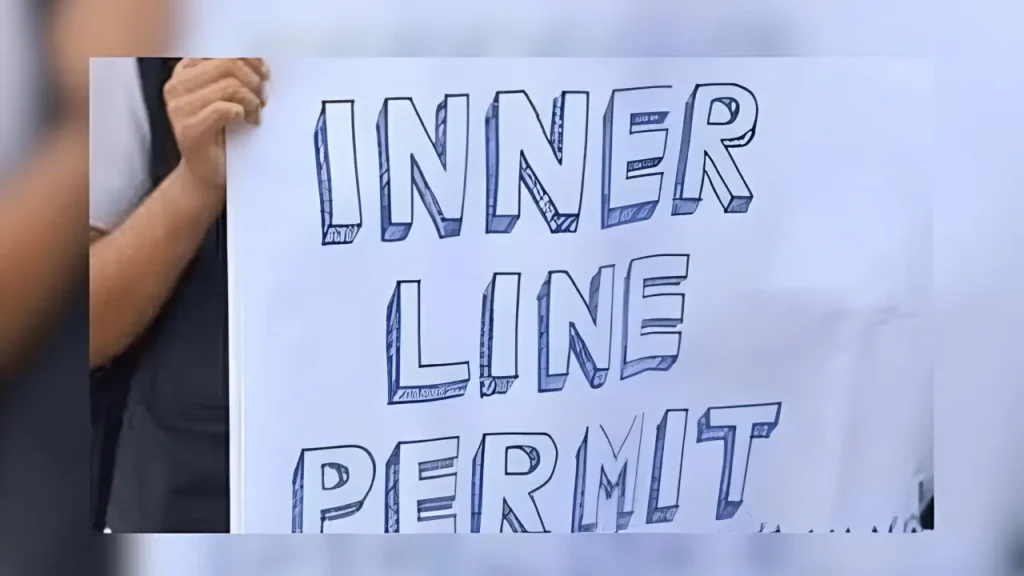
The recent 36-hour bandh led by the Arunachal Scheduled Tribe Bachao Andolan Committee (ASTBAC) has once again pushed the Inner Line Permit (ILP) issue into the centre of political discourse in Arunachal Pradesh. What may appear to outsiders as merely an administrative concern is, for many indigenous communities of the state, deeply tied to questions of identity, land, political protection, and cultural survival.
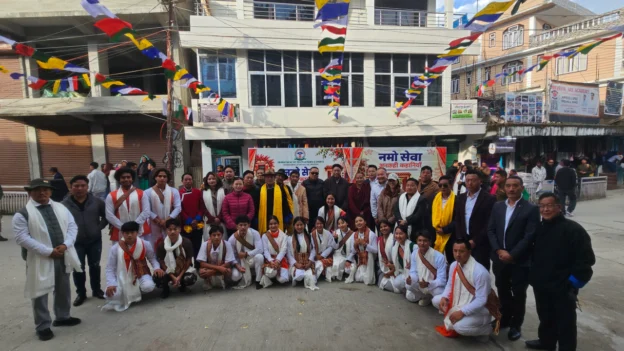
What made the recent agitation particularly notable was not simply the demands raised, but the scale of voluntary public participation it witnessed. Unlike many protests in Northeast India that are often driven primarily by student unions, political organisations, or pressure groups, spontaneous mass mobilisation by ordinary citizens remains relatively uncommon in Arunachal Pradesh.
Yet, the ST Bachao movement saw people from different walks of life joining demonstrations, discussions, and public campaigns with unusual intensity. The participation reflected a growing collective anxiety that the safeguards protecting indigenous communities are gradually weakening.
The agitation did not emerge overnight. It is rooted in long-standing concerns regarding illegal migration, weak implementation of protective laws, alleged misuse of Scheduled Tribe (ST) certificates, and fears of demographic transformation. Beneath the immediate controversy lies a larger question haunting many Arunachalees today: if the protective mechanisms themselves begin to fail, what remains to safeguard indigenous identity in the state?
The colonial origins of the Inner Line Permit
The Inner Line Permit (ILP) system traces its origins to the Bengal Eastern Frontier Regulation (BEFR), 1873, enacted by the British colonial administration on 27 August 1873 and brought into force on 1 November the same year. Initially introduced as an administrative mechanism for the “peace and governance” of the eastern frontier regions, the regulation covered districts such as Kamrup, Darrang, Nowgong, Sibsagar, Lakhimpur, Cachar, the Khasi and Jaintia Hills, Garo Hills, and Naga Hills. Many of these territories now fall within present-day Northeast Indian states.
Under Section 2 of the regulation, the colonial government was empowered to draw an “Inner Line” beyond which outsiders could not travel without official permission. The British administration justified the regulation as a means to minimise conflict between the hill tribes and plains populations. However, historians and scholars have pointed out that the system was equally connected to protecting colonial commercial interests, particularly tea plantations, oil reserves, and trade routes in the frontier areas.
The British largely followed what scholars describe as an “isolationist policy” towards the hill tribes of the Northeast, preferring limited interference in tribal affairs while maintaining strategic control over the frontier. The ILP mechanism therefore functioned both as a political buffer and as a tool of regulated access into tribal territories.
After India gained Independence in 1947, the ILP system was not abolished despite its colonial origins. Instead, the Government of India retained the Bengal Eastern Frontier Regulation, replacing the colonial term “British subjects” with “Citizens of India.”
India retained the ILP mechanism in Arunachal Pradesh, Nagaland, and Mizoram, while Manipur was brought under the ILP regime in 2019 following longstanding demands for greater protection of indigenous identity and demographic safeguards. The decision to continue the system was closely linked to the unique realities of the Northeast, particularly regions inhabited by small tribal communities with distinct customary laws, land ownership systems, and cultural practices.
In the case of Arunachal Pradesh, then known as the North-East Frontier Agency (NEFA), the issue carried even greater significance because of its sensitive geopolitical location bordering China, Bhutan, and Myanmar. The continuation of the ILP also reflected growing concerns regarding demographic change in Northeast India.
Migration, commercial expansion, and post-Partition population movements had already transformed the social composition of several regions in the Northeast. Policymakers feared that numerically small tribal communities in frontier areas could become economically and politically marginalised if unrestricted settlement was permitted.
Why ILP matters deeply in Arunachal Pradesh
Arunachal Pradesh is home to numerous tribal communities, each with distinct languages, customs, oral traditions, and social systems. Most tribes are numerically small, geographically scattered, and culturally vulnerable. For many residents, the fear is not simply migration, but becoming minorities within their own homeland.
Across Northeast India, memories of demographic transformation continue to shape political consciousness. Tripura’s indigenous communities becoming minorities in their own state often serves as a cautionary example in discussions surrounding migration and identity.
Historical experiences in neighbouring states such as Assam also continue to shape these anxieties. Large-scale migration, particularly illegal immigration from Bangladesh, has long been a politically sensitive issue in Assam, fuelling mass movements like the Assam Agitation (1979–1985) and debates surrounding identity, land, and citizenship.
Concerns are often raised that undocumented migrants gradually disperse from entry points like Assam and West Bengal into other parts of the Northeast in search of work and settlement opportunities. Within Arunachal Pradesh, such anxieties are further intensified by public perceptions linking unchecked migration with rising instances of crime, land encroachment, document fraud, and pressure on local resources.
Whether entirely accurate or not, these perceptions have significantly shaped public opinion surrounding the demand for stricter implementation of the ILP system.
For many indigenous communities in Arunachal Pradesh, the anxiety surrounding migration is not necessarily rooted in hostility towards fellow Indian citizens, but in the fear of gradual marginalisation within a small and demographically fragile society.
In a state where tribal communities are numerically limited and heavily dependent on land, forests, and customary systems for both livelihood and identity, concerns over unchecked migration are often framed through the lens of resource sharing, cultural preservation, and political security.
Many Arunachalees fear that increasing inflow from outside the state, whether for labour, trade, or settlement, could eventually place pressure on employment opportunities, land ownership patterns, welfare resources, and indigenous political representation. These anxieties are shaped not only by present realities, but also by historical experiences witnessed elsewhere in the Northeast, where demographic shifts have altered social and political equations over time.
A local resident who had voluntarily joined the protest remarked that the movement was not against people coming to Arunachal Pradesh for work through legal means. According to him, the real concern was illegal entry into the state, the forging of documents, and allegations that some authorities were accepting bribes and allowing individuals to enter even without proper verification.
Several others present at the protest echoed similar sentiments, stressing that their demand was not for isolation from the rest of the country, but for stricter and more transparent implementation of existing protective mechanisms.
The concern, therefore, is less about rejecting outsiders outright and more about protecting a delicate demographic balance in a state where communities fear losing control over their own cultural and economic future. For many people, the Inner Line Permit represents a mechanism through which interaction with the outside world can be regulated rather than unrestricted, allowing development and mobility while still preserving indigenous identity and social stability.
Government assurances and proposed reforms
Following protests and public pressure, the Arunachal Pradesh government provided assurances to ASTBAC regarding several demands. Among the key proposals discussed were the digitisation of the ILP system, introduction of QR code-based verification, improved monitoring at entry gates, and stronger mechanisms for checking overstaying individuals.
The government also assured discussions regarding concerns over ST certificate verification and promised to examine loopholes within the existing system.
Digitisation has become one of the movement’s central demands because many believe that manual systems are vulnerable to corruption and manipulation. A centralised digital database linked to district administrations and enforcement agencies could theoretically improve transparency and monitoring.
However, many protesters remain sceptical. They argue that technological reforms alone cannot solve the problem if corruption and political interference continue within administrative systems.
The criticism of the movement
Despite receiving significant support, the ST Bachao Andolan has also faced criticism. Some observers argue that the movement risks encouraging xenophobia and hostility towards all non-local populations, including migrant labourers who contribute significantly to the state’s economy.
Critics point out that there is an important distinction between illegal settlement and ordinary migrant workers seeking livelihoods. Excessive suspicion towards outsiders may deepen social divisions and create an atmosphere of fear and exclusion.
There are also concerns regarding certain demands related to women’s rights and tribal identity. Debates surrounding APST women married to non-APST men have triggered criticism from those who believe that identity protection should not come at the expense of gender equality and individual freedoms.
This reveals a larger challenge faced by many indigenous societies worldwide: how to preserve collective identity while remaining democratic and inclusive internally.
When protection becomes a political anxiety
The debate surrounding the Inner Line Permit in Arunachal Pradesh cannot be reduced to a mere administrative issue. At its core lies a deeper insecurity shared by many indigenous communities who fear that the existing safeguards protecting their land, identity, and political rights are gradually weakening.
The intensity of the recent protest called by ST Bachao Andolan reflects this growing unease.
At the same time, the debate also reveals the contradictions shaping Arunachal Pradesh today. The state depends heavily on migrant labour for construction, trade, and urban services, making interaction with the outside world economically unavoidable. Yet, this very dependence generates fears of cultural dilution and political marginalisation within a demographically small society.
The anxiety, therefore, is not simply about outsiders entering the state, but about the perceived inability of institutions to regulate this movement transparently and fairly.
The anger expressed during the protests was directed as much towards governance failures as toward migration itself. Allegations of forged documents, corruption at checkpoint gates, and weak enforcement mechanisms have deepened public distrust in the state’s ability to protect existing safeguards.
In this context, the ILP has acquired a meaning far beyond a travel permit. It has become symbolic of whether indigenous communities still possess meaningful control over the pace and terms of social change occurring around them.
However, the movement also raises difficult questions. While concerns over demographic vulnerability are genuine, there remains the risk that public frustration may gradually blur the distinction between undocumented entry and ordinary migrant workers seeking livelihoods. This is where the challenge becomes particularly delicate.
The demand for protection must coexist with the realities of economic interdependence and constitutional inclusivity.
Arunachal Pradesh today stands at a crossroads where it must balance economic modernisation with indigenous protection, and development with cultural survival. Whether the ILP system can continue to function as an effective safeguard will depend not only on stricter enforcement, but also on the state’s ability to rebuild public trust.
Ultimately, the ILP debate has always been about who gets to belong, who determines belonging, and how a small indigenous society negotiates survival in a rapidly changing world.