The story of China’s increasingly direct intervention in support of Myanmar’s military junta is becoming far more visible after the country’s controversial December 2025 elections. What once appeared to be quiet diplomatic backing has now evolved into a far more active political and strategic role, particularly in territories near the China-Myanmar border that remain under rebel control.
Over the past several months, Beijing has steadily expanded its influence over the conflict dynamics in northern Myanmar. Its role is now no longer confined to mediation or economic engagement. Instead, China appears to be actively shaping the conditions under which the Myanmar military seeks to reclaim territories lost after the launch of Operation 1027 by the Three Brotherhood Alliance.
The clearest indication of this shift has emerged in northern Shan State, where the Myanmar military regime has reportedly gained enough confidence to directly pressure armed ethnic groups to vacate territories captured during the anti-junta offensives.
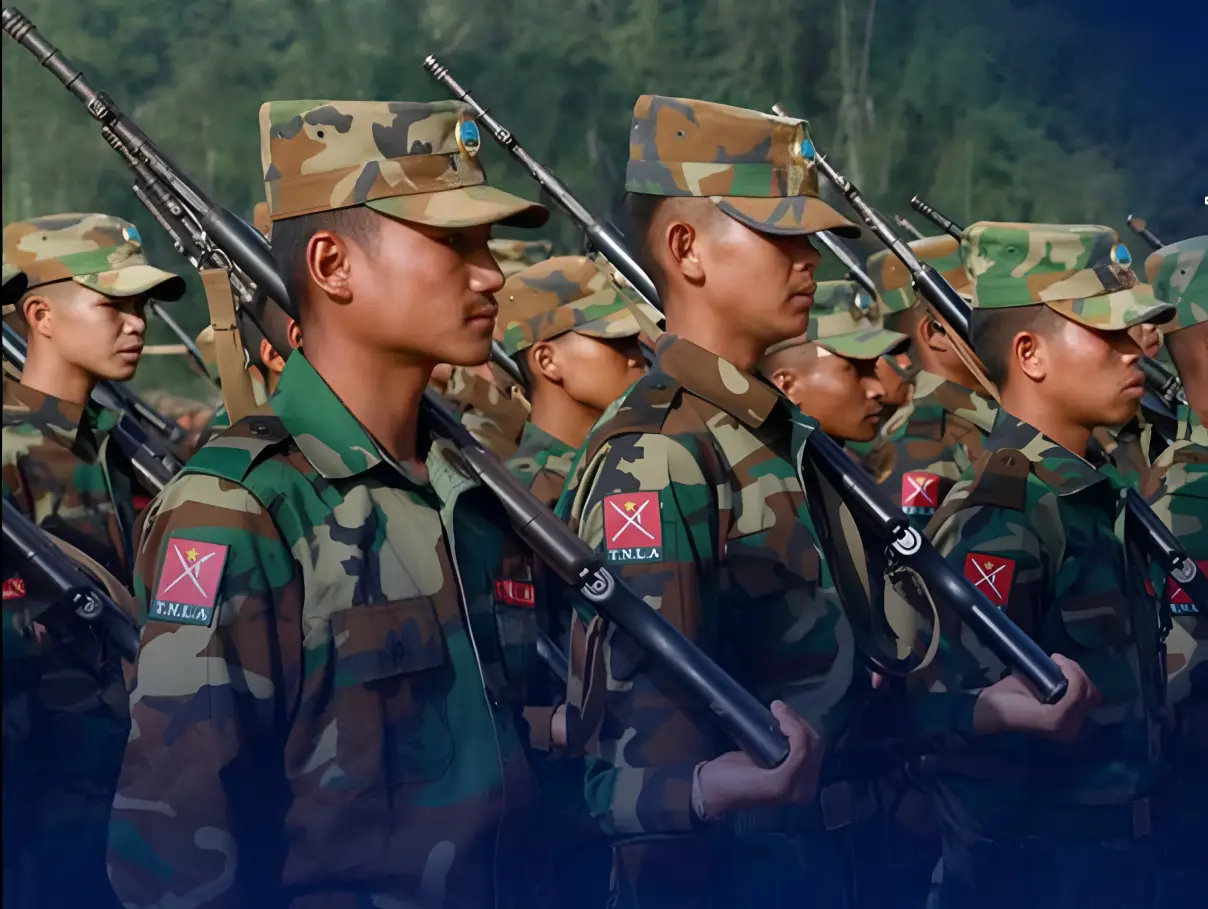
One of the main targets of this pressure has been the Ta’ang National Liberation Army (TNLA), among the most powerful rebel groups operating in northern Shan State. The junta has reportedly demanded that the TNLA relinquish several strategically important areas currently under its control.
According to reports by DVB News, the TNLA was asked during a meeting with regime representatives in Kunming, China, on May 12 to hand over control of Namhkam, Namtu, Mongngawt and Monglon towns in northern Shan State. The Burmese media outlet quoted a military regime official, speaking on condition of anonymity, as saying that the TNLA rejected the demand to surrender the four towns located between 67 and 214 kilometres north and west of Lashio Township.
The development is significant because it follows a China-brokered ceasefire agreement reached in Kunming in October 2025 between the TNLA and the Myanmar military. That agreement resulted in the TNLA handing over Momeik Township in Shan State and Mogok Township in Mandalay Region to the regime.
Even before that, the military junta had managed to recapture Hsipaw, Kyaukme and Nawnghkio towns from the TNLA during a major counteroffensive last year. These developments collectively suggest that China’s mediation efforts are now increasingly aligned with the junta’s broader territorial objectives.
DVB News also reported the release of 110 junta prisoners captured by the TNLA during Operation 1027, which began on October 27, 2023, and later concluded under a China-brokered ceasefire signed on October 29.
Another politically important development emerged when the TNLA’s political wing, the Palaung State Liberation Front (PSLF), sent a congratulatory message to Min Aung Hlaing on April 15, just days after he was sworn in as Myanmar’s president following elections widely dismissed by critics and opposition groups as illegitimate.
Independent Myanmar observers believe these developments are among the most crucial for the junta’s long-term plans to establish a quasi-civilian government emerging from military control. China’s involvement, they argue, has become central to that strategy.
Beijing’s support for the post-election political order in Myanmar has become increasingly explicit. On April 25, Chinese Foreign Minister Wang Yi visited Naypyitaw, marking the first high-level visit by a senior Chinese political leader since Min Aung Hlaing assumed the presidency.
The timing of the visit carried major political significance. Myanmar’s January 2026 elections had already been dismissed by Western governments and the opposition National Unity Government as a “sham”. China, however, adopted a sharply different position. Even before the polls, Beijing had framed the electoral process as part of a broader pathway towards stability and conflict resolution.
Wang Yi’s visit effectively formalised China’s support for the new political arrangement in Naypyitaw. More importantly, it demonstrated that Beijing views the consolidation of the junta-led administration as necessary for restoring stability in Myanmar.
For China, the stakes extend far beyond politics alone.
Myanmar remains deeply important to Beijing’s strategic calculations. China is Myanmar’s largest trading partner and has invested heavily in infrastructure, connectivity and energy projects across the country. At the same time, Myanmar provides China with direct strategic access to the Indian Ocean, strengthens its energy security corridors and serves as a critical buffer along China’s southwestern frontier.
Even amid continuing civil war and political instability, Beijing appears determined not to retreat but to deepen its engagement.
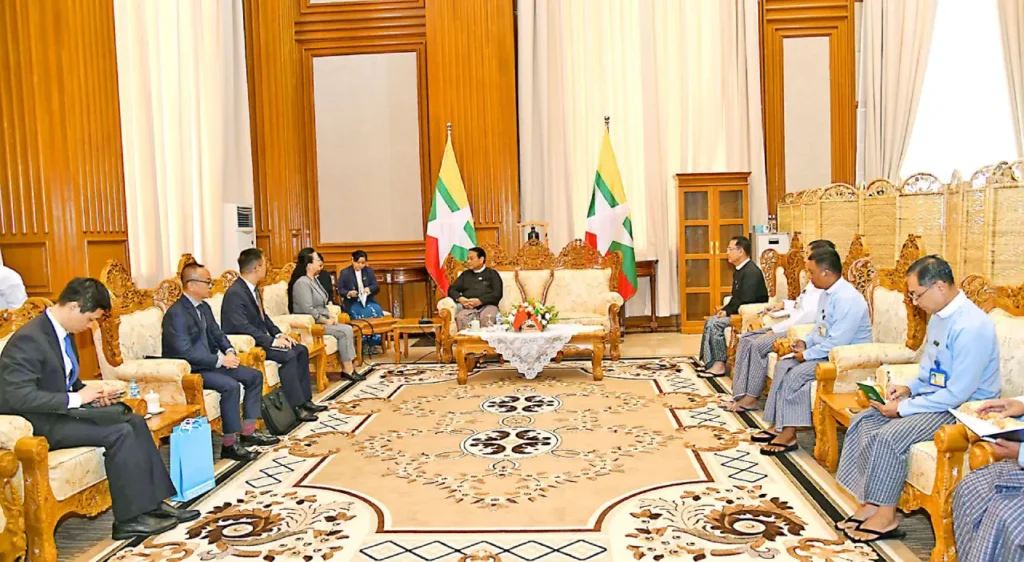
That strategic commitment was reflected once again on May 19 when Ma Jia, Ambassador of the People’s Republic of China to Myanmar, visited Naypyitaw. The visit reinforced what increasingly appears to be a carefully calibrated partnership rooted not in ideology, but in mutual strategic necessity.
During the visit, the Chinese ambassador underlined that cooperation between the two countries would continue under the new five-year joint cooperation framework for 2026–2030. She reiterated Beijing’s commitment towards building what China describes as a “China-Myanmar community with a shared future.”
She also emphasised that China had consistently supported Myanmar throughout the political transition and noted that the National People’s Congress of China had been among the first to send congratulations to the newly formed parliament emerging from the elections. According to her, efforts would continue to deepen parliamentary and political ties between the two countries.
What is becoming increasingly clear is that the Chinese Communist Party leadership under Xi Jinping now views conflict management in Myanmar as essential to protecting China’s long-term strategic interests.
This position has repeatedly surfaced during engagements between Chinese officials and Myanmar authorities, where Beijing has consistently stressed the importance of maintaining peace and stability along the shared frontier. The concern is immediate and practical: prolonged instability in Myanmar carries serious spillover risks for China’s border provinces.
At the same time, Beijing has continued urging the Myanmar government to revive the National Ceasefire Agreement process and expand dialogue with as many armed groups as possible.
Yet China’s position also contains another important layer. While encouraging negotiations, Beijing has simultaneously maintained that the Myanmar state has the right to defend itself and restore governance in territories captured by rebel forces, including areas controlled by the People’s Defence Force (PDF).
This dual-track approach reveals the broader Chinese strategy now unfolding in Myanmar — conflict containment combined with controlled military stabilisation under a political order Beijing considers manageable.
For the junta, Chinese backing offers legitimacy, diplomatic cover and strategic breathing space. For Beijing, a more stable Myanmar under a predictable power structure secures investments, protects border security and preserves long-term geopolitical influence in one of Asia’s most critical frontier states.