Bangladesh witnessed a night of chaos and escalating violence over the past 24 hours following the death of Sharif Osman Hadi, a prominent leader of the so-called July uprising, who succumbed to gunshot injuries in Singapore. His death triggered widespread unrest across the country, marked by attacks on media houses, journalists, minority communities, political opponents, and Indian diplomatic missions, pushing the fragile security situation to a new low.
Tensions peaked after radical groups and their supporters marched towards Indian diplomatic establishments in Khulna and Rajshahi, forcing the temporary closure of the two Indian consulates. Although police managed to prevent large-scale destruction at these missions, protests quickly spiralled into violence elsewhere. Leading media organisations, including The Daily Star and Prothom Alo, saw their offices attacked and set on fire. Nurul Kabir, editor of New Age, was reportedly threatened when he attempted to stop assailants from torching media premises. In a narrow escape, staff members of The Daily Star and Prothom Alo managed to flee by climbing onto rooftops before being rescued by fire service personnel using ladders.
#WATCH | Bangladesh: Visuals of the aftermath from The Daily Star office in Dhaka, which was burned down by protesters.
After the death of Osman Hadi, a key leader in the protests against Sheikh Hasina, Bangladesh has erupted in unrest, and two newspaper offices have been set… pic.twitter.com/dpKn5h97fI
— ANI (@ANI) December 19, 2025
Despite the scale of the violence, the interim government appeared largely ineffective in containing the situation. Critics argue that the rhetoric of interim leader Muhammad Yunus may have further inflamed tensions. In a nationally televised address confirming Hadi’s death, Yunus described him as a “fearless frontline fighter” of the July uprising and declared a day of state mourning, vowing to bring those responsible for the killing to justice while urging citizens to exercise restraint. However, soon after the speech, violence intensified across the country on the night of December 18.
Sharif Osman Hadi, 32, was a senior leader of the student-led protest platform Inquilab Mancha, which emerged during the 2024 uprising that led to the fall of former prime minister Sheikh Hasina, who subsequently fled to India. Hadi had been shot by masked assailants on December 12 as he was leaving a mosque in Dhaka. He was rushed to a nearby hospital in critical condition and later airlifted to Singapore for advanced medical treatment. Singapore’s Ministry of Foreign Affairs confirmed on Thursday that he had died from his injuries. At the time of his death, Hadi was campaigning for the February 2026 parliamentary elections.
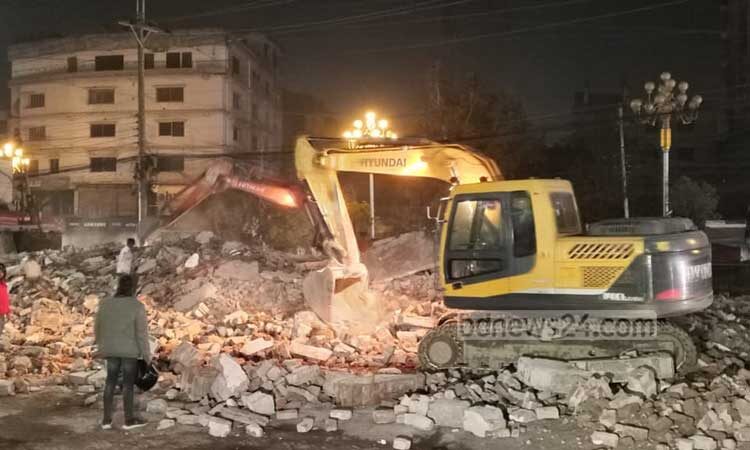
Following confirmation of his death, protests erupted nationwide, targeting not only state institutions but also political rivals and minorities. Supporters of the banned Awami League, as well as members of minority communities, saw their homes attacked and set ablaze overnight in several parts of the country. In Chittagong, the residence of a senior Awami League leader and former minister was reportedly torched. The full extent of the damage remains unclear.
Adding to the volatility, the historic residence of Sheikh Mujibur Rahman—Bangladesh’s founding father and the father of Sheikh Hasina—was vandalised and set on fire once again, according to Reuters. The house had already been attacked twice last year, in February and August, underscoring the deepening cycle of political violence.
Anti-India sentiment featured prominently during the unrest. Protesters stormed the Indian High Commission and visa centres, demanding the extradition of Sheikh Hasina, who was sentenced to death last month in absentia. In Chittagong, demonstrators hurled bricks and stones at the Indian Assistant High Commission late Thursday night. According to local media reports, protesters gathered outside the mission in the Khulshi area around 11 pm, raising slogans against Hadi’s killing, the Awami League, and India. Police used tear gas and baton charges to disperse the crowd, with clashes continuing until around 2 am before law enforcement regained control.
Many liberal and peace-oriented citizens have accused Yunus of effectively “pouring fuel on the fire,” arguing that the interim government’s conduct over recent months has contributed to the present crisis. The latest violence has been accompanied by aggressive anti-India sloganeering and even threats to sever India’s northeastern region from the rest of the country, reflecting a sharp deterioration in bilateral sentiment. Observers link this trend to Dhaka’s growing distance from New Delhi and a perceived tilt towards Islamabad.
Although interim foreign affairs adviser Touhid Hossain has attempted to distance the government from the violence, critics say his statements—often marked by strong anti-India posturing and ambiguous clarifications—have only deepened suspicions about the administration’s direction. Public anger has also been fuelled by the government’s decision to ban the Awami League from contesting next year’s elections, further polarising the political landscape.
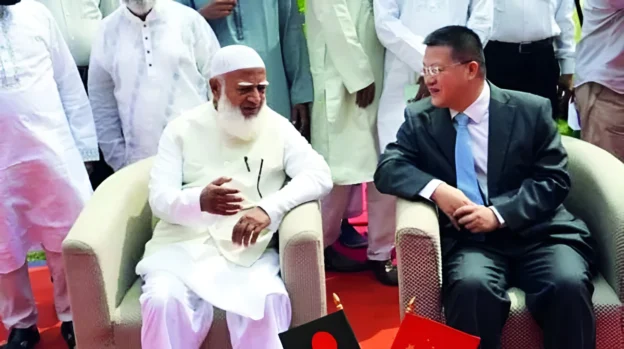
The unfolding crisis has also revived concerns about the growing influence of Islamist groups, particularly Jamaat-e-Islami. Since the August 5, 2024 uprising in Dhaka, the interim government has struggled to restore democratic order, with critics claiming it has increasingly yielded ground to radical pressure. According to sources in Bangladesh, Yunus has allegedly been issued an ultimatum by Jamaat-e-Islami to create conditions conducive to the implementation of Islamic laws, failing which he would be forced to step aside. The party’s leader, Dr Shafiqur Rahman, is widely viewed as a potential successor.
Reports that Dr Rahman has made multiple visits to the Pakistan High Commission in Dhaka have further raised eyebrows, given Jamaat-e-Islami’s historically pro-Pakistan orientation and its opposition to Bangladesh’s 1971 liberation movement. For many observers, the past 24 hours of violence are not an isolated eruption but the culmination of mounting political instability, radicalisation, and unresolved questions about the interim government’s legitimacy and direction.
As Bangladesh braces for further fallout from Hadi’s killing, the country remains on edge, with fears that the violence may deepen in the coming days unless decisive steps are taken to restore order and rebuild public trust.