What was meant to be a routine democratic exercise for the Garo Hills Autonomous District Council (GHADC) has instead plunged Meghalaya into a volatile political and social crisis. The GHADC polls were scheduled to be held on April 10, but the electoral process soon turned into the centre of a much larger confrontation—one driven by the contentious question of whether non-tribals should be allowed to participate in the council’s elections.
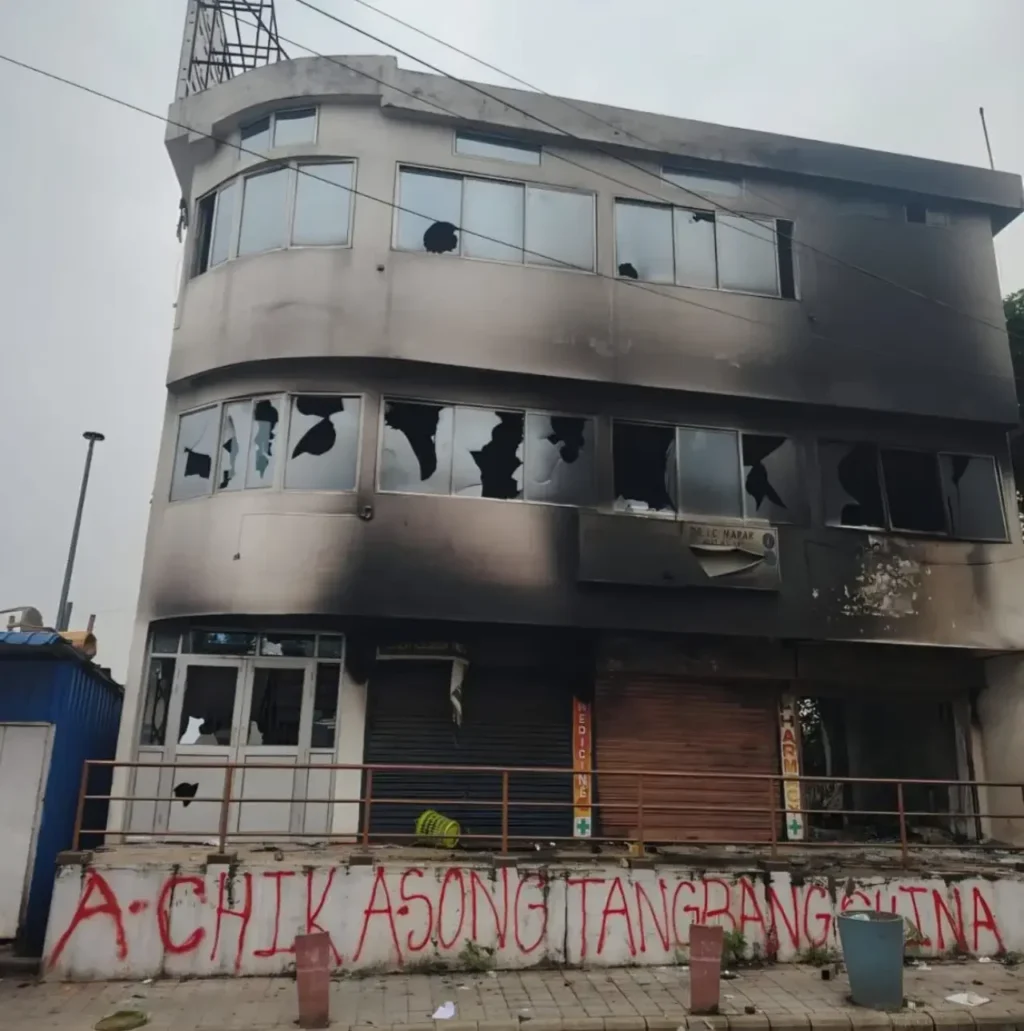
The debate over the participation of non-tribals in the GHADC elections sparked an unprecedented wave of unrest that claimed two lives and quickly spread across the plain belts of the Garo Hills, areas largely dominated by non-tribal communities, particularly Bengali Muslims. Within days, what had begun as preparations for an election turned into scenes of violent clashes and legal battles, eventually forcing the government to postpone the polls.
Video credit : Contributed
Although tensions over the participation of non-tribals had been simmering beneath the surface, the immediate trigger for the crisis was a notification issued by the GHADC Executive Committee on February 17, 2026. The Executive Order mandated that all candidates filing nominations must possess a Scheduled Tribe certificate, effectively preventing non-tribals from contesting the elections.
The order was defended by some groups as a step necessary to safeguard tribal interests. However, it was quickly challenged in court. On March 10, 2026, the Meghalaya High Court quashed the order. Justice Hamarsan Thangkhiew ruled that the Executive Committee had bypassed mandatory legislative procedures, including approval from the full District Council and the assent of the Governor.
Even before the court’s ruling, tensions had already spilled onto the streets. The situation escalated on the morning of March 9 when Esmatur Mominin, a Bengali Muslim Trinamool Congress leader and former MLA from the Phulbari constituency, arrived at the Deputy Commissioner’s office in Tura to file his nomination papers on the first day of the filing process. Mominin and his supporters were met with strong opposition from sections of Garo groups.
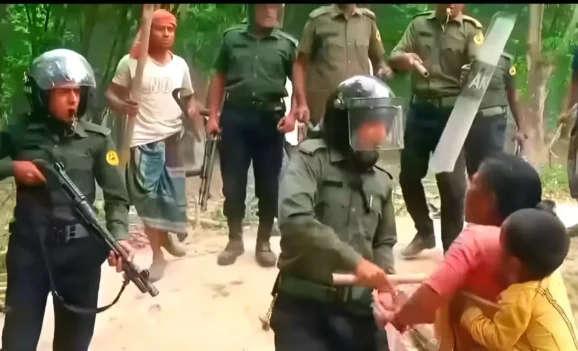
In the border area of Chibinang, where Mominin’s house is located, tensions between tribal and non-tribal groups reached a peak on the night of March 9.
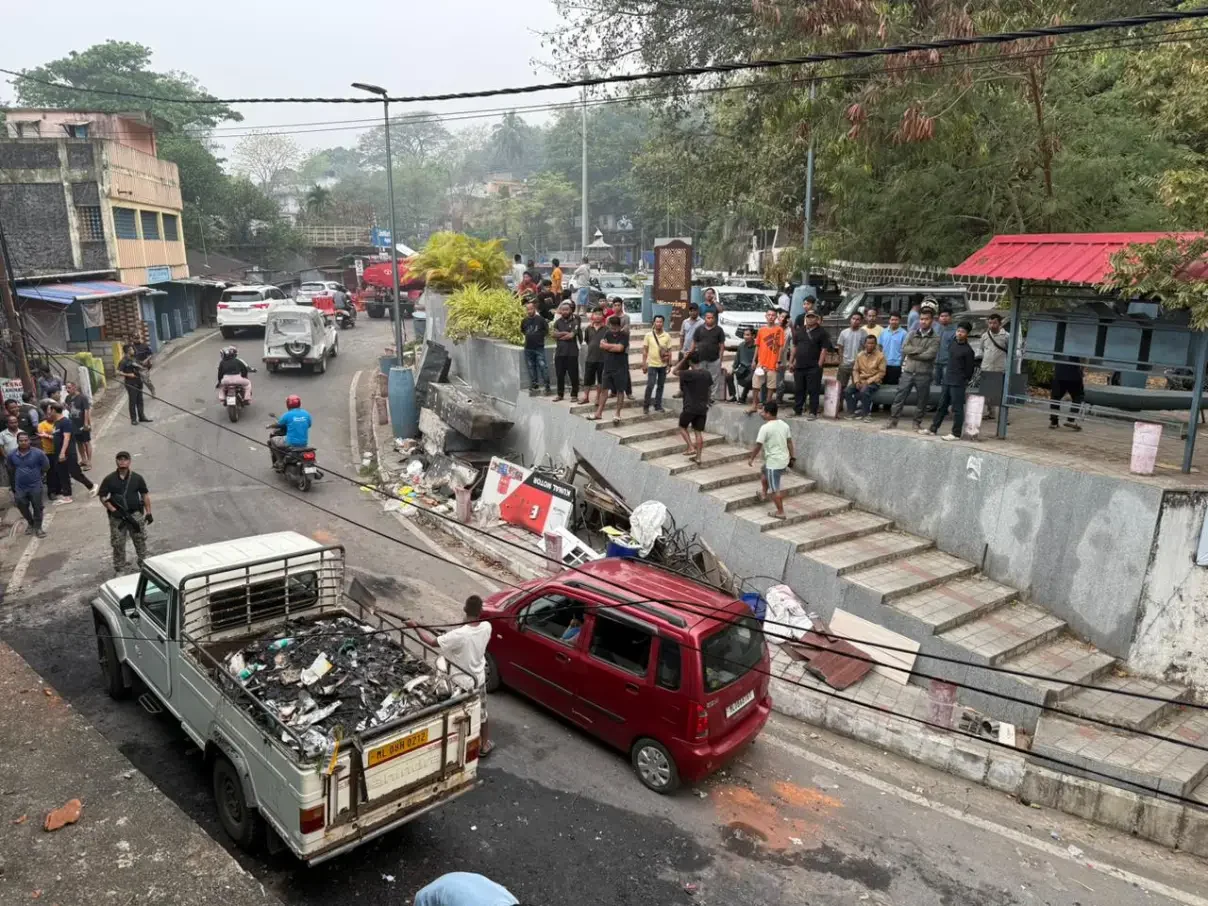
According to police reports, the situation soon spiralled into a chaotic exchange of fire. While authorities admitted to firing in the air to disperse the crowd, they stated that the two reported deaths were likely the result of clashes between rival groups, many of whom were armed with licensed muzzle-loaders, pellet guns and traditional weapons.
“Both sides had weapons… it all happened during the night. We fired in the air to disperse the crowd, but there was an exchange of fire between them in that confusion,” a police source said.
To understand the intensity of the anger, one must look at the unique history of the GHADC compared to other autonomous councils in Meghalaya. Unlike the Khasi or Jaintia Hills councils, the GHADC has allowed non-tribals to vote and contest elections since its inception in 1952.
Traditionally, any non-tribal resident living in the Garo Hills for 12 years has been eligible to vote. In addition, non-tribal candidates have historically contested from three specific constituencies—Phulbari, Rajabala and Mahendraganj—where a significant portion of the population consists of Bengali-speaking Muslims.
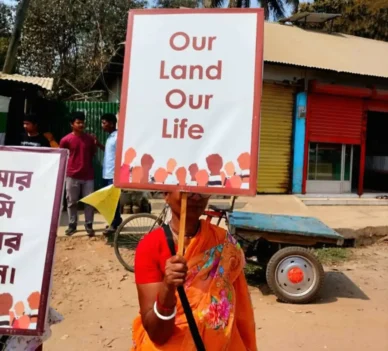
For many tribal activists, the recent notification was viewed as a long-awaited measure to protect indigenous rights. However, non-tribal communities saw it as an unconstitutional attempt to strip them of a political role they had historically exercised.
Video credit : Contributed
As the situation worsened, Chief Minister Conrad K Sangma announced on March 11 that the elections would be postponed indefinitely. In an effort to restore order, the government deployed a large security presence, including five companies of the CRPF, three companies of Assam Police, four columns of the Army and four additional companies of the Meghalaya Police.
Leader of the Opposition Dr Mukul Sangma described the developments as “deeply disturbing” and called for immediate dialogue between elected representatives and civil society leaders. Meanwhile, VPP President Ardent Miller Basaiawmoit stressed the importance of safeguarding tribal rights and ensuring that constitutional protections are taken seriously.
For now, the Garo Hills remains locked in a tense stalemate. While the High Court has emphasised the need to follow proper constitutional procedures, the social divide remains deep. The challenge for the government is no longer limited to conducting an election—it now lies in restoring public confidence and finding a path toward consensus in a region where questions of identity and law have collided violently.
Meanwhile, the district administrations of West and East Garo Hills imposed curfew in their respective districts to contain the deteriorating law and order situation. The curfew was extended until March 14, with relaxations between 6:00 AM and 1:00 PM to allow residents to purchase food and other essential commodities.