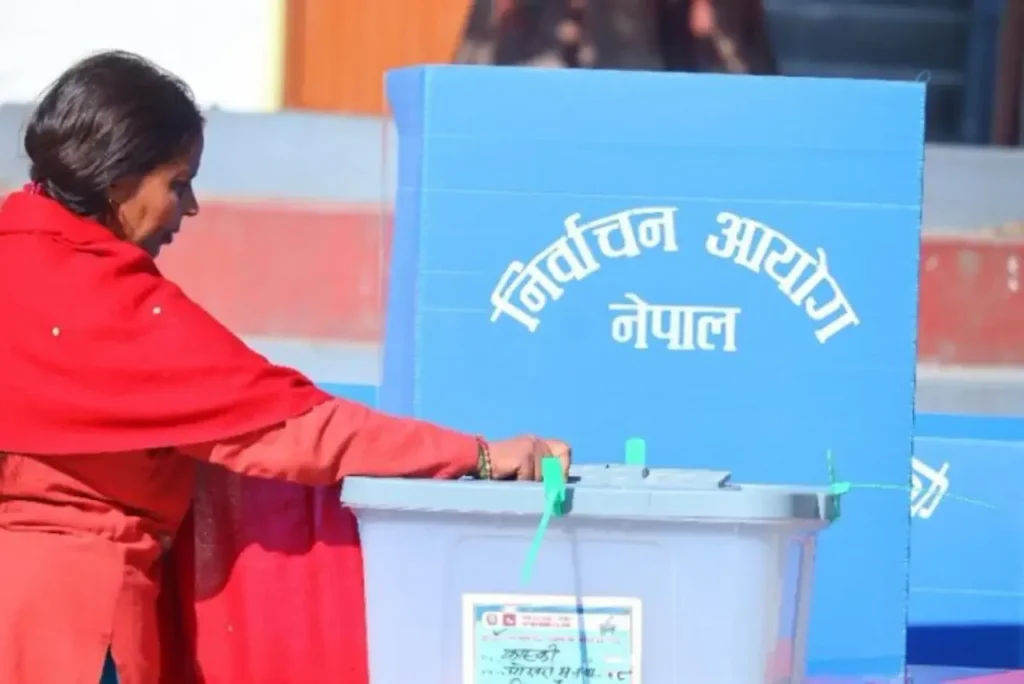
Nepal’s political landscape has undergone a dramatic transformation as vote counting in the country’s special general election has now been completed. The results from all 165 First-Past-The-Post (FPTP) constituencies and 110 seats for Proportional Representation (PR) seats are out and declared by the Election Commission.
Election results have now confirmed sweeping victory for the Rastriya Swatantra Party (RSP). The party has already secured 125 seats in the FPTP system which has 165 seats and 57 seats through the PR system which had 110 seats, giving it 182 seats in Parliament just two votes short of a two-thirds majority. Such a result has made the RSP the single largest political force in Nepal and fundamentally altered the country’s political equilibrium.
The electoral verdict represents a powerful rejection of the political status quo. Voters have delivered a decisive mandate for accountability, transparency, and signalled a generational shift in Nepali politics. At the centre of this transformation is Balendra Shah, former mayor of Kathmandu Municipal Corporation whose leadership, charisma and reformist message resonated strongly with a population eager for a new political direction in Nepali politics.
From protest to political transformation
The roots of this political upheaval lie in the Gen Z protest movement of September 2025, which erupted across Nepal amid growing frustration over corruption, nepotism, and the perceived lack of accountability within the political establishment.
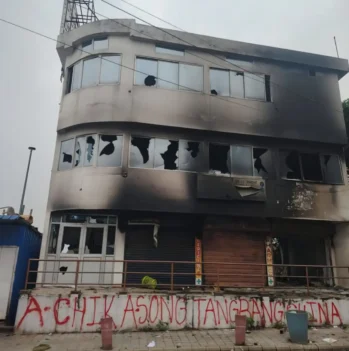
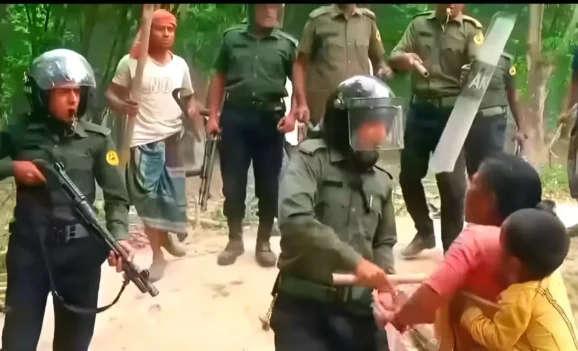
The state’s response to the protests became a turning point. Security forces attempted to quell demonstrations with heavy force, exposing serious shortcomings in training, empathy, and crowd-control protocols. Violence and arson damaged several national institutions during the unrest.
The crisis reached a tragic peak in September 2025, when more than 75 young demonstrators were killed during clashes with police across the country. The use of live ammunition shocked the nation and intensified public anger against the political establishment.
In many ways, the election became the democratic channel through which that anger was expressed.
Collapse of the old guard
The election has delivered a severe blow to Nepal’s traditional political parties. The Nepali Congress and the Communist Party of Nepal (Unified Marxist–Leninist) (UML), which have dominated the country’s politics for decades, have seen their parliamentary presence dramatically reduced. Post result the Nepali Congress was limited to 38 seats, while the UML secured 25 seats and Nepal Communist Party received 16 seats standing a distant third.
The outcome reflects widespread public frustration with decades of patronage politics, corruption scandals, and slow progress in governance and development. Voters appear to have rejected not only the established parties but also their entrenched second- and third-tier leadership.
A young Parliament emerges
One of the most notable features of the new political landscape is the emergence of a much younger Parliament.
A majority of Members of Parliament fall within the 35 to 49 age group, signalling a generational shift in Nepal’s legislative leadership. About 118 newly elected MP are below the age of 50 years. The youngest elected MP being 25 years of age in the new Parliament. This younger political class is likely to bring new priorities, including governance reforms, economic modernisation, and greater digital integration.
The generational change also reflects the energy of the youth movement that helped shape the election outcome and the voter’s ownership of the election process.
The “Citizens’ Contract” agenda
A central pillar of the RSP’s campaign was the “Nagarik Karar” or Citizens’ Contract, which outlines five priority areas for governance reform.
The document proposes a sweeping anti-corruption drive, greater digitalisation of governance, and the dismantling of entrenched party-state patronage networks within bureaucracy, educational institutions, and trade unions.
The party has also pledged to create a neutral, professional, and transparent bureaucracy, aiming to restore public trust in state institutions.
For many voters, these commitments represent a long-awaited effort to address the governance deficits that have defined Nepal’s political system for decades.
Economic reforms and new policy signals
Economic reform is expected to be a key priority for the incoming government. Nepal has long struggled with limited employment opportunities at home, pushing many young people to seek work abroad in the Gulf countries, Malaysia, and Japan.
The RSP has promised to create 12 lakh new jobs across sectors such as construction, tourism, information technology, mining, agriculture, manufacturing, and services.
Recent remarks by senior RSP leader Swarnim Wagle have also highlighted possible economic policy changes. Wagle has criticised Nepal’s steep tax regime on automobiles, where taxes on newly purchased vehicles can reach around 300 percent, and has suggested that the system needs reform to make vehicle ownership more affordable and rationalised.
He has also advocated introducing international digital payment platforms such as PayPal and other global online wallets, arguing that Nepal must modernise its digital financial infrastructure to integrate more effectively with the global digital economy.
Such measures could significantly benefit freelancers, IT professionals, and small businesses that rely on international online payments.
Infrastructure and strategic connectivity
Infrastructure development and connectivity are also central to the RSP’s long-term vision.
The party has proposed expanding national power grids, building fast-track highways, developing tunnel systems, and exploring high-altitude rail networks. These projects are intended to improve domestic connectivity and strengthen Nepal’s economic integration with its neighbours.
The broader ambition is to position Nepal as an economic bridge between India and China, leveraging its geographic location for regional trade and development.
Justice and the Karki Commission
Another major challenge facing the incoming government will be addressing the findings of the Karki Commission, which investigated the Gen Z protests and the deaths of demonstrators.
The commission has already submitted its report and the Nepal government, under Interim Prime Minister Sushila Karki, has formally accepted the Gauri Bahadur Karki commission report on the 2025 Gen Z protest crackdown and vowed to implement the recommendations of the Commission.
The Interim Government has said that the report is being thoroughly reviewed by Government and has declared to release the Report on 16th March 2026 for the public.
How would the implementation process carry out would largely depend on the political will of the new government that will enter office in the coming few days.
For many Nepalis, justice for the victims of the protests remains a crucial test of the new government’s commitment to reform.
Foreign policy: Stability with economic focus
Despite the dramatic domestic political shift, analysts do not expect radical changes in Nepal’s foreign policy.
The country has traditionally pursued a policy of non-alignment, balancing its relations with major regional powers while protecting its strategic autonomy. RSP leaders have indicated that this approach will continue, though with greater emphasis on economic diplomacy.
Recent exchanges between RSP leaders and Narendra Modi have been described as cordial, suggesting continued engagement with India while maintaining balanced relations with China.
India and China will both have to re-engage with the new generation of political leadership that seem to be forward looking, wanting shared growth and development with its neighbours. With reforms at the top of the agenda for the RSP, the idea that India’s civilizational and economic linkages with Nepal would further work in deepening relations between these two countries in the coming days.
Nepal, south asian neighbours have also expressed joy in Nepal’s election verdict and has all promised deeper engagement and cooperation with Nepal. The smooth unfolding of Nepal’s election process this time around has strengthened Nepal’s credibility and deepened it’s democratic credentials. With prospects for greater stability in Government Nepal is poised for structural economic reforms enabling the country to push for targeted levels of economic growth.
A defining moment for Nepal
Nepal now stands at a pivotal moment in its democratic journey.
The scale of the RSP’s victory reflects a deep public desire—especially among younger voters—for cleaner governance, economic opportunity, and institutional reform.
Yet translating a powerful electoral mandate into effective governance will be the true challenge. The early months of the new government, particularly its first hundred days, will determine whether this political earthquake can deliver the meaningful change that Nepal’s voters clearly demand.