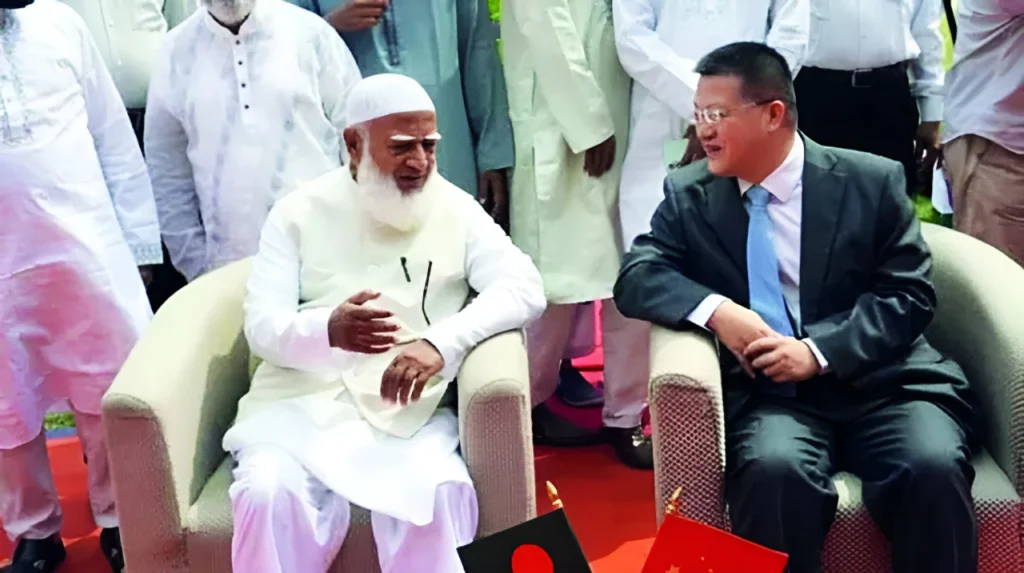
On a humid afternoon in Mirpur, in Dhaka, hundreds of low-income residents gathered on a school field. They queued patiently for Eid food packages—rice, oil, lentils. It was a familiar scene for Eid al-Fitr, a time of charity and compassion.
But this time, the distributor stood out: the Chinese embassy.
At first glance, it appeared to be a simple act of generosity. Yet in the layered world of geopolitics, even charity carries intent. And beyond geopolitics, it raises a deeper question—does this compassion extend to China’s own Muslim minorities, particularly the Uyghurs in Xinjiang?
That is where the contrast becomes impossible to ignore.
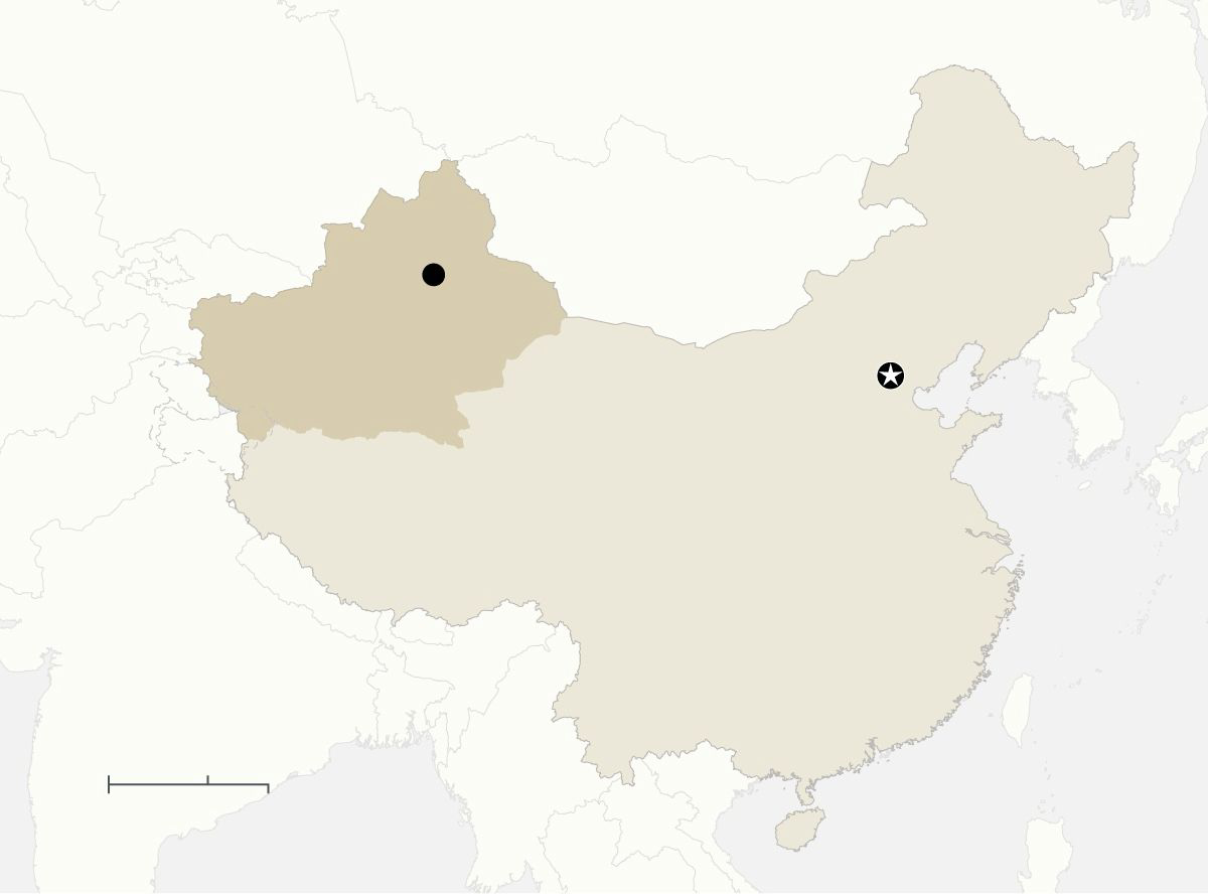
Very little independent information emerges from Xinjiang. What is known comes from reports that describe a systematic campaign against Uyghurs and other Muslim minorities—marked by mass detention, forced labour, cultural erasure, and surveillance.
A 2022 report by BBC stated that over a million Uyghurs have been detained in what the state calls “re-education camps.” Leaked police files described heavily guarded facilities and even a shoot-to-kill policy for escape attempts.
Beijing denies all allegations.
Yet the concerns have only deepened. Countries such as the United States, United Kingdom, Canada, and Netherlandshave accused China of genocide.
As recently as October 2025, the United Nations raised alarm over the criminalisation of Uyghur cultural expression. It cited cases like artist Yaxia’er Xiaohelaiti, jailed for his music, and scholar Rahile Dawut, disappeared and believed to be serving a life sentence.
Their alleged crime: preserving identity.
Reports further indicate that thousands of mosques have been demolished, religious practices criminalised, and the Uyghur language suppressed. In such a setting, Eid is not a celebration of community—it is, at best, a tightly controlled observance.
And this is what makes Mirpur so striking.
In Dhaka, China distributes Eid food. In Xinjiang, it stands accused of policing the very faith that defines Eid.
This is not just contradiction—it is calibrated optics.
China’s outreach in Bangladesh reflects a broader strategy of influence. Soft power here is not abstract—it is tactile. A food package handed to a struggling family does what infrastructure cannot: it creates gratitude, immediacy, and memory.
It builds legitimacy from below.
China understands that in societies marked by inequality, presence in moments of need matters more than distant investments. By stepping into Eid—a deeply social and religious moment—it aligns itself with generosity and solidarity.
But that alignment stops at its borders.
The same state that participates in Eid abroad stands accused of restricting it at home. The same government that distributes food to Muslim communities overseas faces allegations of suppressing Islamic identity within Xinjiang.
This duality is not accidental—it is the design.
China’s economic footprint in Bangladesh—through infrastructure, energy, and Belt and Road projects—already secures influence at the state level. Initiatives like Eid aid extend that influence into everyday life, softening criticism and reshaping perception.
They are not separate from geopolitics. They are geopolitics.
Bangladesh, however, is not unaware.
There have been voices within the country raising concerns about the treatment of Uyghurs. Civil society, activists, and sections of the public recognise the contradiction. But states operate within constraints.
For Dhaka, the calculus is complex.
Economic needs, development priorities, and regional realities demand engagement with powerful partners. Stability, growth, and strategic balance often take precedence over distant human rights concerns. In a competitive geopolitical environment, Bangladesh—like many others—must weigh principle against pragmatism.
And China offers a partnership without conditions.
No lectures on governance. No pressure on internal politics. Just investment, aid, and presence. That makes it an attractive partner—even as uncomfortable questions remain.
This is where China’s approach is particularly effective.
It separates its external image from its internal conduct. Abroad, it performs generosity. At home, it enforces control. One does not cancel out the other—instead, one masks the other.
The result is a carefully constructed narrative: a benefactor to the world, a disciplinarian within.
The scene in Mirpur, then, is not just about charity. It is about projection.
For the families who received food, the moment was real and necessary. But beyond that lies a harder truth—that humanitarian gestures can coexist with repression, and that visibility abroad can obscure silence at home.
China’s message is simple, but strategic: be seen where it helps, remain opaque where it harms.
And that is the core of the contradiction.
Because while rice and lentils travel easily across borders, accountability does not.
In the end, the question is not whether China’s aid is helpful—it clearly is. The question is whether such acts can be viewed in isolation from the reality in Xinjiang.
And increasingly, they cannot.
For in the shadow of every Eid package handed out in Dhaka lies another, quieter image—from Xinjiang—where faith, identity, and expression remain under watch.
That contrast is not just uncomfortable.
It is the story.