History has a way of scripting itself in moments no one quite anticipates. Some go on to define a nation’s rise, remembered for the promises they fulfilled. Others linger for the opposite reason—when hope met reality and fell short.
What decides that legacy is never the moment itself, but what follows.
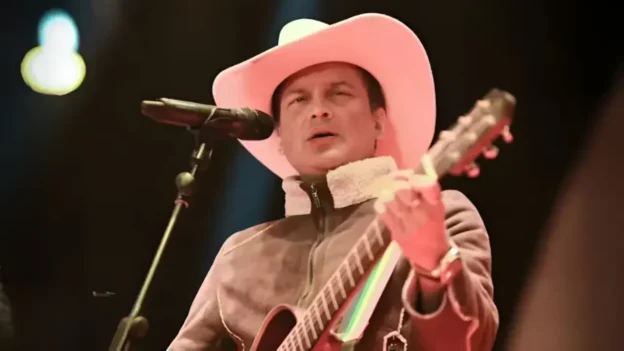
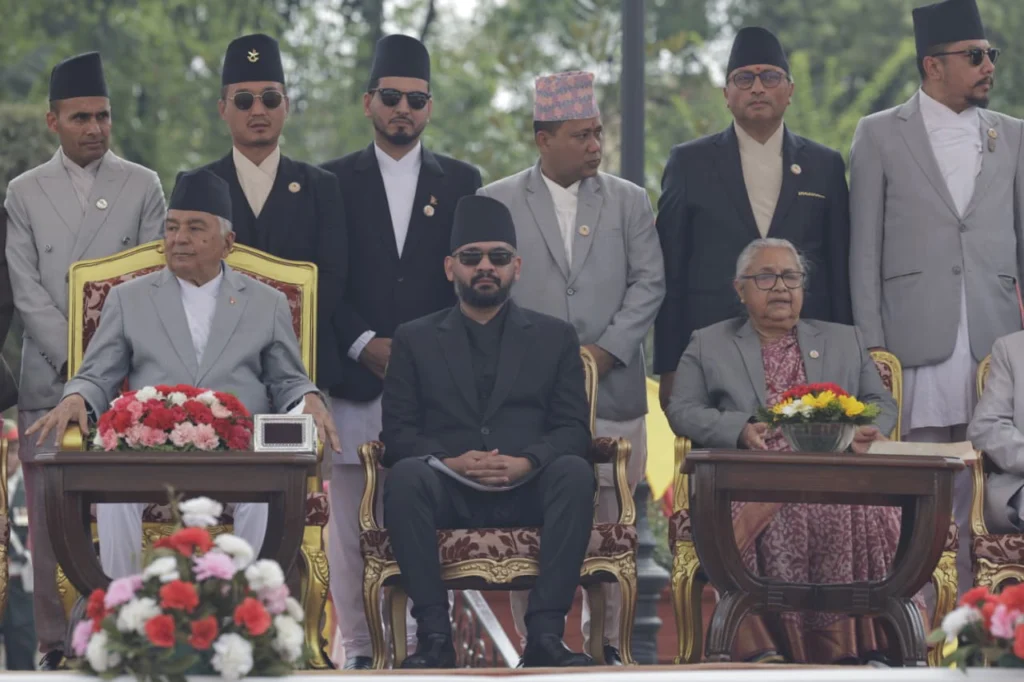
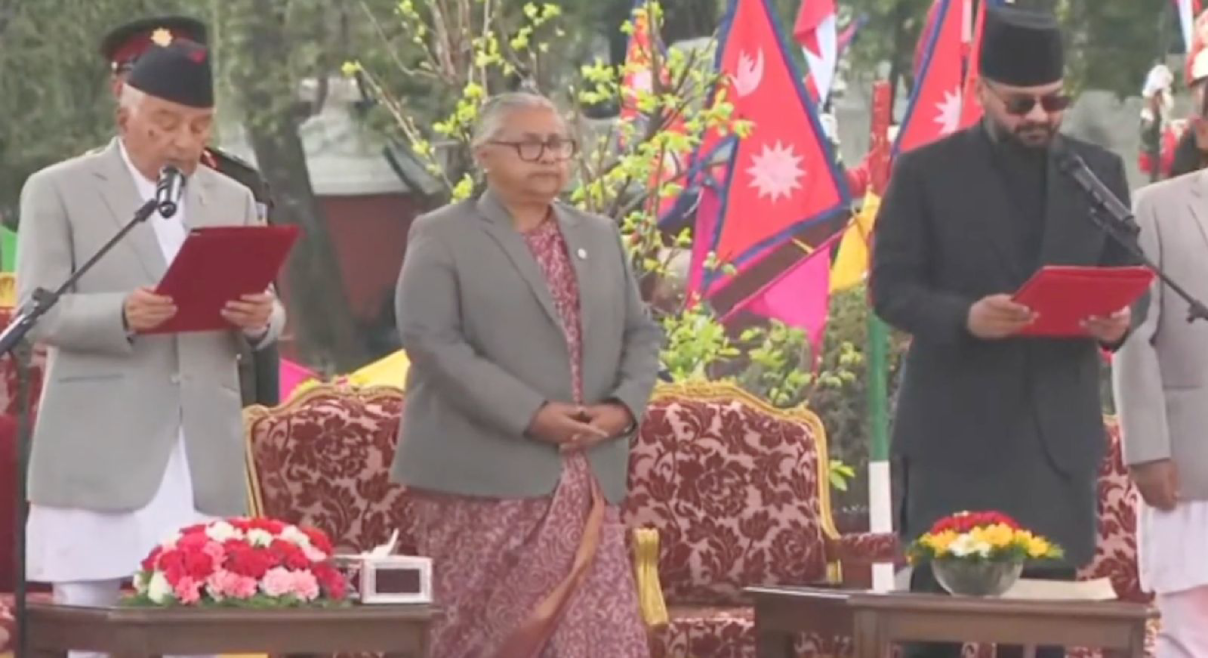
Today, Nepal finds itself at such a turning point, with Balendra Shah at the centre of it. The rapper-technocrat turned politician has taken oath as Prime Minister in Kathmandu, completing a rise that feels as improbable as it is compelling.
Just a year ago, this would have sounded far-fetched even to his supporters. Yet, carried by a wave of public sentiment that perhaps even he did not fully foresee, Balen has now written himself into the country’s political history.
The scale of that wave is evident in the numbers. The Rastriya Swatantra Party secured 182 seats, falling just two short of a two-thirds majority.
Still, it is the strongest showing by a single party in decades. The Nepali Congress trailed at 38, while the Communist Party of Nepal (Unified Marxist–Leninist) was pushed further back to 25.
With around 60 percent turnout from nearly 19 million voters, the verdict was not merely electoral. It was emotional, shaped by fatigue with the old order and a yearning for something different.
That yearning now turns into expectation. The mandate handed to Balen is not just about forming a government; it is about fixing what many believe has long been broken.
There is an unspoken demand that he clean up systemic inefficiencies. That he address corruption and set Nepal on a path that leans more towards self-reliance than dependence.
It is a tall order. One that requires not just intent, but endurance.
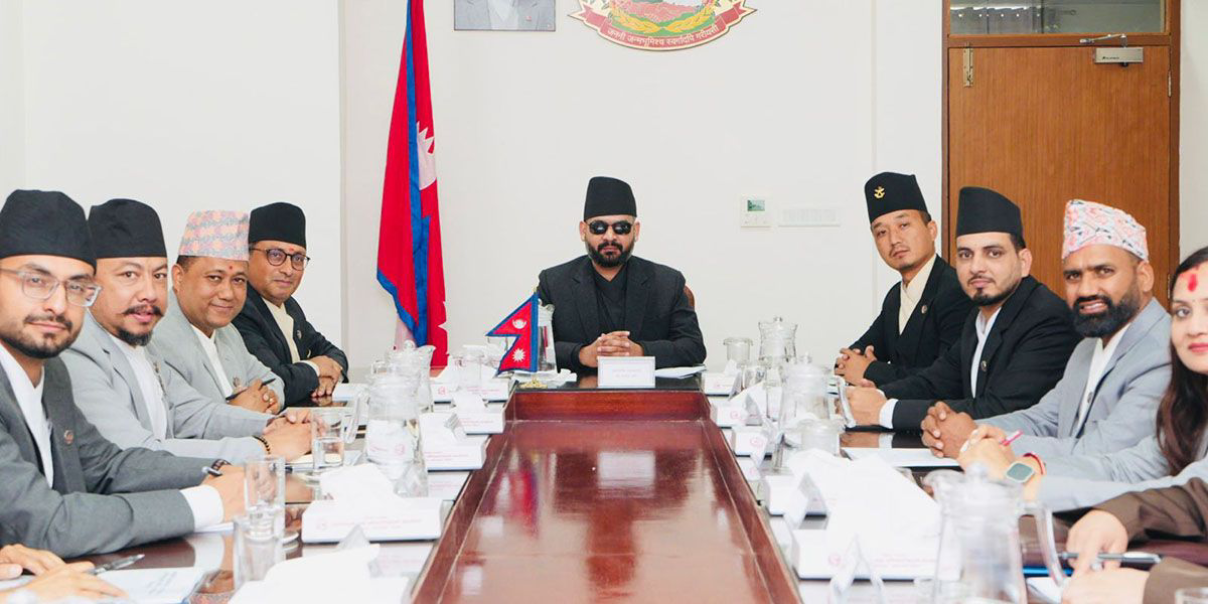
Observers at the swearing-in ceremony noticed a man who did not seem overwhelmed. Seated beside President Ram Chandra Paudel, Balen appeared composed, even distant in thought.
His familiar black topi and dark glasses gave little away. Yet those present spoke of a quiet intensity, as if the weight of governance had already begun to settle in.
At 35, his leadership signals a generational shift. Nepal has been inching toward this moment, and it now feels real.
The inclusion of younger faces like Sudan Gurung reflects that change. It suggests that governance may no longer remain the preserve of seasoned veterans alone. After all, every leader begins somewhere. Experience is often built in office, not before it.
Yet optimism walks alongside questions. Concerns around Rabi Lamichhane, particularly allegations of corruption, have not disappeared. Similarly, scrutiny of figures like Sudan Gurung continues to hover. Questions about past associations during the GenZ mobilisation remain part of the conversation.
Whether these are passing shadows or deeper cracks will depend on how the government responds. Transparency, more than rhetoric, will decide that.
The larger context explains why this moment arrived. Disillusionment with Nepal’s traditional leadership had been building steadily over the years. Leaders across the spectrum—from K. P. Sharma Oli to Pushpa Kamal Dahal and Sher Bahadur Deuba—have faced allegations of corruption and misgovernance.
Over time, trust eroded. For many citizens, it stopped being about ideology and became about credibility. That is where Balen found his moment. But he is not without contradictions.
His tenure as mayor of Kathmandu offered glimpses of both decisiveness and controversy. His crackdown on street vendors was seen by some as necessary discipline. Others saw it as insensitive to livelihoods. Civil society groups and activists, including voices like Ishan Adhikari, pushed back and demanded more inclusive solutions.
Balen, however, stood firm. He argued that illegality could not be normalised and placed responsibility on a system that had failed to provide alternatives.
His confrontational style extended beyond policy. He often took on the political establishment directly, accusing it of creating laws without workable intent.
At times, his public communication invited criticism. His tone, especially on social media, was seen by many as abrasive and unbecoming of a leader.
Incidents such as the ban on the screening of Adipurush and Indian movies in Kathmandu added to that perception. While rooted in cultural concerns, the decision raised questions about balance and restraint.
Perhaps the most polarising moment came with his remarks about Singha Durbar. A symbol of state power, it became central to a controversy that sparked intense debate. He later denied making the statement attributed to him. But the image it created lingered, shaping both criticism and support.
These layers make Balen Shah a complex figure. Part disruptor, part administrator, and very much a product of public frustration. To many, he represents courage and authenticity. To others, unpredictability and risk.
Now, the space for symbolism is narrowing. The transition from outsider to Prime Minister demands a different balance.
Decisiveness must now meet consultation. Intent must translate into institution-building. Figures like Swarnim Wagle and Rabi Lamichhane may shape the party’s direction. Leaders like Sudan Gurung will influence its execution. But the weight, ultimately, rests on Balen.
Nepal, in choosing him, has chosen possibility over familiarity. It has taken a chance on a leader who promises change, but must now deliver within the limits of governance.
For now, the story is still being written. Whether this chapter becomes one of renewal or regret will depend not on how unexpectedly it began—but on how carefully, and how wisely, it unfolds from here.