
Some elections are fought, and some are performed. Assam, at this moment, appears to be witnessing both—simultaneously. On the surface, the contours of power seem largely settled. The BJP-led NDA, backed by a formidable organisational structure and a deeply embedded welfare network, appears structurally poised to return to power. Yet, to read this election purely through the lens of outcome is to overlook its deeper significance. What is unfolding is not just a contest for power, but a shift in how politics itself is being practised and understood.
What has changed—perhaps irreversibly—is the grammar of politics.
In just a matter of days, Assam’s electoral discourse has undergone a noticeable and unsettling transformation. The language of governance has steadily given way to insinuation; debate has been overshadowed by spectacle. Politics, in its more deliberative sense, is increasingly being replaced by a theatre of allegations, counter-allegations, and carefully amplified outrage. This shift is not incidental. It reflects a broader strain in democratic communication, where credibility is shaped as much by repetition and reach as by evidence.
This transformation has been driven by multiple, overlapping developments. Campaigns have sharpened along communal lines, smear tactics have become more visible, and the use of coarse language has entered the political mainstream in ways rarely seen before in Assam. Party-switching, too, has added to this churn, underlining how ideological boundaries are becoming more fluid in the pursuit of political opportunity.
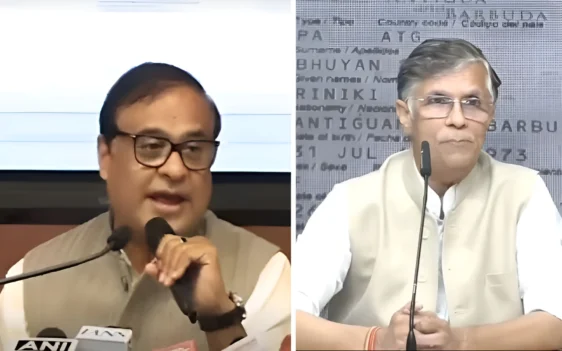
Layered onto this has been the Congress party’s late but forceful attempt to reframe the election around questions of wealth, transparency, and moral legitimacy. The response from the ruling establishment, led by Chief Minister Himanta Biswa Sarma, has been equally assertive, ensuring that the narrative remains contested. At the same time, the emergence of Kunki Chowdhury as a young and unconventional candidate has disrupted established campaign patterns, introducing an element of unpredictability into what once seemed a largely one-sided contest.
Individually, each of these developments carries weight. Taken together, they have unsettled what until recently appeared to be a predictable election.
The political economy of allegation
The opposition’s strategy must be viewed not simply as a set of accusations, but as a calculated attempt to shift the axis of the election. By foregrounding claims related to overseas business interests, alleged undisclosed assets, and questions of financial transparency, it has tried to move the conversation from welfare delivery to ethical accountability.
The scale of these allegations—often involving large figures and references to global financial linkages—has been designed to capture public attention. In political messaging, magnitude carries symbolic force. Big numbers, even when complex or contested, can shape perception.
Yet, this strategy reveals an inherent limitation.
For a large section of Assam’s electorate, particularly beyond urban centres, such figures remain abstract. They do not easily translate into everyday concerns or immediate political choices. As a result, while the allegations generate headlines, they do not always generate deep-rooted electoral resonance.
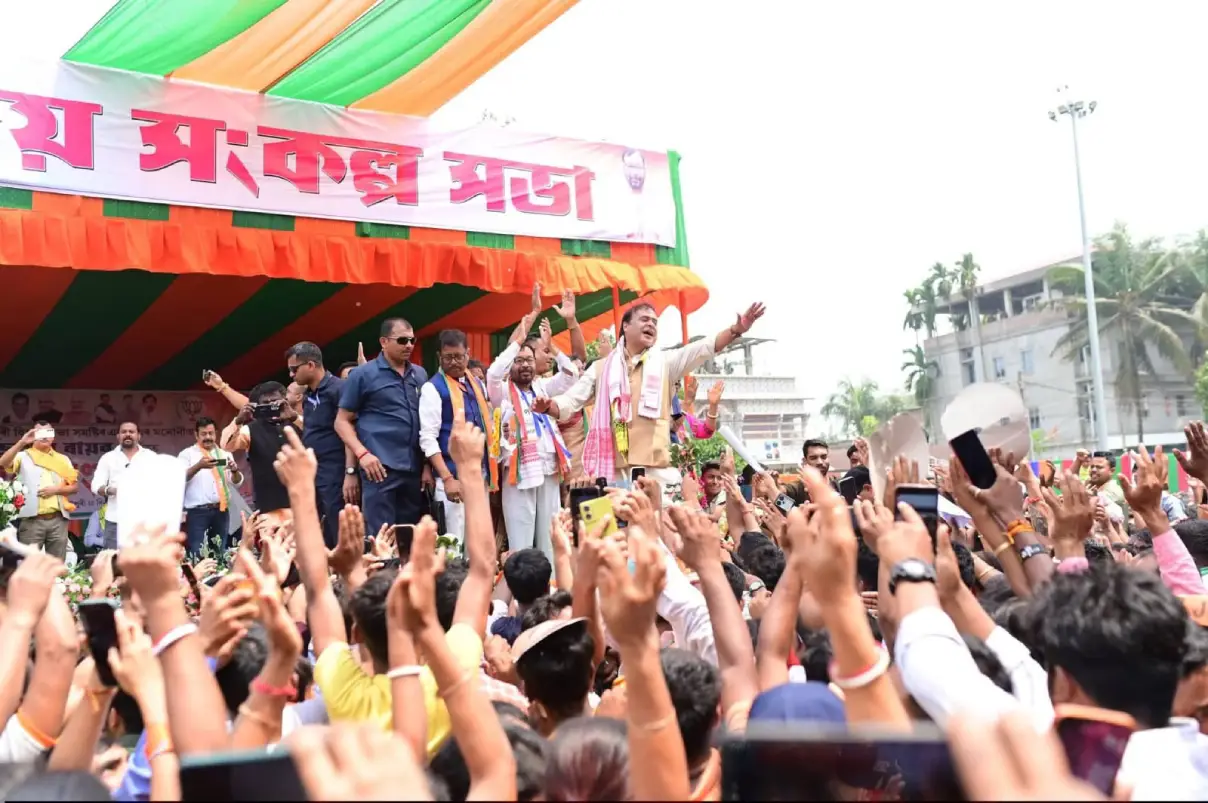
This does not diminish the importance of transparency. Rather, it highlights a structural disconnect between elite political discourse and the lived realities of voters whose priorities are grounded in immediate economic needs.
The ruling establishment’s response reflects a different kind of political calculation. Instead of engaging in detailed rebuttals, it has often reframed the allegations within a broader narrative—one that invokes conspiracy, external influence, and questions of intent. In doing so, the debate shifts from accountability to allegiance, turning scrutiny itself into a subject of contestation.
Welfare as political ground reality
To understand why such allegations have limited traction, one must look at the deeper architecture of political power in Assam.
Over the past several years, the expansion of Direct Benefit Transfer schemes has fundamentally reshaped the relationship between the state and its citizens. Programmes such as Orunodoi have done more than provide financial support—they have embedded the state into the everyday lives of beneficiaries.
This is welfare not merely as policy, but as political infrastructure.
For many households, particularly in rural and semi-urban areas, these schemes represent stability. The regularity of support, even if modest, carries significant weight in conditions of economic uncertainty. In this context, electoral decisions are rarely driven by ideology alone. Instead, they are shaped by a pragmatic assessment of continuity and risk.
Voters are not simply asking who is right; they are asking who delivers.
This creates what can be described as welfare hegemony—a condition where legitimacy is anchored in delivery rather than discourse. Unless allegations directly threaten this structure of delivery, they struggle to penetrate voter consciousness.
The quiet exit of the urban middle class
While welfare beneficiaries form a decisive electoral base, another segment—the urban middle class—appears increasingly disengaged.
Across Assam’s towns and growing urban centres, there is a noticeable sense of withdrawal among educated voters, professionals, and small business owners. This is not mere apathy, but a deeper disillusionment. Many express skepticism toward all political actors, coupled with a fading belief that their participation can effect meaningful change.
This disengagement has structural roots. The middle class is neither the primary recipient of welfare nor the central focus of identity-driven mobilisation. Its concerns—governance quality, institutional integrity, fiscal responsibility—often find limited space in campaign narratives dominated by immediacy.
The result is a silent electorate—present in conversations, but less visible at the ballot box.
Over time, this silence reinforces itself. Reduced participation leads to reduced political attention, which in turn deepens disengagement. The implications for democratic balance are significant.
Kunki Chowdhury and a disruptive undercurrent
Amid this shifting landscape, the rise of Kunki Chowdhury introduces an important counterpoint.
Her campaign stands out not because it guarantees electoral success, but because it challenges prevailing norms. In an environment marked by sharp rhetoric and personal attacks, her emphasis on civility and issue-based engagement offers an alternative political idiom.
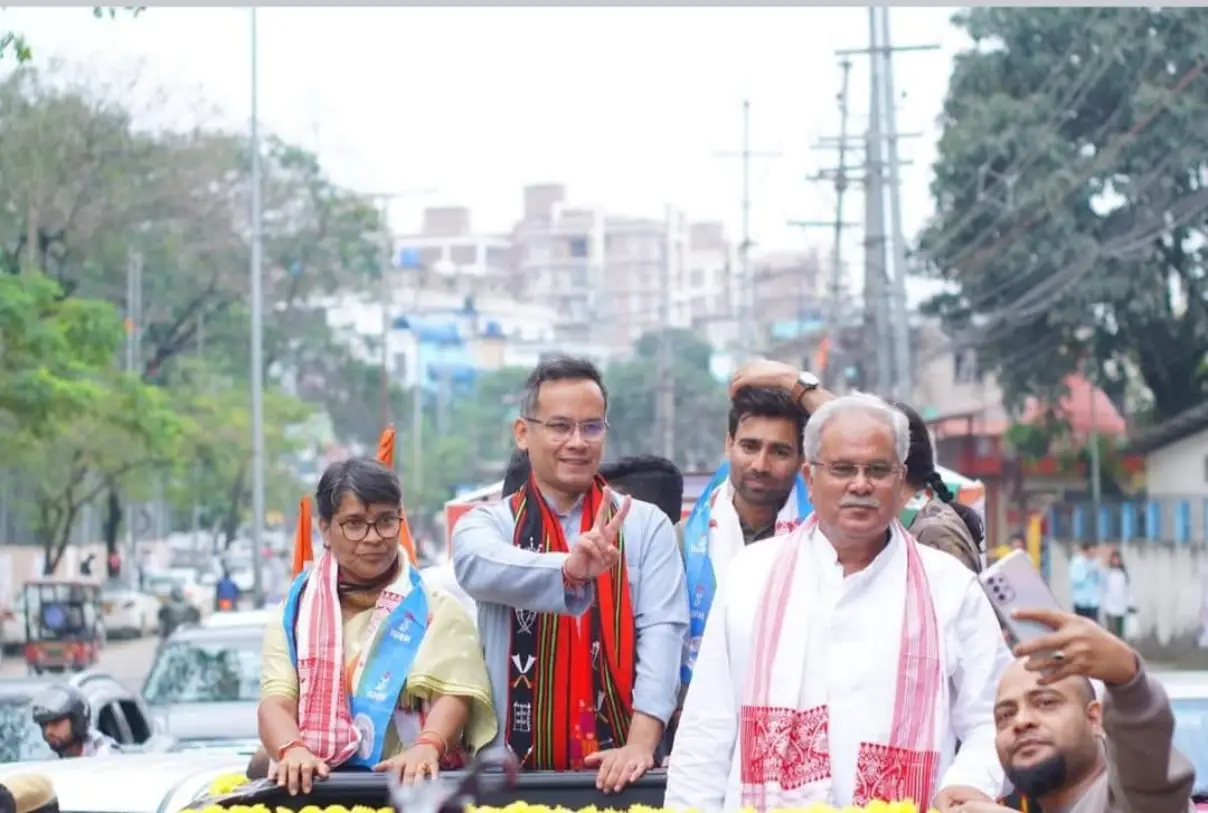
Interestingly, the response to her campaign has amplified its reach. Personal attacks, especially those targeting identity and lifestyle, have in some cases generated sympathy and support. This suggests the presence of an undercurrent within the electorate—a quiet discomfort with the coarsening of political language.
Endorsements from public figures and intellectuals further situate her candidacy within a broader conversation about democratic values and the nature of public discourse. Whether this translates into electoral gains remains uncertain, but its symbolic significance is hard to ignore.
Technology and the battle over truth
Adding another layer of complexity is the growing role of technology in shaping perception. Allegations of AI-generated deepfakes targeting Chowdhury point to an evolving campaign landscape, where digital tools can be used not just for outreach, but for distortion.
If such tactics become normalised, they introduce a new form of uncertainty into electoral politics. The line between authenticity and fabrication becomes increasingly blurred, making it harder for voters to distinguish fact from manipulation.
In such an environment, trust becomes the central currency. Political judgment shifts away from verification toward belief—toward whom one chooses to trust rather than what can be conclusively proven.
Parallel narratives in a fragmented public sphere
At a broader level, this election is being shaped by two competing narratives.
The ruling party foregrounds continuity, governance, and national identity. The opposition emphasises accountability, transparency, and ethical critique. However, these narratives do not fully intersect. Instead, they operate within parallel spaces, each addressing different constituencies.
For a rural beneficiary, the assurance of monthly support may outweigh abstract concerns about financial disclosures. For an urban voter, issues of institutional integrity may carry greater weight than welfare continuity.
The election, therefore, is not a single conversation, but a collection of fragmented ones.
The numbers beneath the noise
Ultimately, elections are determined not just by narratives, but by numbers.
In Assam, the underlying arithmetic appears to favour those who have successfully embedded themselves within everyday voter realities. Welfare outreach, organisational strength, and message control together create a durable electoral base.
Against this, the opposition’s strategy faces a constraint of time. Allegations require space to evolve into conviction. Elections, however, operate on immediacy. This mismatch limits their immediate electoral impact, even if their long-term implications remain significant.
Beyond the result
As Assam moves toward polling day, the larger question extends beyond who will form the next government.
What is at stake is the nature of political culture itself.
This election reflects a democracy that is simultaneously resilient and strained—resilient in its competitive energy, yet strained in the quality of its discourse. The rise of new voices offers hope, but the erosion of civility and the withdrawal of key voter segments raise concerns.
The eventual outcome may well reinforce existing power structures. Yet, the process has revealed deeper currents—of welfare dependency, narrative control, technological disruption, and civic disengagement.
Between the spectacle of accusation and the quiet calculus of voters lies the real story of this election. It is not merely about who wins, but about how democracy is being practised—and how it may continue to evolve in Assam.
And often, it is within these quieter shifts that the most consequential changes take root.