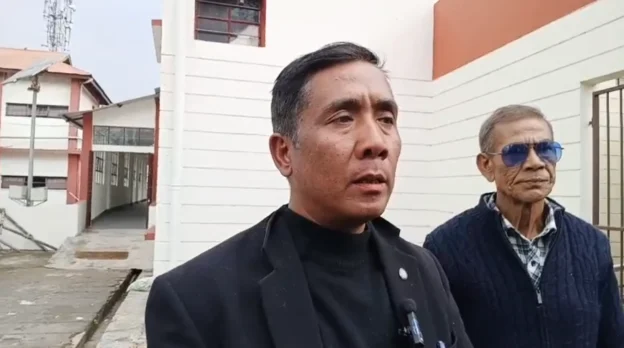

After 17 years in exile, Tarique Rahman’s return to Bangladesh has transformed the February 12 parliamentary election into one of the most consequential political contests the country has faced in decades. His homecoming has redefined the race as a high-stakes struggle over power, legitimacy, and the direction of Bangladesh’s post-uprising democracy, elevating the vote beyond a routine electoral exercise into a referendum on governance and democratic restoration.
Formally confirmed last month as chairman of the Bangladesh Nationalist Party (BNP), Rahman arrived in Dhaka on December 25, 2025, ending nearly two decades in London. The timing proved politically catalytic. What had appeared to be a fragmented and uneven opposition campaign was rapidly recalibrated into a nationally mobilized effort led by a physically present and assertive figure capable of consolidating support, directing strategy, and projecting authority. His return comes in the shadow of the July 2024 mass uprising that toppled the Awami League–led government, making this the first general election since that upheaval and imbuing the ballot with exceptional symbolic weight.
For many voters, the election is no longer only about selecting representatives to parliament but about whether the opposition can credibly reclaim state power after years of political suppression. That sense of historical inflection was almost immediately complicated by personal tragedy. Just five days after Rahman’s arrival, his mother, former Prime Minister and longtime BNP chairperson Khaleda Zia, died in Dhaka. Party officials say Rahman moved swiftly from mourning to mobilization, immersing himself in the mechanics of a nationwide campaign at a pace that underscored both urgency and resolve.
Operating from a temporary headquarters in Gulshan, Rahman has maintained a punishing daily schedule that reflects the dual challenges of internal consolidation and external outreach. Mornings are devoted to strategy meetings with senior party leaders and parliamentary candidates, afternoons to negotiations with allied parties within the opposition bloc, and evenings to engagements with diplomats, business leaders, and civil society representatives. According to aides, these meetings are designed to reassure domestic and international stakeholders that the BNP is committed to a credible electoral process and prepared to govern in a volatile post-uprising environment.
Since mid-January, Rahman has taken his campaign directly to voters. He has toured northern districts long regarded as organizational weak points for the BNP, addressed divisional rallies across the country, and made an emotional visit to the grave of his father, the late President Ziaur Rahman, for the first time in nearly two decades. These appearances have served both symbolic and strategic purposes, reintroducing him to a generation of younger voters who know him largely through political memory while projecting command over a party often criticized in recent years as leaderless and internally adrift.
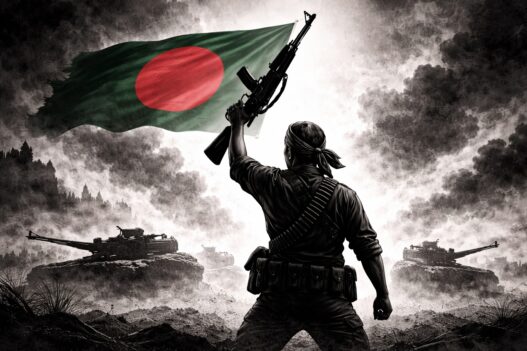
On the campaign trail, Rahman frames the February 12 vote as the culmination of a long struggle to restore democratic rights eroded under what he describes as 15 years of authoritarian rule. At rallies, he consistently links the election to the sacrifices made during the 2024 uprising, presenting the ballot as an extension of that mass movement rather than a departure from it. At the same time, he has adopted a sharply confrontational stance toward Jamaat-e-Islami, urging voters not to support the party and describing it as fundamentally opposed to the spirit of Bangladesh’s liberation war. Rahman has repeatedly warned that women would be the worst sufferers if Jamaat were to come to power through the February 12 election, a line of attack aimed at mobilizing secular and female voters wary of Islamist politics.
In Rangpur, he told supporters, “We are not voting for a party alone. We are voting to protect the right to speak, to vote, and to live with dignity.” He has also held three election campaign programmes in three districts of the Dinajpur region in northern Bangladesh, an area where the BNP is seeking to rebuild organizational strength and translate momentum into seats.
Rahman’s policy platform, articulated as a 31-point “state repair plan,” blends economic relief with institutional reform. The proposals include a family assistance card targeted at women, subsidized agricultural support for farmers, and expanded vocational training to address youth unemployment. He has also pledged to dismantle what he describes as entrenched corruption linked to large infrastructure projects, positioning the BNP as both a corrective force and a reformist alternative.
Notably, Rahman has endorsed the interim government’s proposed “July Charter” of reforms and has urged voters to support it in a parallel referendum scheduled for election day. The move is widely seen as an attempt to align the BNP with the reformist energy that propelled the 2024 uprising, while signaling continuity rather than rupture in the transition process.
Despite the surge in momentum generated by his return, Rahman’s campaign faces significant structural and political obstacles. Within the BNP itself, dozens of party members are contesting the election as independents after being denied nominations, raising the prospect of vote-splitting in key constituencies. While some rebels have been expelled, Rahman has engaged in quiet, seat-by-seat negotiations to persuade others to withdraw. “Every seat matters,” said a senior BNP election committee member, speaking on condition of anonymity. “This rebellion could decide the outcome in many constituencies.”
Externally, the BNP is confronting an unexpected and formidable challenge from Jamaat-e-Islami, its former ally, which is running an aggressive and well-organized campaign. In several districts, the contest has effectively become a three-way race involving Jamaat, the BNP, and residual Awami League networks. Rahman has sharpened his rhetoric in response, accusing Jamaat of opportunism and positioning the BNP as the principal bulwark against both Islamist influence and the remnants of the old ruling order.
The death of Khaleda Zia accelerated a leadership transition that had long been anticipated but repeatedly deferred. On January 9, the BNP’s national standing committee unanimously elevated Rahman from acting chairman to full chairman, a move intended to project stability and decisiveness in the final phase of the campaign. The decision has enabled him to assert direct control over electoral strategy, blending the nationalist legacy of his father with his mother’s populist appeal and his own emphasis on modernization and institutional reform.
Rahman’s reemergence has also placed him under intense domestic and international scrutiny. Pro-government media outlets continue to highlight his past convictions and years in exile, seeking to question his credibility and fitness to govern. At the same time, international observers are watching closely for signs of whether the election will meet global standards of credibility. Rahman’s meetings with diplomats from the European Union, China, and other key partners underscore the BNP’s awareness that international acceptance of the vote will be critical for economic recovery and political stability in the aftermath of prolonged political turmoil.
With fewer than five days until polling day, Rahman has intensified his campaign, shifting focus toward constituency-level coordination and urging supporters to guard polling stations against irregularities. “On February 12,” he tells crowds, “your duty is to protect your vote.” Political analysts say his return has fundamentally altered the electoral landscape. “Tarique Rahman is no longer a distant symbol,” said Dr. Ayesha Khatun, a Dhaka-based political analyst. “He is an active, visible campaigner. The challenge now is whether he can convert momentum into parliamentary seats amid internal divisions and fierce competition.”
As Bangladesh approaches one of its most consequential elections since independence, Rahman stands at the center of a political storm shaped by exile, uprising, and unfinished transitions. His return has reshaped the campaign, but the outcome on February 12 may determine not only his own political legacy, but the trajectory of Bangladesh’s turbulent democracy in the years ahead.