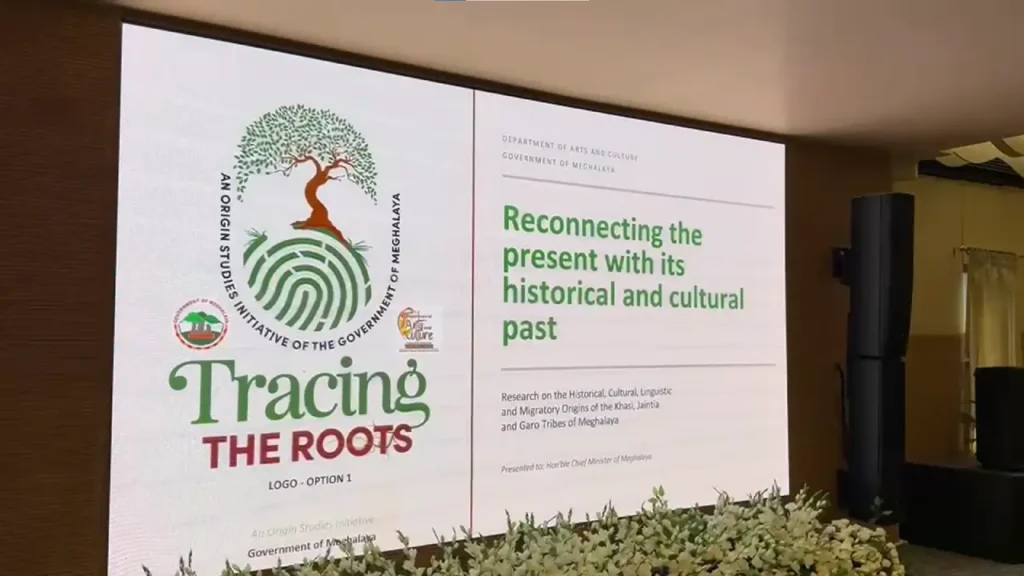
In a landmark move to scientifically document the heritage of the state, the Government of Meghalayahas commissioned a specialised research initiative to trace the genetic and cultural origins of the Khasi, Jaintia and Garo tribes. Announced by Chief Minister Conrad K. Sangma during a comprehensive review session at the Tara Ghar state guest house, the project positions high-level research teams at the forefront of building an evidence-based narrative of the state’s indigenous history.
At the core of the initiative are two dedicated committees constituted to manage the complex analytical work involved. One committee will conduct an in-depth study of the Khasi and Jaintia communities, while the other will focus exclusively on the Garo tribe. Their approach goes beyond conventional historical inquiry, employing advanced scientific methods such as DNA mapping and linguistic analysis to explore long-debated linkages rooted in oral traditions. The research will, for instance, examine Mon-Khmer genetic connections for the Khasi-Jaintia groups and investigate possible ancestral links between the Garo community and populations in Tibet.
The teams, comprising nearly 50 scholars under the Chief Minister’s Research Programme, have been engaged in preliminary groundwork since February. Their work involves extensive collaboration with premier national and international scientific institutions. By integrating genetic data with cultural and linguistic insights, the researchers aim to produce comprehensive documentation that moves beyond folklore to verifiable historical evidence. The Chief Minister underscored the importance of this rigour in filling long-standing gaps in historical records and ensuring that credible documentation is available for future generations.
While the formal launch of the programme is scheduled for May 2026, the research teams are already operational. Given the depth of DNA analysis and the scope of fieldwork involved, the project is expected to take between 18 to 24 months. To ensure transparency and public engagement, the government has committed to releasing periodic updates, allowing citizens to track the progress of the research in real time.
The initiative signals a significant shift in how indigenous heritage is approached in Meghalaya. By equipping specialised research teams with resources and fostering international academic partnerships, the government aims to ensure that the histories of the Khasi, Jaintia and Garo communities are documented with scientific precision and academic depth.
The announcement coincided with a broader administrative review marking eight years of the Meghalaya Democratic Alliance government. During the session, Chief Minister Conrad K. Sangma reviewed six key departments alongside Deputy Chief Minister in-charge Urban Affairs and Transport Snaiwbhalang Dhar, Sports and Youth Affairs Minister Wailadmiki Shylla, and Art and Culture Minister Sanbor Shullai, signalling a renewed push towards urban transformation, sports preparedness and resource optimisation.
Briefing the media after the meeting, the Chief Minister outlined discussions on urban development, particularly focusing on cleanliness, beautification and infrastructure improvements in Shillong, Jowai and Tura. He emphasised the need to strengthen community participation to improve waste management systems and address gaps in water waste management, noting that while work has already begun, the goal is to enhance and scale up existing efforts.
Preparations for a major sporting milestone also featured prominently in the review. A separate session was dedicated to planning for the upcoming National Games, where detailed discussions were held on infrastructure, accommodation, transport logistics and the expected number of athletes, along with the venues for various sporting events.
On the economic front, the government reviewed a proposal to establish a Centre of Excellence for agar cultivation in Meghalaya, identifying it as a sector with significant growth potential. The presentation focused on strategies to develop the sector in a structured and sustainable manner.
Environmental governance and revenue generation were also key areas of focus during the review of the forest department. Discussions covered various functional wings of the department, exploring ways to enhance revenue streams while improving overall efficiency and management.
Clarifying the scope of urban interventions, the Chief Minister noted that there were no specific new infrastructure projects proposed, but rather an emphasis on improving ongoing initiatives related to cleanliness, beautification and overall urban management, particularly in Shillong.
The final review meeting centred on the Meghalaya Transport Corporation, where discussions focused on optimising existing assets and improving operational efficiency to ensure more effective utilisation of resources across the transport sector.