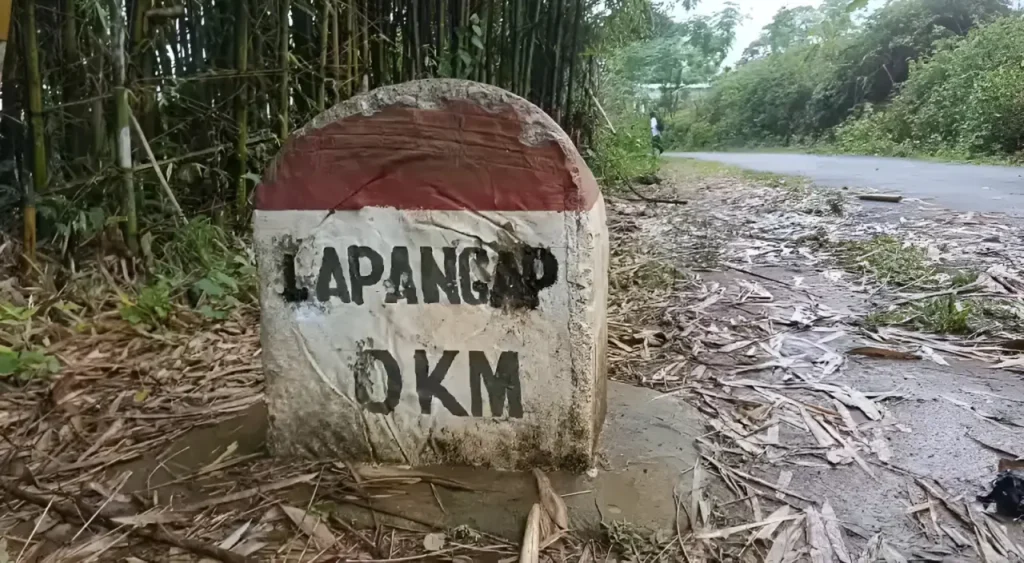
The agrarian border village of Lapangap in Meghalaya’s West Jaintia Hills district, located along the volatile interstate boundary with Assam’s Karbi Anglong region, has emerged as a major flashpoint of geopolitical tension and humanitarian distress. Local farmers have found themselves trapped in a crippling standoff, unable to cultivate their lands even as the crucial sowing season approaches its end.
The worsening situation has triggered widespread public outrage, mass protests in Shillong, and urgent appeals to human rights institutions. At the same time, the crisis has exposed deep-rooted administrative shortcomings and highlighted what many residents perceive as a stark disparity in institutional assertiveness between Meghalaya and Assam along the disputed border areas.
For the people of Lapangap, the issue is no longer merely territorial. Villagers say the prolonged insecurity has severely disrupted their livelihoods, threatened their food security, and created an atmosphere of constant fear and uncertainty. As tensions continue to escalate, local residents have accused the authorities of failing to provide adequate protection to farming communities living along the border.
Institutional paralysis and growing territorial assertion
At the centre of the growing resentment is the perceived inaction of the Jaintia Hills Autonomous District Council (JHADC). Residents of Lapangap have openly accused the council of ignoring their repeated appeals and failing to respond meaningfully to the mounting crisis along the interstate boundary.
Observers have pointed to a sharp contrast between the JHADC and Assam’s Karbi Anglong Autonomous Council (KAAC), which has reportedly intensified developmental activities and administrative outreach in the border areas. According to local accounts, the KAAC has aggressively implemented schemes aimed at strengthening its administrative presence among border residents as part of a broader effort to expand its territorial influence.
Video credit : Contributed
This increasingly assertive approach by the Assam-based council has gradually altered the existing ground situation, leaving Meghalaya’s comparatively under-resourced district council struggling to counter the developments. Critics argue that while the Meghalaya government has historically relied on district-level officials to manage such disputes, that strategy has proven ineffective against Assam’s more centralised and better-funded border initiatives.
Residents further claim that the absence of a strong institutional response from Meghalaya has emboldened attempts to alter the administrative realities in the disputed region. Many fear that continued delays and inaction could permanently weaken Meghalaya’s position in the area and further marginalise local communities already caught in the conflict.
Failed diplomacy and escalating disputes
The prolonged diplomatic deadlock has left local communities increasingly vulnerable. On May 22, 2026, the Hill Farmers’ Union (HFU) Central Body took the significant step of filing an official complaint before the Meghalaya Human Rights Commission (MHRC), alleging systematic intimidation, harassment, and economic deprivation of Lapangap’s farming community by actors from the Assam side.
In its petition, the HFU described the continued obstruction of agricultural activities as a direct violation of the farmers’ fundamental human rights. The union maintained that denying villagers access to their farmlands had effectively deprived them of their primary source of livelihood and pushed the community into deep economic uncertainty.
Recent peace initiatives have also failed to restore normalcy. During a high-level Peace Committee meeting held on May 5, 2026, a temporary understanding appeared to have been reached. Representatives from the Karbi side requested state authorities and the local Superintendent of Police to provide verification regarding individuals detained in connection with the death of Orival Timung. The Superintendent of Police assured the gathering that official reports and photographic evidence would be furnished, while clarifying that the matter remained under judicial jurisdiction and that bail had already been granted to the accused.
Video credit : Contributed
As part of what was described as a goodwill gesture, the Karbi delegation sought a two-day period to consult members of their community, indicating that Lapangap farmers would be allowed to return safely to their fields by May 8, 2026. However, when the farmers attempted to resume cultivation on the agreed date, they were allegedly blocked by Assam Police personnel and targeted with stone-pelting by Karbi counter-demonstrators, triggering panic among the villagers.
Another conflict-resolution meeting convened by the district administration on May 18, 2026, involving the Deputy Commissioner, Superintendent of Police, and Sub-Divisional Officer, also failed to produce any breakthrough. During the discussions, Karbi representatives reportedly shifted the focus of negotiations away from the earlier criminal investigation and instead raised concerns regarding forest usage and restrictions on the plantation of commercial trees and bamboo in the buffer forest areas adjacent to Lapangap’s farmlands.
Representatives from Lapangap clarified that they had no objections to Karbi residents engaging in cultivation within undisputed vacant areas under mutually agreed bilateral guidelines. However, they insisted that such activities should remain limited to seasonal food crops rather than permanent commercial plantations such as broomstick grass or timber species, in line with the environmental restrictions imposed on Lapangap’s own residents.
Despite extensive deliberations, the meeting concluded without any signed agreement, with both sides ultimately leaving the issue of final territorial demarcation to the governments of Meghalaya and Assam.
Public anger erupts in Shillong
The prolonged stalemate eventually triggered a major public demonstration in Shillong on May 13, 2026, as hundreds of aggrieved residents from the border areas marched through the state capital demanding stronger territorial protection and immediate intervention by the government.
The protest witnessed the participation of several influential pressure groups, including the Khasi Students’ Union (KSU), Jaintia Students’ Union (JSU), Jaintia Nationalist Council (JNC), and the Hill Farmers’ Union (HFU). Protesters assembled at Barik Point before proceeding toward the memorial of freedom fighter Syiem Kiang Nangbah near the Civil Hospital.
The procession later moved toward the Secretariat, where tense scenes briefly unfolded after demonstrators attempted to breach police barricades erected by law enforcement personnel. Following a standoff, authorities eventually permitted protest leaders to approach the Secretariat gates and seek an audience with senior cabinet ministers.
Expressing the deep frustration of his community, Lapangap Waheh Shnong (village headman) Teiwanmi Lyngdoh stated that villagers had been subjected to continuous psychological and physical intimidation since 2023. He said the much-anticipated peace talks at Khanduli had failed to provide genuine security guarantees, forcing the community to take its grievances directly to Shillong.
Video credit : Contributed
The village durbar submitted a detailed charter of demands to the Meghalaya government. These included an immediate and legally binding resolution guaranteeing unhindered agricultural access, the removal of an Assam Police camp at Lum Pynthror, which residents claim lies within Meghalaya territory, and the correction of global positioning coordinates amid allegations that Assam authorities manipulated GPS and Google Maps data to depict an artificial boundary extending deeper into Meghalaya.
The villagers also demanded the deployment of permanent and heavily armed state security outposts to safeguard the farming community working in the sensitive border region. According to local residents, only a sustained security presence would allow normal agricultural activities to resume without fear of harassment or confrontation.
In an emotional address to the media, Teiwanmi Lyngdoh lamented the irony of the situation, stating that despite being citizens of independent India, the people of Lapangap had effectively been reduced to “slaves on their own ancestral land” because of the state’s inability to guarantee their safety and livelihood.
State intervention and fragile temporary truce
The scale and intensity of the Secretariat protest prompted an immediate response from the Meghalaya Democratic Alliance (MDA) government. Deputy Chief Minister Sniawbhalang Dhar convened an emergency high-level review meeting attended by the Chief Secretary, Principal Secretary, Inspector General of Police, and senior district officials from West Jaintia Hills.
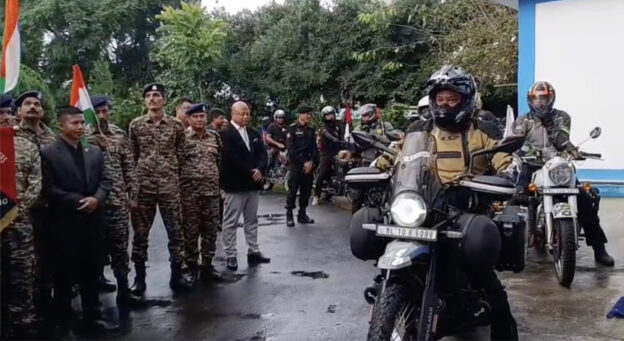
Following the deliberations, West Jaintia Hills Deputy Commissioner Abhinav Kumar Singh personally addressed the demonstrators outside the Secretariat gates and announced that elite SF-10 police commandos would be deployed to strategic border outposts beginning the following morning in order to secure the agricultural zones and reassure local residents.
The Deputy Commissioner further explained that comprehensive boundary settlement talks had been temporarily delayed because the Assam government was in the process of stabilising a newly formed cabinet and had not yet appointed a Chairman for its Regional Committee. He assured the public that high-level bilateral negotiations led by the Chief Minister and Deputy Chief Minister would resume once Assam completed the necessary administrative appointments.
At the same time, the Superintendent of Police assured the public that the Meghalaya Police remained fully committed to protecting local farmers. He appealed to villagers to return to their fields and resume cultivation under the protection of the newly deployed security personnel.
Reassured by these executive commitments, the leadership of the various pressure groups and the Lapangap village durbar agreed to temporarily suspend their agitation. However, they also issued a stern warning that if the security arrangements failed to prevent further harassment or obstruction, they would launch a far more intense and widespread phase of public agitation across Meghalaya.