In a transformative step for Meghalaya’s socio-cultural landscape, Chief Minister Conrad K. Sangma inaugurated two landmark projects in Shillong: the newly renovated State Central Library and the dedicated House of Ryndia. More than just a routine ribbon-cutting event, the unveiling represents an ambitious fusion of living heritage, public education, and sustainable economic empowerment.
By bringing together traditional textile arts, modern educational infrastructure, and community-centric development, the initiative sets a bold benchmark for how the state intends to chart its path forward without losing touch with its roots.
During his opening address, Chief Minister Sangma laid out a three-dimensional development model that balances modern growth with historical preservation. At its foundation, this strategic vision focuses heavily on massive capital investments in infrastructure to bridge existing gaps across roads, public facilities, schools, medical facilities, and sports venues.
However, physical infrastructure is only the start; the second pillar focuses on personal development, ensuring these structures actively empower residents by enabling farmers to scale up production and giving local entrepreneurs direct pathways to national markets. The third and binding pillar is cultural identity, anchoring every modern advance firmly in Meghalaya’s traditions and heritage.
This holistic approach extends seamlessly into the state’s forward-looking tourism and economic strategy. Rather than relying solely on established hotspots like Sohra, Mawlynnong, and Dawki, the government is expanding its horizons to build fresh regional brands across eleven specific strategic locations.
The broader ambition is to turn everyday cultural practices—ranging from music and traditional sports to handloom weaving and local handicrafts—into thriving, commercially viable micro-economies. By involving local communities directly in building these sustainable brands, the state aims to generate long-term livelihoods while protecting the authentic traditions that make Meghalaya unique.
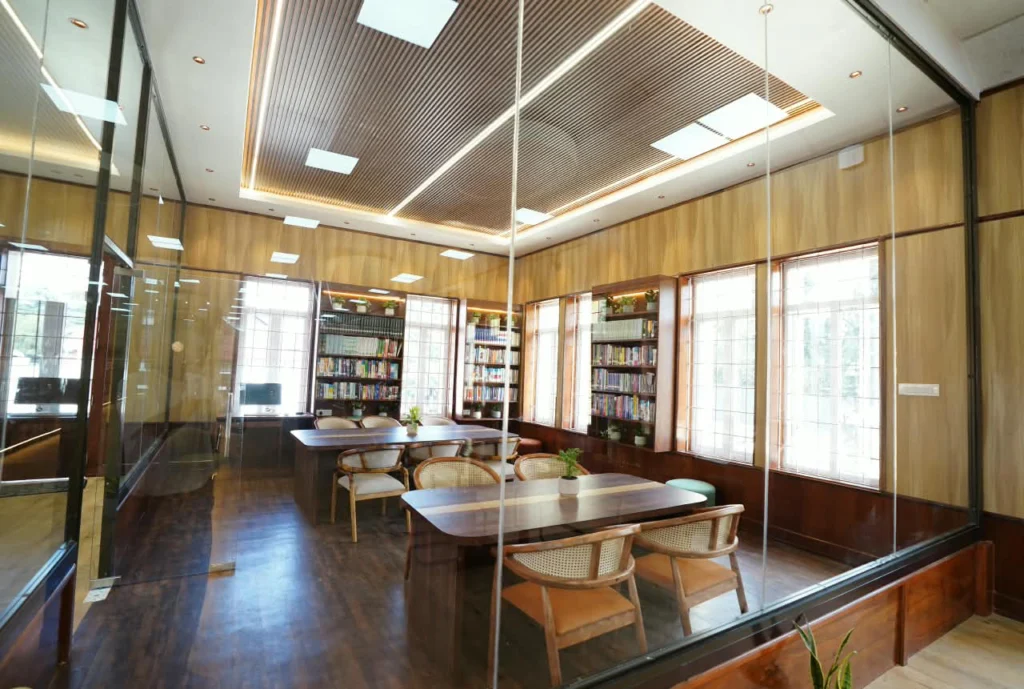
A standout highlight of this cultural movement is the total overhaul of the State Central Library. Recognizing that traditional public reading spaces must evolve to stay relevant, the renovation modernizes the environment while actively cultivating a strong reading culture among youth and students.
To make the space inviting and contemporary, the library now features relaxed amenities offering local coffee, tea, and regional snacks. The intent is to offer a comfortable, welcoming sanctuary where young minds can step away from digital distractions and immerse themselves in physical books. In line with this effort, the Chief Minister urged parents and teachers to play an active role in nurturing a habitual love for reading in children.
The day’s events also celebrated the broader spectrum of Meghalayan craft and heritage through the State-Level Living Heritage Arts & Craft Village Festival, showcasing regional music, traditional culinary arts, oral histories, and folk traditions practiced across the state. Hand in hand with this festival, the opening of the House of Ryndia creates a permanent, specialized haven for the state’s world-renowned indigenous handloom silk. The dedicated space is built to elevate the visibility of native weavers, broaden public awareness, and establish direct market linkages that ensure traditional artisans reap fair economic rewards.
Originally founded on January 19, 1974, under the Directorate of Arts and Culture, the State Central Library has served as Meghalaya’s premier public literary institution for over half a century. Over decades, it has catered to students, scholars, researchers, public servants, senior citizens, and casual readers alike. As of March 1, 2026, the facility houses a rich repository of more than two lakh book volumes, alongside extensive collections of magazines, government publications, and archived local newspapers dating back to the 1970s. With nearly 31,000 registered members, the library issues approximately 200 books each day, while offering core services like reference research, internet browsing, current-awareness updates, orientation sessions, children’s literature sections, internship opportunities, and digital membership management.
The library’s modern transformation was financed through a ₹2.23 crore grant under the National Mission on Libraries, an initiative focused on upgrading public infrastructure, introducing modern information technology, building library networks, and widening access across all demographics. The revamped facility boasts enhanced general reading rooms, specialized archives, an upgraded children’s wing, and a modernized Knowledge Corner.
First introduced in 2019–20, this Knowledge Corner has now been fully upgraded into a comprehensive resource center specially designed to support aspirants preparing for national-level competitive examinations. With the integration of E-Granthalaya software, an Online Public Access Catalogue, and Web OPAC facilities, members can now navigate the library’s vast archives and locate research materials faster and more efficiently than ever before.