Are reports of fresh Chinese incursions in Arunachal Pradesh signalling a new border crisis, or are familiar military confrontations along the Line of Actual Control being amplified into something far more alarming? The distinction matters, particularly in a frontier where territorial disputes, strategic posturing and competing narratives have long shaped India-China relations.
Social media has been flooded with reports of renewed Chinese aggression along the Line of Actual Control (LAC) in the Taksing sector of Arunachal Pradesh’s Upper Subansiri district. Some accounts have gone further, suggesting that Chinese troops have occupied strategic Indian territory, raising concerns about another confrontation between the two Asian powers.
The immediate trigger was a statement by Indo-Tibetan Border Police (ITBP) Director General Shatrujeet Singh Kapur during an event in Alwar, Rajasthan, on Thursday, 22 October. His remarks about continuing face-offs between Indian and Chinese troops were quickly interpreted by some as evidence of fresh incursions.
But a closer examination of what Kapur actually said presents a somewhat different picture.
“In the past few days, a situation arose where face-off happened at several locations in Arunachal and it still continues,” he said.
Significantly, Kapur did not speak of Indian territory being occupied by Chinese forces. His observations were largely directed towards the changing nature of warfare and the urgent need to modernise India’s border forces, particularly in response to China’s advances in drone technology.
The ITBP chief acknowledged that the People’s Liberation Army (PLA) had developed considerable capabilities in drone warfare and stressed that conventional approaches to confronting Chinese aggression would have to change.
He also highlighted the formation of a specialised combat unit, the Shaurya Commandos, whose personnel had demonstrated their capabilities during recent face-offs. The force, which guards the 3,488-km India-China frontier, is strengthening its preparedness through drones, specialised units and underground shelters.
These are important developments. Yet much of the attention surrounding Kapur’s speech has shifted from military preparedness to speculation about territorial losses.
According to senior Defence Ministry officials, there have been “no such incursions, except a few face offs”, described as matters arising during routine patrolling.
One official, speaking on condition of anonymity, acknowledged that attempts by Chinese troops to adopt an aggressive posture could not be entirely dismissed. However, Indian forces had responded to such situations whenever they arose.
This distinction is crucial. Face-offs along disputed stretches of the LAC are hardly new, whether in Arunachal Pradesh or Ladakh. They reflect differences in territorial perceptions, patrolling practices and unresolved boundary claims. While every confrontation warrants vigilance, it does not automatically establish that territory has been occupied or surrendered.
That does not mean concerns surrounding Taksing are entirely without foundation.
Since June, reports have emerged of alleged Chinese movements around several strategically sensitive locations in Upper Subansiri. The Nah Welfare Association (NWA) submitted a representation to the district administration claiming that PLA troops had expanded their presence around Oying in the Asaphila region, Paniar, Marpan, Portrang and Tingdingtang. The organisation also alleged that military infrastructure had been established in some of these areas.
The Indian Army rejected these allegations, maintaining that there was no evidence of fresh Chinese intrusion. Arunachal Pradesh Chief Minister Pema Khandu similarly dismissed the claims after discussions with members of the Nah community and the NWA.
Nevertheless, the association continued to express concern. Its allegations remain unverified and contested, but the anxieties of communities living along such sensitive frontiers deserve serious attention rather than outright dismissal.
Watch | ITBP Director General Shatrujeet Singh Kapoor said, “It is difficult to compete with China through traditional methods. It may now be difficult to rely on conventional methods…”
(Source: Social Media) https://t.co/0Tf2mG2KFK
— United News of India (@uniindianews) October 23, 2026
Reports since July have also referred to confrontations near Maja, including an account of Chinese troops returning in larger numbers after encountering Indian patrols and allegedly pitching tents several kilometres inside India’s perception of the LAC. These claims, too, require independent verification.
The Ministry of External Affairs has maintained that both countries continue to use established diplomatic and military mechanisms to address outstanding issues and prevent misunderstandings. Its spokesperson, Randhir Jaiswal, also acknowledged that tensions sometimes arise when Chinese troops depart from established patrolling patterns.
Taken together, these developments suggest a sensitive and occasionally confrontational frontier, but they do not, by themselves, substantiate claims of a fresh territorial takeover.
To understand why Taksing repeatedly attracts attention, one must also understand its geography and history.
Among the last Indian settlements in Upper Subansiri, Taksing lies in one of the most remote and strategically important stretches of Arunachal Pradesh. Reaching it involves travelling through difficult mountain terrain, passing Bara Rupak, Daporizo, Limeking, Nacho, Maja and Gelemo. Road connectivity has improved considerably, but the journey remains demanding.
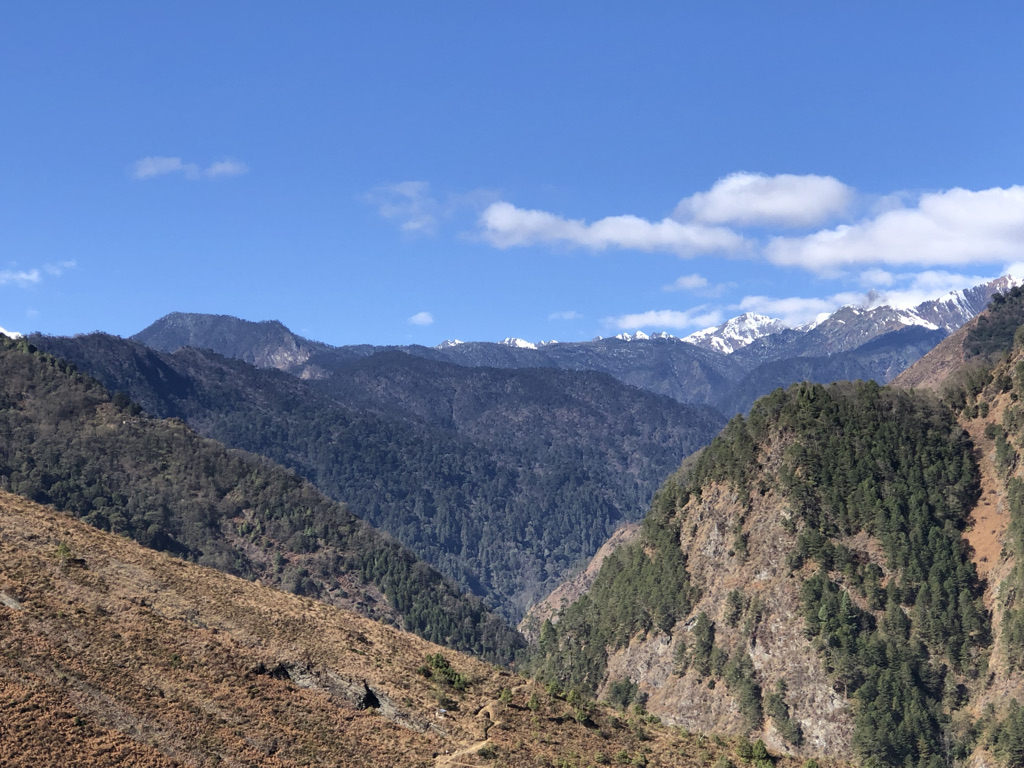
The extraordinary beauty of the mountains, forests and rivers contrasts sharply with the unmistakable military presence. What appears to be a tranquil Himalayan landscape is also a frontier shaped by decades of territorial contestation.
Yet Taksing’s significance extends far beyond contemporary military calculations.
The Tsari Chu, flowing from Tibet into Arunachal Pradesh before joining the Subansiri river system, was once part of an important trans-Himalayan cultural and religious landscape. For centuries, Tibetan pilgrims travelled through this region during the twelve-yearly Tsari pilgrimage around Dakpa Sheri, the sacred “Pure Crystal Mountain”.
The pilgrimage route connected Tibet with the Tagin-inhabited areas of Upper Subansiri. The last major pilgrimage took place in 1956, before deteriorating India-China relations transformed an old corridor of cultural exchange into a heavily guarded political frontier.
This history is particularly relevant because the contemporary dispute is not confined to military positions. It also involves competing interpretations of geography, history and territorial belonging.
Longju, situated along this sensitive frontier, witnessed one of the earliest violent India-China confrontations in August 1959. Indian forces subsequently withdrew towards Maja. The region again acquired military significance during the 1962 war.
Near Gelemo, the Sher-e-Thapa Memorial commemorates Havildar Shere Thapa of 2 JAK Rifles, associated with the fighting during that conflict. The memorial is a reminder that the apparently peaceful landscape carries the memory of a deeply contested frontier.
It is against this background that India’s recent decision to formally identify 27 places and geographical features in Arunachal Pradesh by their standard Indian names on Survey of India maps assumes significance. The list includes Longju, Maja and the Sher-e-Thapa Memorial.
The exercise is more than a cartographic formality. It represents India’s response to China’s repeated attempts to assign Chinese names to places in Arunachal Pradesh, a state Beijing claims but India administers as an integral part of its territory.
Maps, after all, are not politically neutral documents in contested borderlands. Naming a mountain, river, settlement or historical site can become an assertion of sovereignty and an attempt to reinforce a particular territorial narrative.
China’s naming exercises and India’s cartographic response must therefore be understood as part of a larger contest over legitimacy, history and national perception. Neither necessarily changes the military situation on the ground, but both influence how territorial claims are communicated domestically and internationally.
This contest continues even as New Delhi and Beijing pursue diplomatic engagement at the highest levels. Recent meetings between Prime Minister Narendra Modi and President Xi Jinping have demonstrated that dialogue and strategic rivalry can proceed simultaneously, without necessarily resolving the underlying boundary dispute.
That is precisely why the latest controversy surrounding Taksing deserves a more measured assessment.
China’s military modernisation, infrastructure development and aggressive posturing along disputed stretches of the LAC remain legitimate concerns for India. Equally important is the need for Indian forces to remain technologically prepared and for the government to communicate clearly about developments along the frontier.
But there is a considerable difference between reporting an actual incursion, documenting a military face-off and circulating claims that Indian territory has been lost. Conflating these developments risks creating public alarm without improving understanding of the security situation.
The concerns of frontier communities must not be ignored, just as official denials should not automatically be treated as a substitute for transparency. Both deserve scrutiny, supported by verifiable evidence.
What the Taksing episode ultimately reveals is the complexity of India’s eastern Himalayan frontier, where military preparedness, territorial perceptions, historical memory and competing national narratives intersect.
Kapur’s remarks should therefore be viewed primarily as a warning about the changing character of border warfare and the necessity of modernisation, rather than as confirmation of a fresh Chinese territorial advance.
The real danger is not merely China’s aggressive posturing along the LAC. It is also the tendency to turn every confrontation into a narrative of territorial defeat without establishing the facts.
India cannot afford complacency along its borders. But neither can it afford a public discourse in which speculation overwhelms evidence. In Taksing, as elsewhere along the contested frontier, strategic vigilance must be accompanied by informed reporting, transparency and an understanding that the battle over perceptions can sometimes become almost as consequential as the confrontation on the ground.