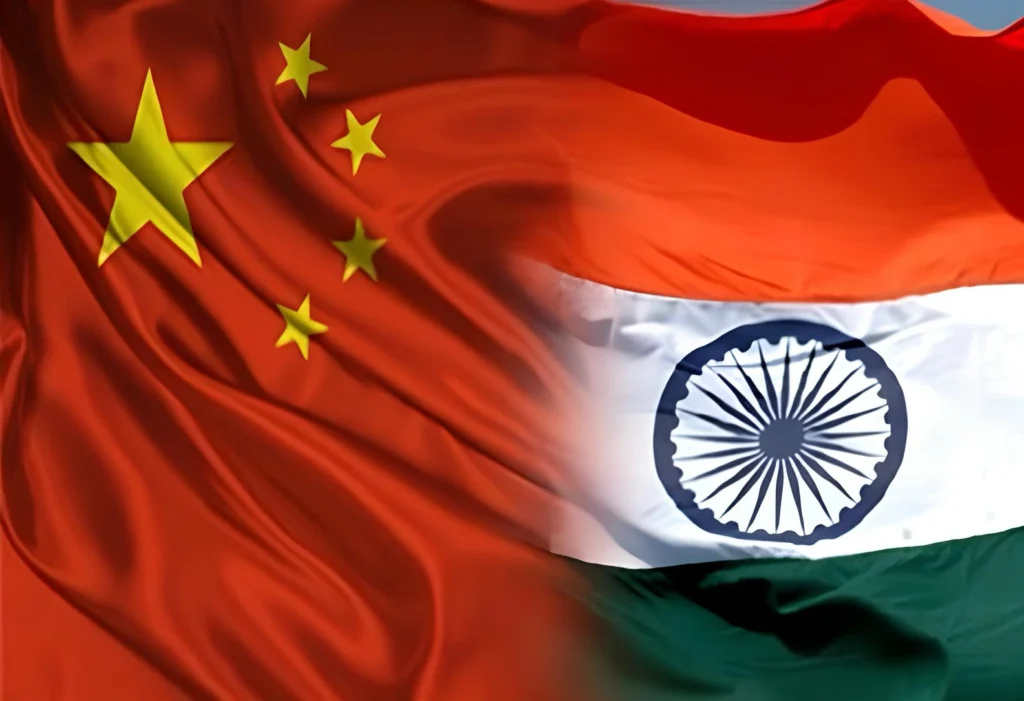
India-China ties today sit in an uneasy middle ground between strategic competition and guarded cooperation. Diplomatic channels have reopened and high-level meetings have resumed, yet the fundamental sources of friction—especially along the disputed border—continue to shape the relationship more powerfully than any statement of partnership.
The most recent reminder came in Arunachal Pradesh. On 22 October 2026 the director general of the Indo-Tibetan Border Police confirmed that face-offs with Chinese troops were continuing at several locations along the Line of Actual Control. These included a prolonged stand-off near Taksing in Upper Subansiri district that began in late July 2026, when Chinese troops pitched tents several kilometres inside India’s perception of the LAC.
The confrontations persisted through the 18th BRICS Summit held in New Delhi on 12–13 September 2026, which Chinese President Xi Jinping attended, and through multiple rounds of military and diplomatic talks, including the first Corps Commander-level meetings in the eastern sector on 6–7 September 2026 at the Wacha-Damai Border Personnel Meeting Point.
This pattern is not new. The Galwan Valley clash of 15 June 2020 shattered the earlier framework of carefully managed border stability. Subsequent disengagement agreements reduced the most acute risks in eastern Ladakh, but they did not resolve the deeper territorial dispute. The relationship that has emerged since is one of managed competition rather than genuine rapprochement.
Nowhere is this clearer than in Arunachal Pradesh, which has become a focal point of competing strategic investments. China continues its long-standing practice of issuing lists of “standardised” Chinese names for locations in the state, which it claims as “Zangnan” or southern Tibet. In early August 2026 India responded by formally standardising the names of 27 geographical features on official Survey of India maps; similar steps were later taken in Ladakh. These cartographic contests reinforce sovereignty claims without changing facts on the ground.
More consequential still is the race for control over water and connectivity. China began construction of a massive hydropower complex on the lower Yarlung Tsangpo on 19 July 2025, close to the border, with planned capacity far larger than existing major dams, including China’s own Three Gorges Dam. The project has heightened Indian concerns about water security, sediment flows and strategic leverage on a river system for which no bilateral sharing agreement exists.
India has answered with its own proposed Siang Upper Multipurpose Project, an approximately 11,200 MW scheme designed to create substantial downstream storage. Officials present it as a necessary counter to upstream Chinese works, though the project continues to face local opposition over displacement and environmental impact. At the same time, New Delhi is pushing forward the 1,700-plus-kilometre Frontier Highway (NH-913) that will run close to the Line of Actual Control from the Bhutan border region eastward to the Myanmar border town of Vijaynagar, with completion targeted for 2029. The road is intended to improve military mobility and civilian connectivity in sparsely populated frontier areas.
These developments are occurring against a wider global shift that has expanded China’s room for manoeuvre. The post-1945 liberal international order—constructed and underwritten by the United States through open trade rules, multilateral institutions and security alliances—enabled China’s integration into the world economy and its rapid rise. Over time, however, relative power changes, domestic economic pressures, costly overseas interventions and political polarisation reduced American willingness to bear the disproportionate costs of sustaining that order.
The rise of the Trump presidency and the broader “America First” approach crystallised a more selective and transactional foreign policy that prioritises reciprocity and national advantage. This partial US retrenchment from hegemonic leadership has given Beijing greater strategic space to pursue its interests, whether in engagement with major powers or in its competition with India.
India’s response has been deliberate and multi-layered. It has accelerated border infrastructure, including the Frontier Highway and strategic hydropower projects, while strengthening military presence and logistics along the LAC.
Diplomatically, New Delhi has insisted that peace and tranquillity on the border remain the essential foundation for any broader improvement in ties, and has repeatedly underscored the principles of mutual respect, mutual sensitivity and mutual interest. Economically, India continues to trade with China—bilateral commerce has grown—but has also moved to diversify supply chains, reduce dependence in critical sectors, and apply greater scrutiny to Chinese investments.
At the same time, it has deepened engagement with partners through frameworks such as the Quad and the wider Indo-Pacific, without entering formal alliances. This approach of multi-alignment seeks to expand strategic options while refusing to subordinate core territorial interests.
The overall pattern is clear. Diplomacy can manage friction and reduce the risk of escalation, but hard-power realities and competing claims on the ground still set the terms of the relationship. Face-offs, naming contests, rival hydropower projects and frontier highway construction are not isolated episodes; they are instruments of long-term positioning.
A more stable equilibrium will require sustained military restraint, greater clarity on the Line of Actual Control, and political will on both sides to prevent tactical gains from undermining the broader relationship. Until then, India-China ties will remain defined more by competition and cautious coexistence than by partnership—with consequences that extend well beyond the Himalayas.