Known for its breathtaking landscapes, Buddhist heritage and growing tourism appeal, Tawang is gradually exploring new opportunities for local entrepreneurship.
From promoting traditional crafts and indigenous products to developing hospitality skills, efforts to strengthen the district’s local economy are creating fresh possibilities for its young people.
The emphasis on skill development and enterprise is particularly significant in a region where traditional knowledge, locally available resources and tourism offer considerable potential for small businesses.
Providing local talent with professional training, institutional support and better market opportunities could help Tawang develop into a vibrant centre for indigenous entrepreneurship.
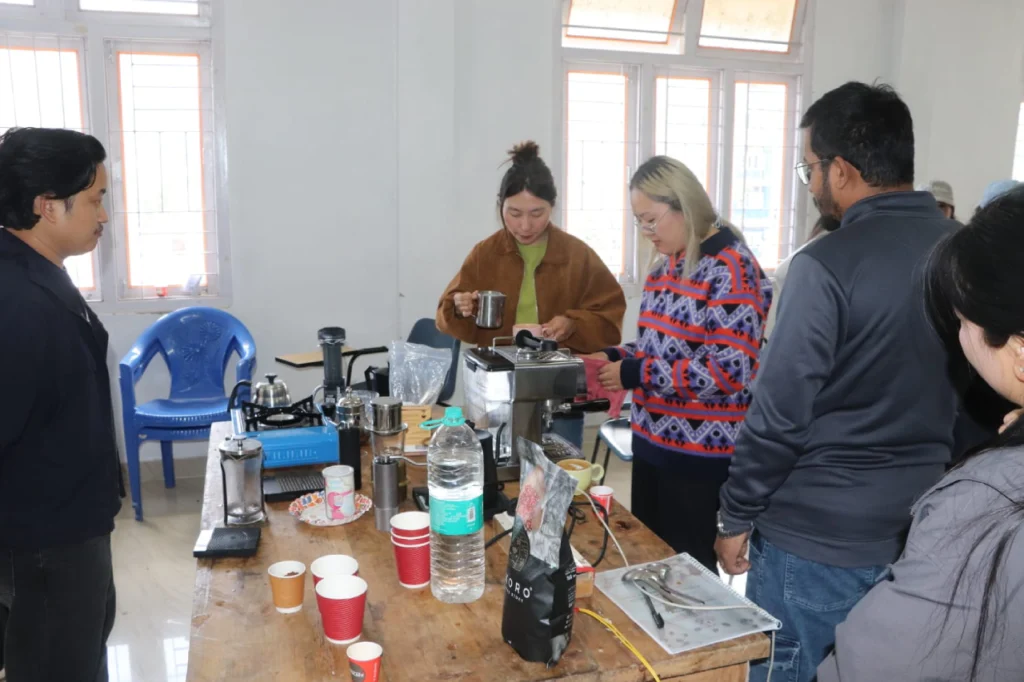
One such initiative concluded on Friday with the completion of a five-day barista training programme at the District Industries Centre in Tawang.
The programme aimed to equip local youth with professional coffee-making skills and encourage self-employment in the hospitality sector.
Titled “A Beans to Brew Journey – From Origin to a Perfect Cup”, the programme was held from October 12 to 16.
It was initiated by the Coffee Board of India’s Coffee Quality Division in collaboration with Mezang Academy of Culinary Arts and Baking Science, Itanagar, and the Department of Skill Development & Entrepreneurship, Government of Arunachal Pradesh.
The training focused on preparing young participants for employment in cafés, hotels and other hospitality establishments. It also encouraged them to consider establishing their own coffee-related businesses.
Over five days, participants received practical lessons in espresso preparation, milk steaming, latte art, different brewing techniques, sensory evaluation and coffee cupping.
The hands-on sessions introduced them to professional standards and the technical skills required in the coffee industry.
Deputy Commissioner of Tawang, Namgyal Angmo, attended the concluding session and interacted with the participants.
She appreciated the initiative and acknowledged the efforts of the organising institutions in bringing industry-oriented training opportunities to the district.
She also expressed gratitude to the organisers for helping local youth acquire practical skills that could strengthen their economic independence and encourage entrepreneurial ventures.
The Department of Skill Development & Entrepreneurship supported the programme by providing the venue and facilitating its smooth conduct.
Beyond hospitality, Tawang’s entrepreneurial potential also lies in traditional weaving, handicrafts, local food products and other indigenous skills.
Many of these activities are rooted in the cultural heritage of the Monpa community and offer opportunities to develop distinctive local enterprises while preserving traditional knowledge.
With appropriate training, product development, branding and access to markets, such indigenous products could find a wider customer base, particularly among tourists visiting the district.
The connection between tourism and local entrepreneurship is especially important. As visitor numbers grow, so does the potential demand for locally produced goods, traditional cuisine, quality accommodation and professionally managed cafés.
Developing these services through local participation could help ensure that a greater share of tourism-related economic benefits remains within the district, supporting families, artisans and aspiring entrepreneurs.
The barista programme reflects this broader approach to livelihood development, where specialised skills and institutional collaboration can help young people move from training to employment or independent enterprise.
It also underlines the importance of sustained cooperation between government departments, professional institutions and industry organisations in addressing skill gaps and nurturing local business initiatives.
For Tawang, the larger opportunity lies not merely in attracting more visitors but in building an economy where local talent, indigenous products and traditional knowledge become important drivers of growth.
The successful completion of the programme marks another encouraging step in that direction, reinforcing Tawang’s potential to emerge as a centre of locally driven entrepreneurship while retaining its distinctive cultural identity.