Tawang, one of Arunachal Pradesh’s most culturally vibrant districts, is witnessing a series of significant initiatives that bring together Buddhist spirituality, community participation and the preservation of its rich indigenous heritage. From preparations for the sacred exposition of Lord Buddha’s relics to cultural performances, heritage treks and literary initiatives, the Himalayan district is increasingly drawing attention to its distinctive identity and traditions.
Among the most significant forthcoming events is the Sacred Exposition of the Holy Relics of Shakyamuni Buddha, scheduled to take place from 31 October to 7 November 2026. The exposition is expected to attract thousands of devotees, including pilgrims from neighbouring countries, and will carry the universal message of peace, compassion and harmony.
Preparations for the event were reviewed at a coordination meeting chaired by Tawang Deputy Commissioner Namgyal Angmo on 1 September. The meeting brought together senior district officials, representatives of monasteries and nunneries, religious organisations, security personnel and other stakeholders.
Director of the Department of Karmik and Adhyatmik Affairs (DoKAA), Thupten Kalden, highlighted the spiritual significance of the relics and recalled the previous exposition held in Tawang in 2013, when approximately 26,000 devotees had the opportunity to offer their respects. The number of visitors this year is expected to be considerably higher.
Tenzin Jorden, Chairman and State Coordinator of the State Level Coordination Committee, presented the proposed coordination framework, security arrangements and activities planned ahead of the relics’ arrival.
He emphasised that the exposition seeks to carry Lord Buddha’s timeless teachings of peace, compassion and harmony to a wider audience. Preparations are being coordinated at national, state and district levels, with monasteries, religious institutions and local communities expected to play important roles.
DoKAA Vice Chairperson Sange Chodup described the exposition as a rare spiritual opportunity, particularly as it coincides with the auspicious Buddhist occasion of Lhabab Düchen.
He observed that the teachings of Lord Buddha, delivered more than 2,500 years ago, continue to hold profound relevance for humanity, transcending religious boundaries through their emphasis on compassion, peaceful coexistence and understanding.
Referring to India’s historic association with Buddhism and its spread across Asia, he said the exposition could also attract pilgrims from Bhutan and Nepal. He stressed the importance of disseminating information about the programme and darshan timings through the Department of Information and Public Relations, Akashvani and other media platforms.
He also highlighted the significance of developing the Buddhist Circuit and expressed gratitude to the governments of India and Arunachal Pradesh for facilitating the exposition.
Zilla Parishad Chairperson Leki Gombu urged Panchayati Raj Institution representatives to ensure that information about the event reaches every village. He also requested the Border Roads Organisation to facilitate participation by its workers, whose weekly holidays might not coincide with the scheduled darshan timings.
Referring to observations by Samdhong Rinpoche on Tawang’s well-preserved cultural traditions, Gombu emphasised the collective responsibility of local communities to safeguard their heritage. He suggested that residents could voluntarily adopt a vegetarian diet during the exposition as a gesture of reverence and compassion.
Deputy Commissioner Namgyal Angmo emphasised that an exposition of such spiritual and public significance would require coordinated efforts from all departments, institutions and community organisations.
She particularly stressed cleanliness, effective waste management and public participation, observing that preparations of this magnitude could not be left to a handful of government departments.
Further consultations with delegates and technical experts are expected to address security, logistics, crowd management, infrastructure and other operational requirements to ensure the safe and dignified conduct of the exposition.
While preparations for the sacred event gather momentum, Tawang has also been hosting programmes aimed at strengthening community participation and celebrating the spirit of public service.
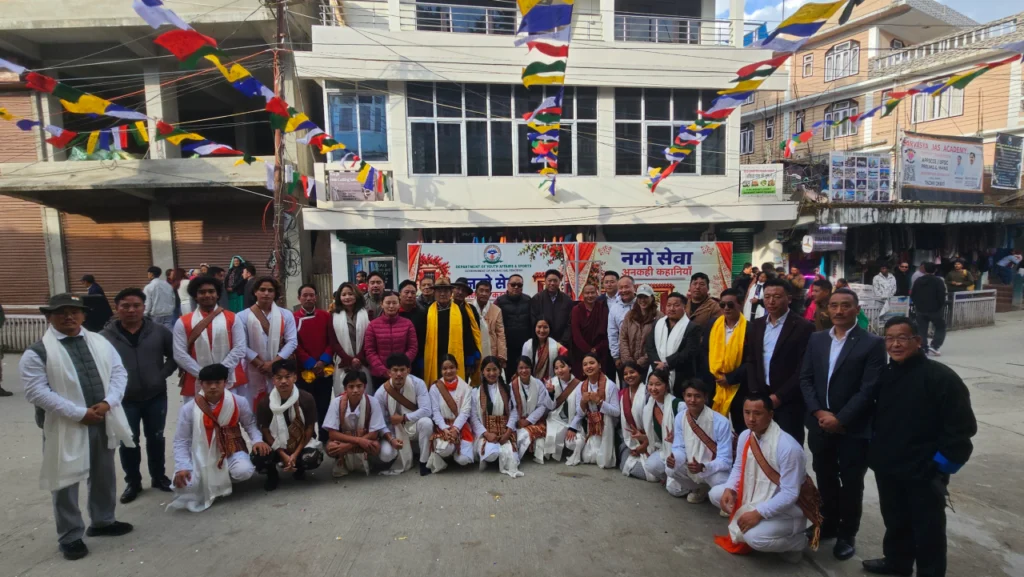
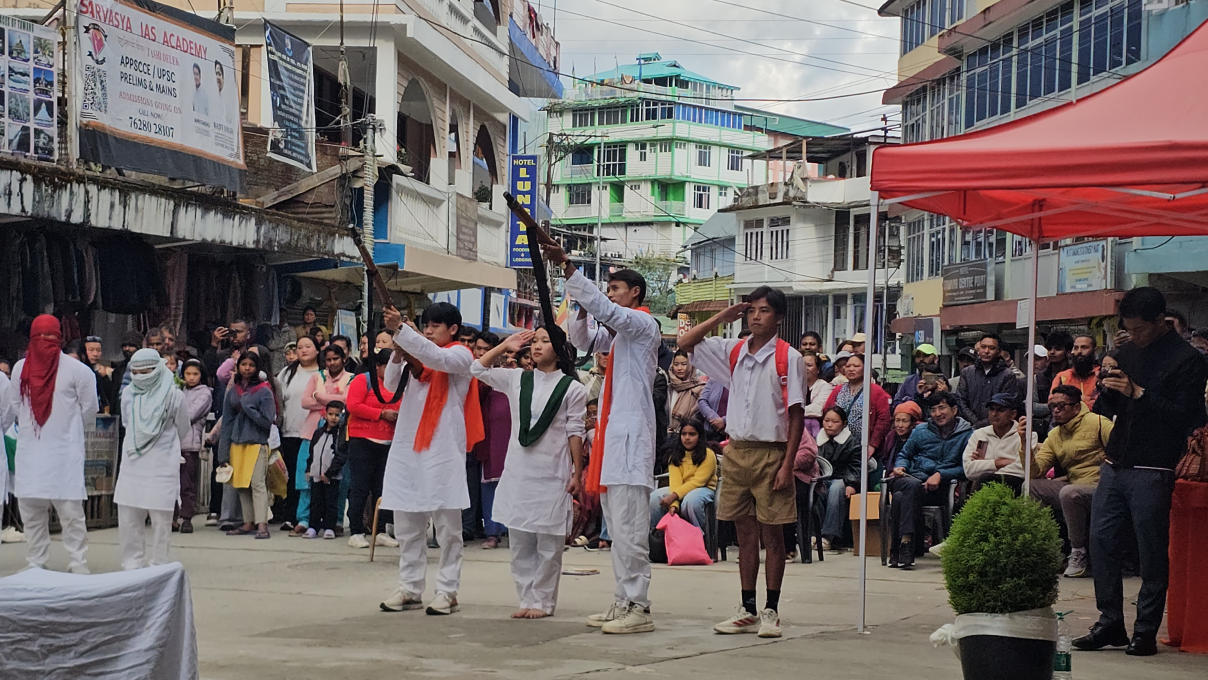
On 11 October, the Department of Youth Affairs and Sports, Government of Arunachal Pradesh, organised the Seva Sankalp Utsav – Nukkad Natak at Tawang’s Old Market under the theme Namo Seva – Ankahee Kahaniyan, or Untold Stories.
The programme used street theatre to communicate messages of selfless service, dedication, social responsibility and community participation, bringing these themes directly to the public through an accessible cultural medium.
The event began with a welcome address by Lhundup Chosang, followed by traditional group dances performed by the Ketchenga Culture Group. Dunggoli Libang, Convenor of the Nukkad Natak programme, also addressed the gathering.
The principal attraction was a street play highlighting stories of service, commitment and collective responsibility. Through its performances, the programme sought to encourage citizens, particularly young people, to recognise the importance of contributing to society.
Zilla Parishad Chairperson Leki Gombu attended as chief guest, alongside in-charge Deputy Commissioner Rinchin Leta, Deputy Superintendent of Police Togum Gonggo, Zilla Parishad Members Sonam Nordzin and Tenzin Monpa, DoKAA Vice Chairperson Sange Chhodup and other public representatives.
The participating artists were felicitated for their contributions, and the programme concluded with the National Anthem.
Beyond its cultural performances, the initiative sought to reinforce the values of Seva, Samarpan and Sankalp — service, dedication and resolve — while encouraging greater public awareness and participation in community and nation-building activities.
The emphasis on community identity and shared responsibility is also reflected in another recent initiative that has sought to reconnect Tawang’s younger generation with the extraordinary journeys undertaken by their ancestors.
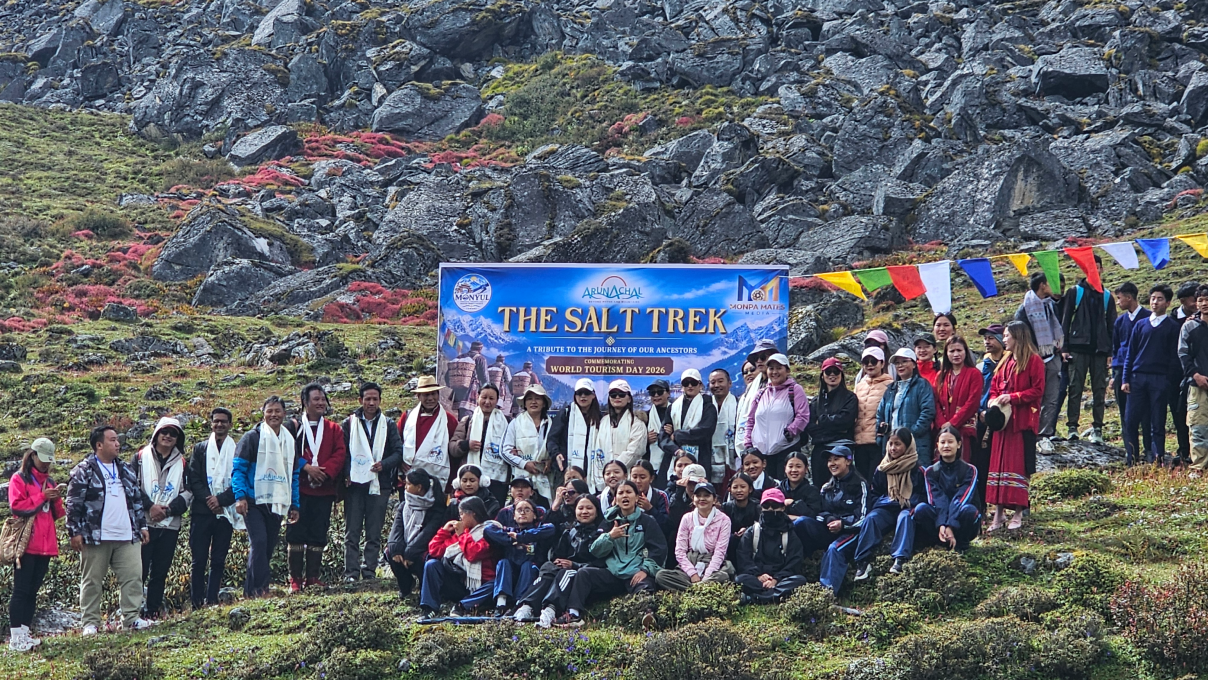
On 20 September, more than 100 participants joined a historic Salt Trek, retracing a section of an ancient high-altitude trade route once used by Monpa communities to transport salt and other essential commodities from Tibet.
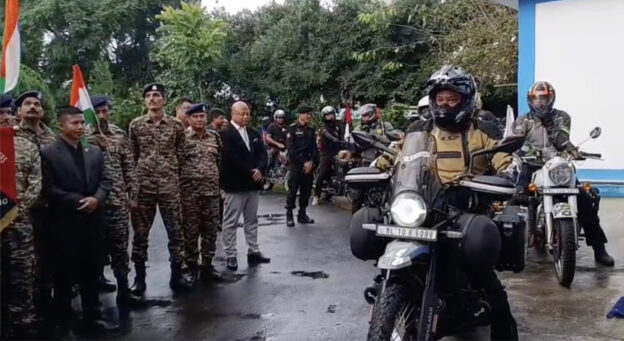
Flagged off by Tawang MLA Namgey Tsering, the approximately 5.5-kilometre trek began at Griptsang Lake near Nagula and concluded at Chhu-shet Gyengo near Klemta Lake.
Organised by the Monyul Heritage Tourism and Winter Sports Society in collaboration with the Department of Tourism, Tawang, and Monpa Media Mates, with support from the Indian Army, the initiative formed part of activities commemorating World Tourism Day.
Participants included Army personnel, students, young people, trekking enthusiasts and local representatives.
During the journey, resource persons Dorjee Tsering, Gaon Burah of Bomba Bumteng, and Phurpa Gombu shared accounts of the ancient trade route, associated pilgrimage sites and the hardships endured by earlier generations.
They highlighted the importance of preserving traditional place names, oral histories, folklore and stories associated with lakes, mountain passes and other landmarks before these disappear from collective memory.
MLA Namgey Tsering described the trek as a meaningful tribute to Monpa forefathers who braved difficult terrain, snow and rain to secure essential supplies for their communities.
He encouraged younger generations to understand the struggles and resilience of their ancestors while taking pride in their cultural inheritance.
The initiative also highlighted the potential of the historic route for heritage and adventure tourism, offering visitors an opportunity to experience Tawang’s landscape alongside its history and traditions.
Organisers stressed environmental responsibility, urging participants to follow the principle of leaving no waste behind in the fragile high-altitude ecosystem.
At the conclusion of the trek, participants were presented with traditional Khadas and shown historical objects, including baskets, horse saddles, walking sticks, silver coins and samples of salt associated with earlier trading practices.
Young participants were also encouraged to document local history, cuisine, folklore and heritage through digital storytelling, podcasts and other creative platforms, including the Ministry of Information and Broadcasting’s GEMS OF INDIA contest.
The effort to preserve Tawang’s cultural memory has found expression in literature as well.
On 25 August, Deputy Commissioner Namgyal Angmo released Fireside Tales, a collection of stories written by Tawang Superintendent of Police Tasi Darang, at the SP’s residence.
The book, illustrated by Mich Tarung and carrying a foreword by Chief Minister Pema Khandu, seeks to preserve local stories, cultural memories and the traditional practice of storytelling.
Recalling the days when families gathered around fireplaces to listen to elders narrate stories and share their wisdom, Darang said those memories inspired him to bring the narratives into written form.
He also expressed concern over declining reading habits, particularly among younger generations, and invited members of the public to contribute stories for future editions, with appropriate acknowledgement.
Deputy Commissioner Angmo appreciated the initiative, describing it as an example of how public officials could contribute to preserving cultural heritage through creative and literary pursuits.
She observed that books such as Fireside Tales could help younger readers understand the experiences, traditions and values of earlier generations at a time when digital screens increasingly compete with reading.
Together, these developments reflect a wider effort in Tawang to preserve its distinctive cultural and spiritual identity while encouraging greater community engagement.
The forthcoming exposition of the sacred relics represents an important moment for the district’s Buddhist heritage, while initiatives such as the Salt Trek, Fireside Tales and Seva Sankalp Utsav demonstrate how traditional knowledge, cultural expression and civic responsibility can find renewed relevance in contemporary society.
Situated along India’s sensitive Himalayan frontier, Tawang occupies a distinctive place in the country’s cultural and historical landscape. Its monasteries, ancient trade routes, oral traditions and close community ties remain central to the identity of the Monpa people.
As the district prepares to welcome devotees for the sacred exposition, these initiatives offer a broader glimpse into a region where spirituality, heritage and public participation continue to shape everyday life.
For Tawang, the significance of these events extends beyond individual celebrations. They represent a continuing effort to ensure that the traditions inherited from earlier generations remain alive, meaningful and accessible to those who will carry them forward.