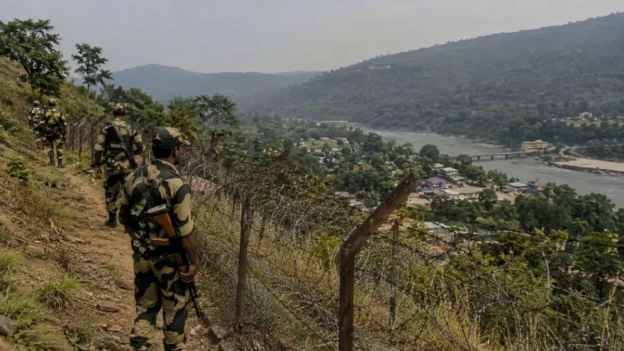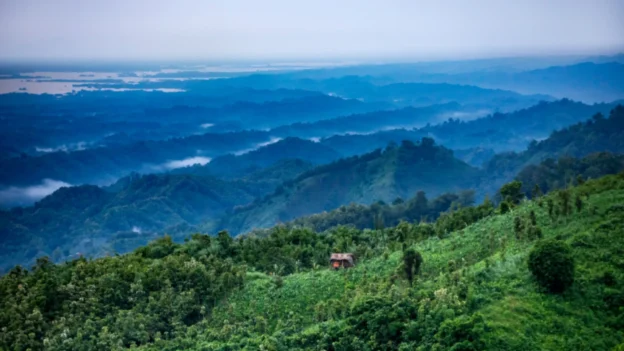

Across the steep, misty ridges of Meghalaya, a critical race against geography is unfolding. For thousands of villagers living along the state’s rugged frontiers, daily life remains tethered to centuries-old footpaths where motor vehicles cannot reach.
Medical care can be hours away on foot, while basic necessities often require arduous mountain treks. A recent heart-wrenching loss in West Khasi Hills district has cast a harsh light on the human cost of this infrastructure divide, sparking intense public discourse over rural road development and emergency health response systems.
The tragedy centres on four-year-old Habankyrshan Marbaniang, the young son of Shangmolin Marbaniang and Omdister Nongsiej, residents of Domkyrkoh village in the remote Rambrai region.
When Habankyrshan fell critically ill, his family faced an immediate, life-threatening hurdle. Domkyrkoh has never had a functional road connecting it to the broader transport network.
Desperate to get their child to a hospital, the parents were forced to carry him on foot, embarking on a gruelling three-hour journey across difficult mountain tracks towards Mawdet, the nearest village accessible by vehicle.
Tragically, before they could reach Mawdet and board transport to a medical facility, the child passed away in his parents’ arms along the path.
As a video detailing the tragic incident circulated across social media, public grief swiftly turned into an urgent demand for administrative accountability.
Addressing the fallout, Meghalaya Health Minister Wailadmiki Shylla offered his condolences while outlining the operational reality behind the incident.
Clarifying the state’s position, Shylla said the tragedy was fundamentally linked to a critical lack of geographic connectivity rather than medical negligence or institutional failure by healthcare workers.
Because the child succumbed along the trail and never reached a healthcare facility, medical personnel had no opportunity to evaluate or treat him.
Departmental checks also confirmed that neither local healthcare workers nor community ASHA volunteers had been notified before the parents began their journey. Health authorities, therefore, remained unaware of the unfolding emergency.
To ascertain the precise cause of death, Shylla directed a medical team to visit the family in Domkyrkoh after the customary three-day mourning period.
Addressing public calls for a formal inquiry or financial compensation, the Minister said an investigation into facility negligence would not apply in the circumstances. He, however, emphasised that the government treats the tragedy with utmost seriousness.
He acknowledged that building infrastructure across Meghalaya’s difficult terrain takes time, but said the state is pursuing interim measures to address the healthcare gap.
Among the proposals is the procurement of specialised four-wheel-drive ambulances capable of navigating rough rural terrain. An ongoing mapping study is also examining where rural health posts could be strategically located to reduce travel times for isolated communities.
Responding directly to concerns over connectivity, Deputy Chief Minister Prestone Tynsong, who oversees PWD Roads, provided details of the government’s ongoing infrastructure investments in the region.
Tynsong confirmed that Domkyrkoh is among several settlements that have remained historically disconnected since Meghalaya attained statehood. He said a major connectivity initiative is now underway to change that situation.
The government has sanctioned a dedicated ₹25 crore infrastructure package to construct a major road stretch connecting Rambrai with Nongnah.
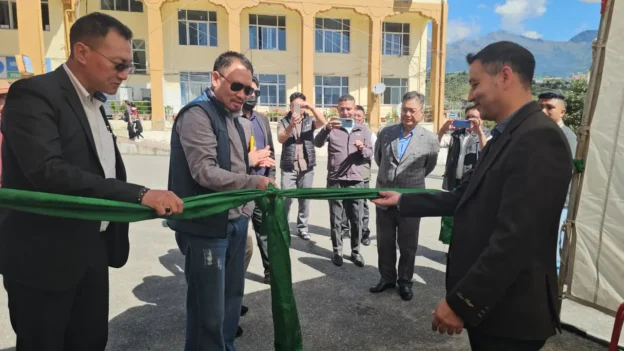
The foundation stone for the project has already been laid, while preliminary work orders have been issued to contractors. Physical construction is expected to begin shortly.
Once completed, the road is expected to provide motorable connectivity to eight or nine historically isolated villages that have never had either paved or unpaved road access.
Reflecting on broader progress, Tynsong said systematic road expansion initiatives launched in 2013 have already connected scores of remote hamlets, transforming rough jungle paths into all-weather routes.
He acknowledged, however, that achieving 100 per cent road connectivity across the state remains a complex and ongoing challenge that has to be addressed alongside other developmental priorities.
The effort to bridge Meghalaya’s rural-urban divide forms part of a much larger state-wide campaign under Phase IV of the Pradhan Mantri Gram Sadak Yojana (PMGSY).
Under the flagship programme, the Meghalaya Government has identified more than 750 previously unconnected habitations for integration into the all-weather road network.
The initiative focuses particularly on difficult geographical pockets where entire communities remain cut off from basic services, governance and commercial supply lines.
The severity of this isolation is evident in areas such as the Khatarshnong region of Sohra.
Hamlets including Mawmang, Sder, Maiong, Mawsohmat, Khohber, Warbar and Tluh have remained without road access for generations.
Residents in these areas often have to endure two to five hours of strenuous mountain travel simply to buy staple food items and other everyday necessities.
Similarly, in pedestrian villages such as Nongpriang, steep and difficult terrain means that virtually every journey has to be made on foot.
By combining PMGSY Phase IV funding with targeted state allocations, the government hopes to dismantle these geographic barriers and extend basic connectivity to communities that have remained isolated for decades.
For families living in such remote settlements, however, the challenge is not simply about reaching markets or improving everyday mobility. As the Domkyrkoh tragedy has starkly demonstrated, when roads do not exist, the distance between a medical emergency and lifesaving care can become a matter of life and death.