When travellers pull over at the scenic viewpoints of Ryndang Briew, they are invariably greeted by a breathtaking sight. Spread out beneath a canopy of rolling green hills, Umiam Lake glimmers like an untouched alpine jewel, its vast expanse of blue water mirroring the tranquil skies of Meghalaya.
For generations, this iconic reservoir has been celebrated as a premier tourist destination, offering postcard-perfect views that draw visitors from across the country. But for those who live along its shores, and for environmental advocates trying to save it, this mesmerising surface conceals a slow-moving ecological catastrophe.
Beneath its picturesque exterior lies a severe and escalating crisis marked by mounting heaps of solid waste, relentless sedimentation and growing environmental pressures that threaten the future of one of the region’s most vital water bodies.
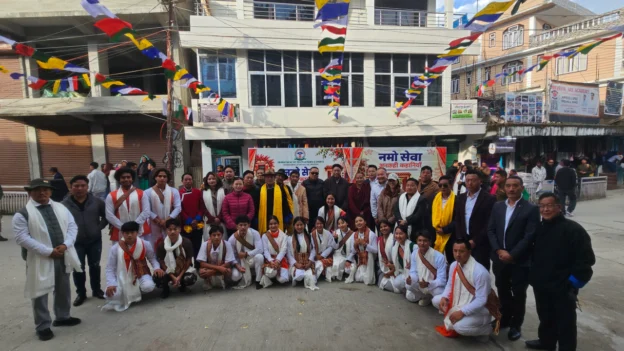
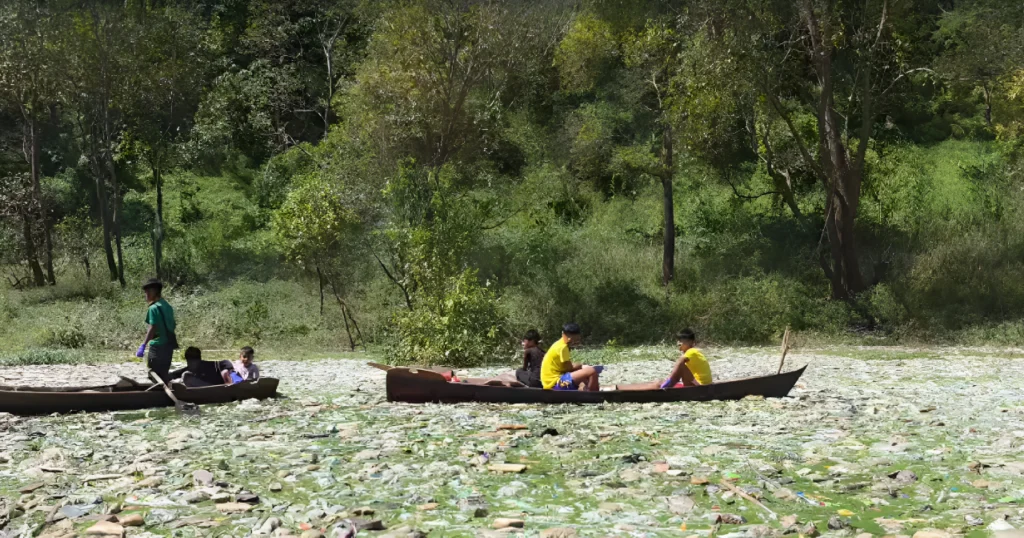
The true magnitude of this deterioration became evident during a recent large-scale clean-up drive. In an effort to rescue the reservoir, the Green-Tech Foundation (GTF), working alongside residents and villagers of Mawdun, launched an extensive clean-up operation at Wah Iap-Ngor.
This location serves as a critical catchment point where solid waste, carried downstream from Shillong by the heavily polluted Wah Umkhrah and Wah Umshyrpi rivers, accumulates before spreading into the wider waters of Umiam Lake.
What unfolded at Wah Iap-Ngor was far more than a symbolic clean-up exercise. It was an urgent response to an increasingly serious environmental problem that has placed enormous pressure on the surrounding communities.
H. Bansiewdor Nonglang, Chairman of the Green-Tech Foundation, highlighted the gravity of the situation, stressing that local communities and civil society could no longer remain passive spectators as one of Meghalaya’s most treasured natural assets continued to deteriorate.
The waste choking the waterway is not an isolated phenomenon. Much of it originates from domestic and commercial activities in Shillong, travelling downstream through the city’s rivers before accumulating at natural barriers such as Wah Iap-Ngor.
The volume of accumulated refuse has reached alarming proportions, placing an enormous burden on the local ecosystem and raising serious questions about the effectiveness of waste management practices upstream.
During the demanding clean-up campaign, village elders, women, young people and GTF volunteers worked alongside one another, manually removing large quantities of discarded plastics, silt and decomposing organic waste.
Despite their sustained efforts, the sheer volume of accumulated material makes complete clearance extremely difficult. Nevertheless, removing even a portion of the waste is considered essential to preventing further contamination of the main body of Umiam Lake.
The environmental crisis confronting Umiam is driven by two interconnected threats: solid waste pollution and the continuous accumulation of sediment.
According to environmental assessments cited by the Foundation, more than 40,000 cubic metres of silt and topsoil enter the reservoir annually. This steady deposition is gradually reducing the lake’s storage capacity, posing a potential long-term threat to the 172 MW Umiam hydropower installation, a critical component of Meghalaya’s electricity infrastructure.
Among those most directly affected are the villagers of Mawdun, whose homes lie close to the accumulation zone. They face the daily consequences of pollution originating far upstream, including unpleasant odours, unhygienic conditions and the continuing degradation of their immediate environment.
For these families, the crisis is not simply an environmental concern but an everyday reality. Yet, despite limited institutional support, residents continue to participate in clean-up efforts, demonstrating a strong sense of responsibility towards their surroundings.
Addressing volunteers during the campaign, the GTF Chairman emphasised that protecting Umiam Lake should not become an exercise in assigning blame.
Rather than engaging in mutual recrimination between government departments, civic agencies and citizens, he called for a collective approach that recognises the shared responsibility of protecting the reservoir.
The message was particularly relevant to Shillong’s residents, whose household and commercial waste can eventually find its way into the rivers feeding Umiam.
The lake, he stressed, must be understood as more than a recreational destination or a picturesque backdrop for tourists. It is an essential public utility and an irreplaceable ecological asset whose protection requires sustained public participation.
The Green-Tech Foundation believes that occasional clean-up drives, however valuable, cannot provide a lasting solution to the crisis.
What is required is a comprehensive, scientifically informed restoration strategy that addresses the underlying causes of pollution and sedimentation rather than merely removing their visible consequences.
Such an approach would involve rejuvenating the Wah Umkhrah and Wah Umshyrpi rivers, introducing effective waste interception measures and preventing refuse from reaching the reservoir in the first place.
It would also require appropriate engineering interventions, regular monitoring of sediment inflows and systematic bathymetric surveys to assess changes in the reservoir’s depth and storage capacity.
Equally important are catchment afforestation, soil erosion control across the river basins and substantial improvements to Shillong’s municipal waste management system.
Together, these measures could help reduce the environmental burden on Umiam while strengthening the long-term sustainability of the reservoir and its surrounding ecosystem.
The Foundation has also raised concerns about increasing commercial pressures around the lake.
It has called for proposals involving luxury hotels, commercial resorts and large-scale real estate developments in the surrounding areas to undergo rigorous environmental impact assessments before receiving approval.
Such scrutiny, it argues, is necessary to ensure that commercial expansion does not exceed the ecological carrying capacity of a water body that supports electricity generation, local livelihoods and regional biodiversity.
The message emerging from the shores of Mawdun is both urgent and unmistakable: Umiam Lake cannot be saved by a single village, an individual organisation or a small group of committed volunteers.
Its protection demands sustained cooperation among communities, civic institutions, environmental organisations and government agencies, supported by a clear and long-term restoration strategy.
If the present deterioration continues unchecked, the consequences could extend well beyond the lake itself, affecting local livelihoods, public health, electricity generation and the wider ecological balance of the region.
For Meghalaya, Umiam Lake is far more than a scenic attraction. It is a vital environmental and infrastructural asset whose future is closely tied to the state’s own well-being.
The challenge now is to look beyond the beauty of its blue waters and confront the damage accumulating beneath them. For unless that changes, Meghalaya risks losing not merely an iconic landscape, but an irreplaceable part of its ecological future.