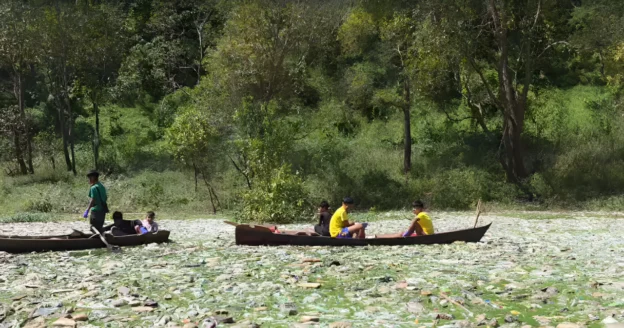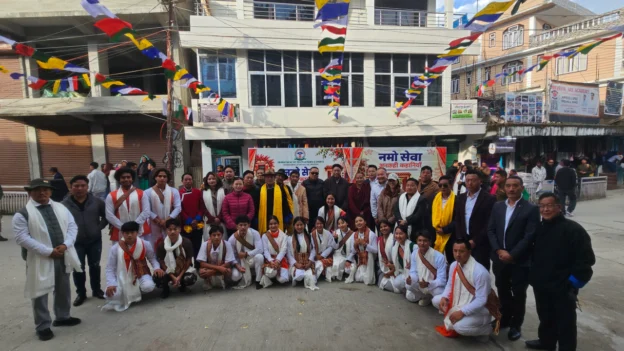

The atmosphere in Shillong remains tense as protests against the proposed tourism project at Lumpongdeng Islandescalate into a significant standoff between the state government and environmental activists. Despite repeated assurances from high-ranking officials that no permanent structures will be erected on the island, leaders of the Green Tech Foundation (GTF) have refused to back down, pushing their hunger strike into its seventh day.
At its core, the confrontation reflects a deeper and familiar dilemma—how to balance ecological preservation with aspirations for economic growth. The government’s push for “experiential tourism” is framed as a sustainable pathway to development, one that avoids heavy infrastructure while unlocking the economic potential of Umiam Lake. Yet for activists, even minimal intervention raises concerns about a slippery slope, where temporary permissions could gradually give way to permanent alteration. This clash is not merely about one island, but about competing visions of development itself—one that prioritizes controlled access and economic gain, and another that insists certain ecologically and culturally significant spaces must remain entirely untouched.
The situation has now reached a critical juncture, with the health of GTF Chairman H. Bansiewdor Nonglangdeteriorating significantly, even as both sides remain locked in a battle of narratives over the future of the pristine site at Umiam.
The GTF’s resistance is rooted in documents obtained through Right to Information (RTI) queries, which the group claims reveal a different story from the one being presented by the government. Secretary General Ritre Lyngdoh explained that their agitation is based on reports including the Consent to Establish (CTE), the concessionaire agreement, and various replies from the Tourism Department and the State Pollution Control Board.
While the government has recently issued corrigendums to the CTE specifying that no permanent structures will be built, the GTF views this as a tactical move to weaken their protest. The foundation maintains that any form of commercialization—whether through permanent villas or temporary festival infrastructure—threatens the ecological integrity of the island. Their demand remains singular and firm: leave Lumpongdeng Island untouched and scrap any plans involving its commercial use.
The conflict has now transcended environmental concerns, with Nonglang framing the issue as one of indigenous rights and identity. He has warned that the government’s insistence on proceeding is being perceived as an attempt to transfer indigenous rights to external interests.
During the protest, he emphasized that while the GTF initially adopted a peaceful approach rooted in prayer, the government’s perceived rigidity could trigger more serious unrest. In a stern warning, he stated that failure to take corrective steps could destabilize the Secretariat itself, asserting that they would not yield to a leadership they believe is betraying local interests.
From the government’s perspective, however, the protest stems largely from misinformation. State Tourism Director B.L. Pakyntien met with GTF leaders to clarify that there is currently no “project” on Lumpongdeng Island in the form being alleged. According to her, the government’s vision is centred on low-impact tourism, allowing visitors to experience nature without the intrusion of concrete or steel structures.
She questioned how the government could withdraw a project that does not exist in the form feared by protestors, reiterating that the island remains untouched. Expressing concern for the health of the hunger strikers, she urged them to end their fast and engage in dialogue, maintaining that the government’s goals of environmental preservation align with those of the protestors.
Adding weight to the official position, Chief Minister Conrad K. Sangma issued a strong appeal for the protests in Malki to be called off. He clarified a key point of public confusion: the proposed high-end hotel project is not planned for Lumpongdeng Island, but at the existing site of the Orchid Resort.
This site, he explained, has been leased to a specialized agency to upgrade facilities to international standards without encroaching on new forest land. For Lumpongdeng itself, he offered a “rock-solid guarantee” that only temporary, eco-friendly structures made of traditional materials like bamboo would be permitted for specific events. He also dismissed allegations linking the project to illegal tree felling, citing police findings that attribute those acts to private individuals.
Deputy Chief Minister Prestone Tynsong echoed this firm stance, stating that while dialogue remains open, there is no question of withdrawing plans to develop the Orchid Resort area. He further suggested that the public should assess whether there are underlying political motivations behind the GTF’s movement.
Despite these high-level assurances, the GTF remains unconvinced, citing past instances where they felt ignored or misled by official communication. The foundation has demanded a formal, written commitment to scrap any plans related to Lumpongdeng Island entirely. Until such assurance is provided, it has resolved to continue its indefinite hunger strike and expand protests across the state, invoking its constitutional right to defend the environment.