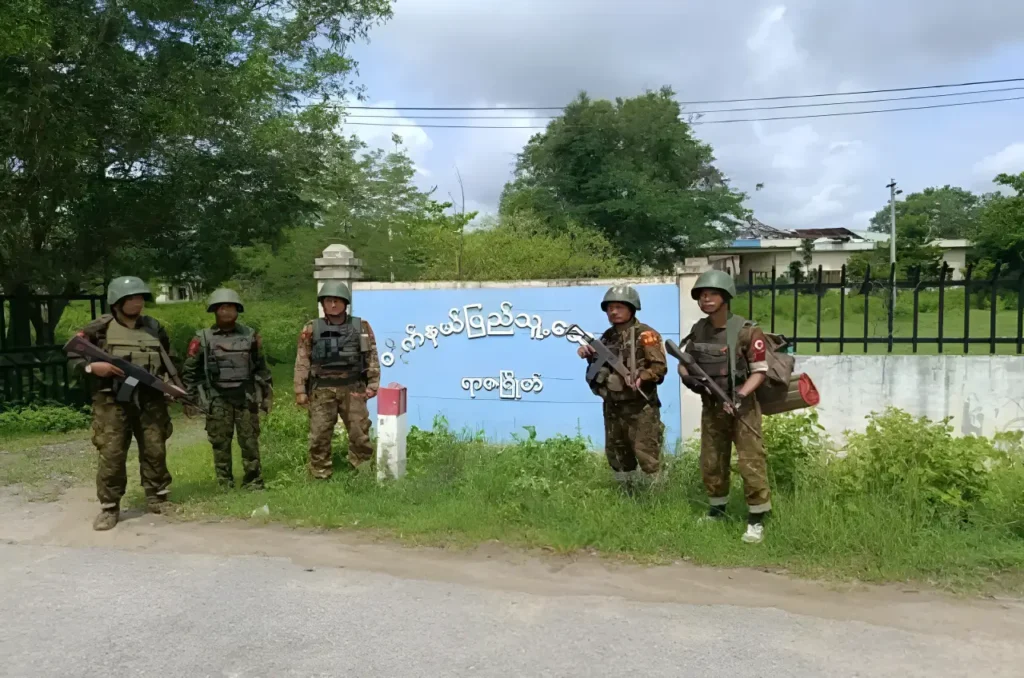
The Myanmar military has registered what appears to be one of its most significant gains in recent months, recapturing Yazagyo village and the strategically important Yazagyo Reservoir in Sagaing Region’s Kalay Township from the People’s Defence Force (PDF) on June 13.
While the development represents a setback for the National Unity Government (NUG)-backed resistance movement and allied armed groups fighting to restore democracy in Myanmar, it is being viewed by the military regime as a major step in its broader campaign to regain control over key transport and trade corridors in the country’s northwest.
The significance of Yazagyo extends far beyond the village itself. Located only a few kilometres from the crucial Tamu-Moreh trade route linking Myanmar with India’s northeastern state of Manipur, the area occupies an important position in one of the most commercially and strategically valuable corridors connecting the two countries.
The recapture also forms part of a wider military effort to restore control over the 81-mile (130-km) Kalay-Tamu road, a critical artery that links Myanmar’s Sagaing Region with India’s border town of Moreh. Kalay lies approximately 144 miles (231 km) north of Sagaing Region’s capital, Monywa.
Following the operation, the regime signalled that restoring full control over the road network remains a key priority. A government media report published on June 15 stated that efforts were being intensified to eliminate what it described as “insurgents” and reopen the Kalay-Tamu road route as quickly as possible.
The renewed military push comes amid a wider conflict that has engulfed large parts of Myanmar since the February 2021 military coup. Following the ouster of the elected government led by the National League for Democracy, resistance movements emerged across the country.
Many of these groups later came under the umbrella of the National Unity Government, which established the People’s Defence Force as its armed wing.
Since then, Sagaing Region has become one of the principal battlegrounds between the Myanmar military and resistance forces. The region has witnessed some of the fiercest fighting of the post-coup conflict, with towns and villages repeatedly changing hands as both sides seek to consolidate territorial control.
Government media report, citing military sources, reported that a junta column advancing from Kalay after conducting security operations succeeded in retaking Yazagyo village and subsequently regained control of the Yazagyo Reservoir on June 14.
The military has accused the PDF of turning the village into a fortified stronghold after seizing it in 2022. Sources close to the Myanmar military claimed that resistance fighters engaged in “forced recruitment, extortion, and constructed defensive positions inside civilian infrastructure, including homes, schools, and religious buildings.”
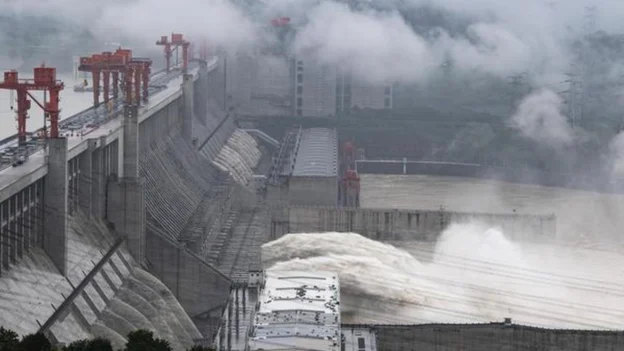
The Myanmar military has also alleged that resistance forces had established bunkers and firing positions on the embankment of the Yazagyo Reservoir and used the facility as a military base.
According to the media report, the PDF also exercised control over the reservoir’s water gates, opening and closing them according to military requirements rather than public needs. Authorities claim that this disrupted electricity generation, drinking water supplies, and irrigation systems, causing hardship for surrounding communities.
Government media asserted that with the reservoir now back under military control, authorities would be able to “systematically operate the water control gates by opening and closing them according to the regular schedule, manage water storage and regulation, and provide and release water in accordance with seasonal requirements.”
The report claimed that residents would once again receive adequate supplies of electricity, drinking water, and irrigation resources. It further stated that local people were expressing “joy and deep gratitude” towards Tatmadaw columns following the operation.
The PDF fighters have been accused of using civilian homes throughout Yazagyo as temporary defensive positions, constructing bunkers with sandbags and tyres, digging firing trenches, and transforming parts of the village into operational military positions.
According to the government media report, military operations in the area remain ongoing and are aimed at ensuring that residents can “live, work, and earn their livelihoods in peace and stability.”
The PDF has not yet responded publicly to the military’s claims regarding either the battle or the allegations made against resistance fighters.
Sources familiar with developments in Sagaing suggest that parts of the resistance movement have recently faced organisational and coordination challenges. There are indications of local-level difficulties among some PDF units operating in Sagaing, as well as differences in coordination between fighters on the ground and sections of the NUG leadership, many of whom continue to operate in exile.
The battle for Yazagyo also reflects a broader trend visible across parts of northern and central Myanmar in recent months. After suffering a series of setbacks during coordinated resistance offensives, the military has increasingly launched counteroffensives aimed at reclaiming strategically important towns, transport routes, and logistical hubs.
Recent successes include the recapture of Mawlu town on May 5 and Indaw town on April 30 from NUG and PDF-aligned forces.
Control of territory along the India-Myanmar frontier remains particularly important for both sides. Moreh in Manipur sits directly opposite Tamu in Sagaing Region, a town that remains partially controlled by resistance forces. The NUG also administers several areas in Sagaing, including Khampat, Shwe Pyi Aye, Myothit, and Pinlebu.
Against this backdrop, the military’s latest gains in Yazagyo are likely to be viewed as part of a larger campaign to re-establish authority over one of Myanmar’s most strategically important border corridors.
No casualty figures have been released by the resistance forces. The Myanmar military, meanwhile, does not publicly disclose its casualty numbers, making it difficult to independently assess the human cost of the latest fighting.