Even as the Government of India pushes ahead with its ambitious plan to complete fencing along the remaining stretches of the India-Bangladesh border, the realities on the ground continue to reveal how securing a frontier is often far more complicated than drawing lines on a map.
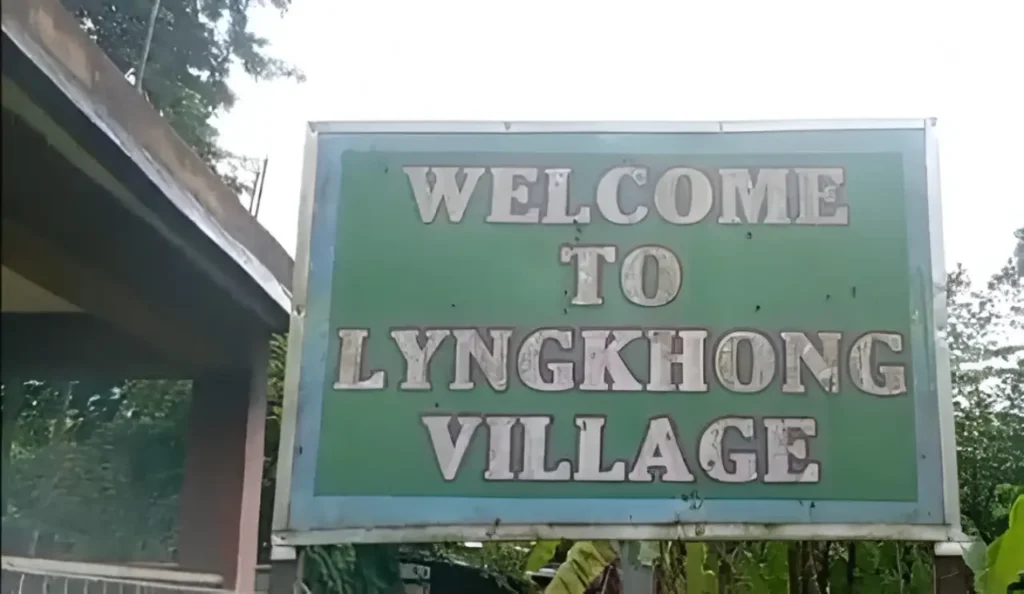
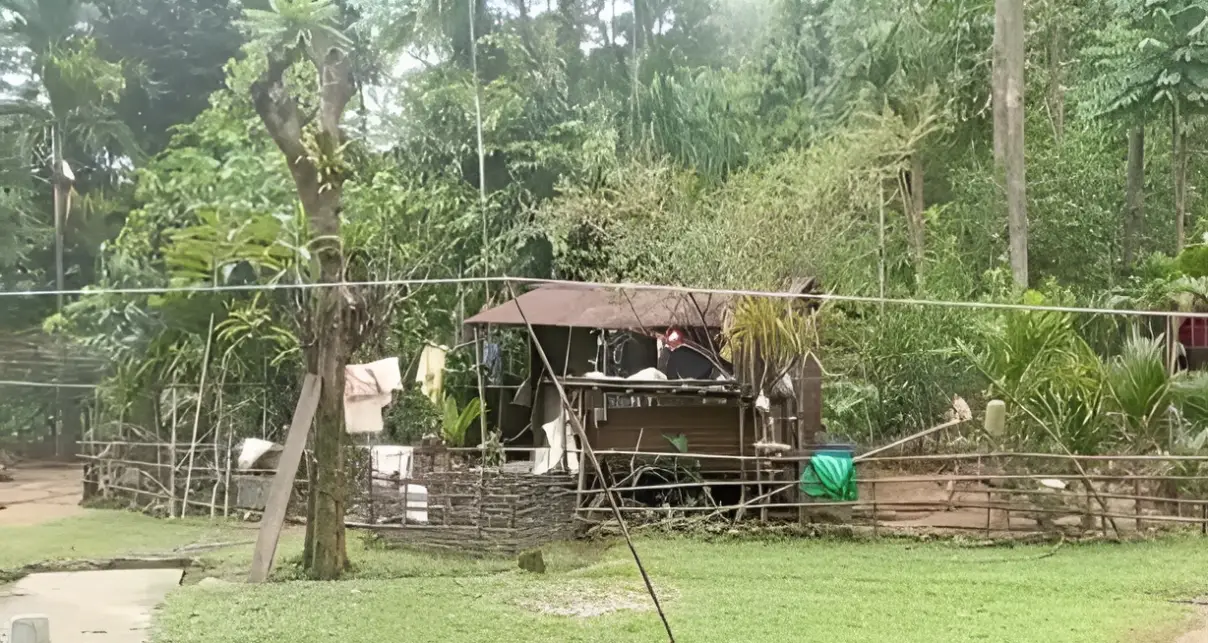
One such challenge has emerged in Lyngkhong village, a remote border settlement in Meghalaya’s East Khasi Hills district, located around 80 kilometres from Shillong. Here, a proposed border fence has triggered strong resistance from residents, not because they oppose the idea of securing the border, but because they fear the current alignment could leave parts of their village outside the fence.
The dispute offers a glimpse into a larger dilemma confronting policymakers across India’s borderlands. While New Delhi sees fencing as a critical security measure, border communities are increasingly asking whether national security can be strengthened without disrupting lives that have evolved around these frontiers for generations.
For the people of Lyngkhong, that question has become deeply personal.
The village sits directly along the India-Bangladesh border, with some homes only a few metres away from settlements across the international boundary. Under existing norms followed between friendly neighbouring countries, border fences are generally constructed about 150 yards inside a country’s territory rather than directly on the zero line.
In Lyngkhong, residents fear that applying this formula could divide the village itself. Houses, agricultural fields and community land could end up outside the fenced zone, effectively separating families from land they have cultivated for generations.
That fear has fuelled a growing movement within the village. Residents have repeatedly stated that they are not opposed to fencing. Instead, they want the alignment redrawn so that the entire village remains within the protected side of the barrier.
Village headman Ramu Khongsdir has been at the forefront of this demand. According to him, villagers have already submitted a memorandum to the Sub-Divisional Officer of Pynursla seeking an immediate halt to construction until the issue is resolved.
Their demand is straightforward: build the fence, but build it along the zero line.
The issue came to a head on June 7 when residents reportedly drove away workers from the National Buildings Construction Corporation (NBCC) who had arrived to undertake fencing-related work. The protest was the culmination of years of frustration.
Villagers claim they have been raising objections for nearly seven years but have received little clarity on how their concerns would be addressed. Tensions escalated further after NBCC workers reportedly arrived on June 4 to dig holes for fence posts in the village.
Many residents view the proposed alignment not merely as an infrastructure project but as a question of identity and belonging. Several villagers said they could not accept a situation where they would effectively be left outside the fence despite being Indian citizens.
Women from the village have been particularly vocal. Some pointed out that they have neither the financial means nor alternative land to relocate elsewhere. Others questioned where they would go if parts of the village were cut off.
Their appeals have been emotional as much as practical. They have urged senior government officials “to personally visit the site, inspect the terrain and listen directly to the concerns of affected families before any final decision is taken.”
The resistance in Lyngkhong has also highlighted a challenge that extends beyond this single village. Several border settlements in Meghalaya face similar geographical constraints where a standard fencing alignment could split villages or isolate farmland.
Recognising these concerns, the Government of India has begun exploring alternatives.
One proposal under consideration is the construction of a single-row barbed-wire fence directly on the zero line in densely populated areas. Such a model would differ from the conventional double-row fence that requires a 150-yard buffer and could allow villages like Lyngkhong to remain intact while still meeting security requirements.
However, implementing such a solution is easier said than done.
Because the fence would be built directly on the international boundary, the proposal requires the consent and cooperation of Bangladesh. Officials from India’s Ministry of Home Affairs have already initiated discussions, but a final decision remains dependent on bilateral agreement.
Meanwhile, state authorities have acknowledged the legitimacy of the villagers’ concerns.
Meghalaya Deputy Chief Minister Prestone Tynsong has emphasised that residents are not opposing border fencing itself. Rather, the concern is that parts of villages and agricultural land may fall outside the fence if the current alignment proceeds.
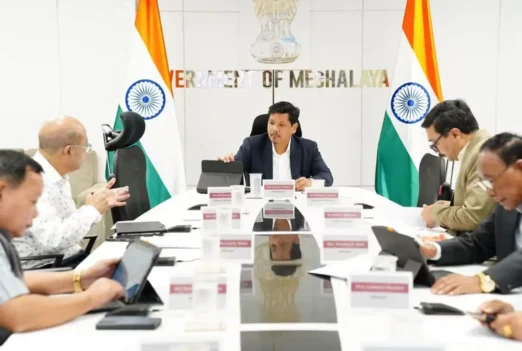
According to Tynsong, the state government will strongly pursue the matter with the Centre to ensure that communities do not lose land that has sustained generations of families. The objective, he said, should be to strike a balance between security requirements and the interests of border residents.
The Deputy Commissioner and other officials are also working with agencies such as the NBCC to re-examine local conditions and explore possible solutions.
The significance of the Lyngkhong protest extends well beyond Meghalaya.
It comes at a time when New Delhi is intensifying efforts to secure the entire 4,156-kilometre India-Bangladesh border stretching across West Bengal, Assam, Meghalaya, Tripura and Mizoram. The fencing project is intended to curb illegal immigration, human trafficking, cross-border smuggling and insurgent movement.
Considerable progress has already been made. Meghalaya’s fencing work is estimated to be around 90 percent complete, while construction continues across other northeastern states.
Yet Lyngkhong serves as a reminder that border management is not only about security infrastructure. It is also about people.
For policymakers, the village represents a test case in balancing strategic priorities with local realities. For residents, it is about protecting homes, land and a sense of belonging.
As discussions continue between Shillong, New Delhi and Dhaka, the future of Lyngkhong remains uncertain. But the message emerging from this small border village is unmistakable: people living on the frontier want security, but they do not want to become casualties of the very measures designed to provide it.