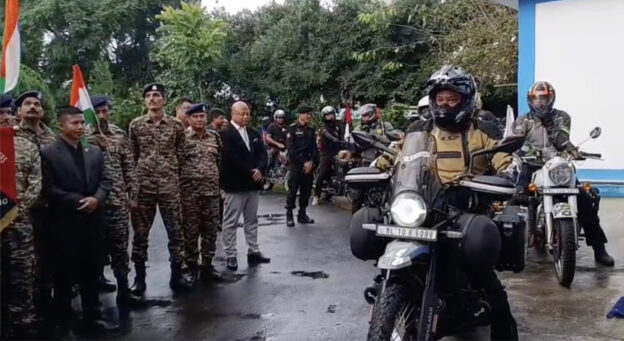
The violence that unfolded during the Khasi Students’ Union (KSU) motorcycle rally in Shillong on August 19 has raised a troubling question: was what happened spontaneous, or was it planned?
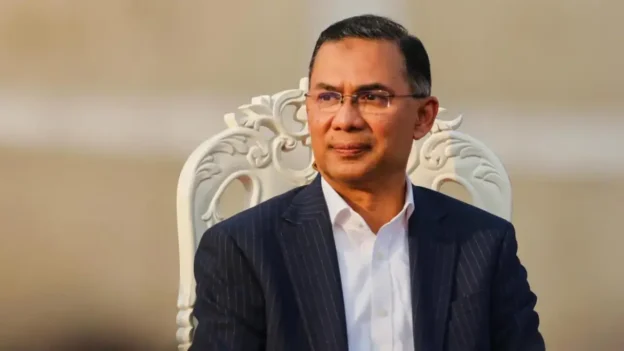
The East Khasi Hills district administration has not reached a conclusion on that question. But its briefing on August 20 highlighted several circumstances that, according to Deputy Commissioner Abhilash Baranwal, would have to be examined closely as part of the investigation.
Baranwal pointed to the presence of several participants carrying sticks and rods from the very beginning of the rally. Some were masked, while the number plates of their motorcycles had been covered.
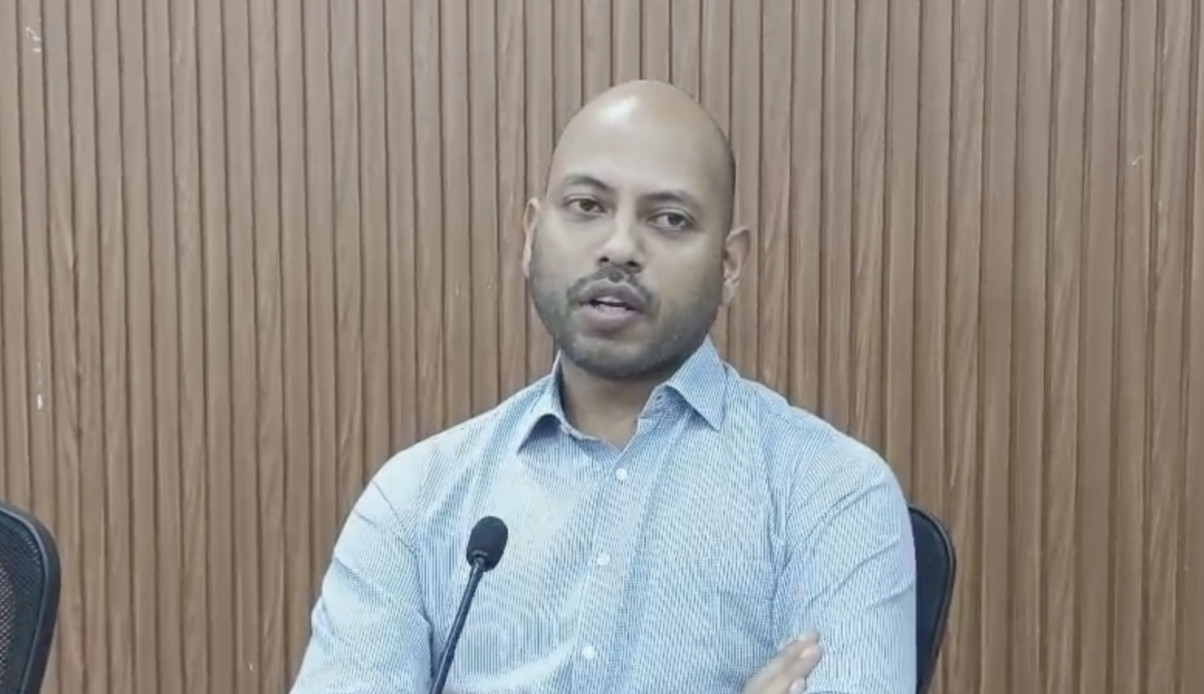
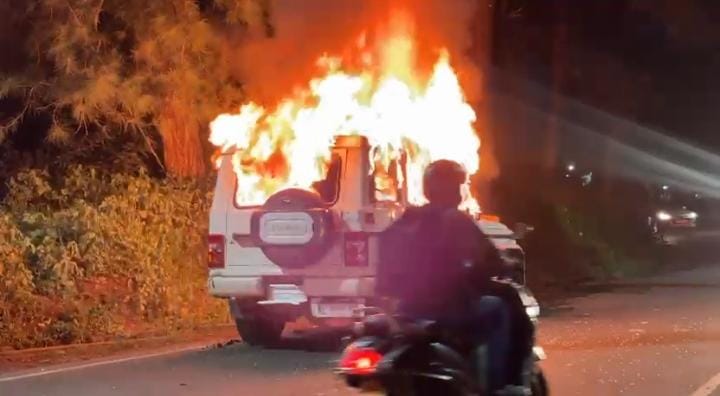
He also drew attention to the fact that the violence was not confined to one or two isolated incidents. A series of incidents occurred at different points along the lengthy rally route, involving damage to vehicles, injuries to people, damage to homes and buildings, and the desecration of the statues of national icons Netaji Subhas Chandra Bose and Swami Vivekananda.
Taken together, these circumstances have prompted questions about whether the violence was pre-planned. The Deputy Commissioner, however, stopped short of drawing any conclusion, stressing that the investigation would have to establish what actually happened and who was responsible.
Late on Wednesday evening, KSU leaders claimed that “negative elements” had infiltrated the rally and apologised for the violence. But Baranwal said the explanation was “not consistent with the evidences”.
Baranwal stopped short of saying that the evidence was sufficient to establish that the violence had been pre-planned. But his assessment did cast doubt on the KSU’s explanation that “negative elements” had infiltrated the rally. “If you examine the arguments, I don’t think it is very consistent with the evidences,” he said, indicating that the claims would have to be tested against what the investigation and the available evidence reveal.
Ultimately, he said, the investigation would establish whether the violence was pre-planned, part of a conspiracy, deliberately instigated, or the work of unruly or antisocial elements who sought to hijack the rally. At the same time, he pointed to the possibility that those involved could have been members of the organisation itself, rather than outsiders who merely took advantage of the procession. “The evidence is there for everyone to see, it’s out there on social media, on media channels, and it’s upto everyone’s guess whether the event was pre-planned or whether they were members of the organisations which tried to take advantage of the rally.”
The violence resulted in damage to 10-12 private vehicles and injuries to 16 people, who were essentially innocent bystanders. Homes and other buildings were also damaged. Among the most disturbing incidents was the desecration of the statues of Netaji Subhas Chandra Bose and Swami Vivekananda, two towering figures associated with India’s freedom struggle and its intellectual, spiritual and nationalist traditions.
The subsequent police action has added another dimension to the questions surrounding the rally. Even after three senior KSU leaders were arrested, police faced resistance when they attempted to apprehend other members at the union’s office in Jaiaw. The police eventually raided the office, further fuelling questions about what transpired during and after the rally.
Across Shillong and elsewhere in the state, people from different communities have taken to social media to condemn the violence. Some have described the incidents as “nothing new”, while others have pointed to what they claim is a history of similar episodes whenever the KSU takes out a protest against the government.
The district administration, meanwhile, has defended the police response. Baranwal clarified that proportionate force was used, including one stun grenade and pellet guns, after a petrol bomb was allegedly lobbed at police personnel from inside the KSU office premises. Police later returned to the area following intervention by the local community.
Another significant aspect highlighted by the administration was the government’s attempt to engage with the KSU before the rally.
Chief Minister Conrad Sangma was ready to meet the organisation from 9 am on August 19, and the offer had been communicated to the KSU. The district administration had also facilitated efforts to arrange the meeting through both formal and informal channels.
The KSU leadership, however, declined to engage and proceeded with the rally, according to Baranwal, despite having assured the administration that the demonstration would remain peaceful.
Permission for the rally had been granted with “strict conditions”, based on that assurance and the administration’s willingness to facilitate what had been submitted as a legal application for a peaceful protest.
“That trust was broken,” Baranwal said.
If the investigation eventually establishes that the violence was pre-planned or part of a conspiracy, a further question will have to be addressed: what was the motive?
The KSU’s demands are clearly stated, and some are also shared by other organisations and activists, particularly opposition to the proposed Shree Cement plant in Jaintia Hills, the demand for implementation of the Inner Line Permit, and concerns over government recruitment.
According to well-informed sources, however, “nothing can be ruled out” with elections in Meghalaya approaching. With political stakes high and ambitions rising among various stakeholders, it remains to be seen what the investigation eventually reveals about what lay behind the violence.
Questions have also been raised about a possible intelligence failure. Baranwal said it was too premature to describe the episode as a complete failure of intelligence. The district administration, he explained, had received information that enabled it to deploy security personnel ahead of the rally and respond where possible.
Whether that intelligence was disseminated in a timely manner, however, remains a matter for examination.
“I wish we could have done better,” Baranwal acknowledged.
Around 200 security personnel had been deployed because of the apprehensions surrounding the rally. However, given the length of the route and the fact that incidents occurred in several pockets, the deployment may not have been sufficient.
The adequacy of the administration’s response will also be examined. Baranwal described the situation as “very dynamic” but maintained that the administration did not give permission to a violent rally to “go on a rampage”.
To prevent any further incidents, five additional companies of the Central Armed Police Forces (CAPF) and one additional company of the Rapid Action Force (RAF) have been deployed in the city. Police and central forces will remain on the ground to maintain security. The administration has also appealed to people to report incidents to the police promptly and refrain from spreading rumours.
The district administration has invoked the Meghalaya Maintenance of Public Order Act. It has also made clear that the damage caused to public and private property will have financial consequences, with those responsible liable to bear the cost. Orders to recover the losses will be issued against the organisation and individuals found responsible.
Condemning the violence, Baranwal said incidents of this nature could vitiate the atmosphere and have no place in a civilised society. They could also undermine Meghalaya’s efforts to promote itself as an international tourism destination, an effort closely linked to livelihood opportunities for its people.
He also warned that such incidents could have consequences for Meghalaya residents living and working outside the state. Referring to incidents reported at Jorabat along the Assam-Meghalaya border, where about two vehicles were vandalised and Meghalaya vehicles were stopped, he cautioned that such developments could further discourage young people from Meghalaya from pursuing employment opportunities outside the state.
The district administration has now made its position clear: the conditions attached to the rally’s permission were violated, turning the demonstration into an unlawful assembly, and the permission has consequently been revoked. FIRs have been registered and the investigation is underway.