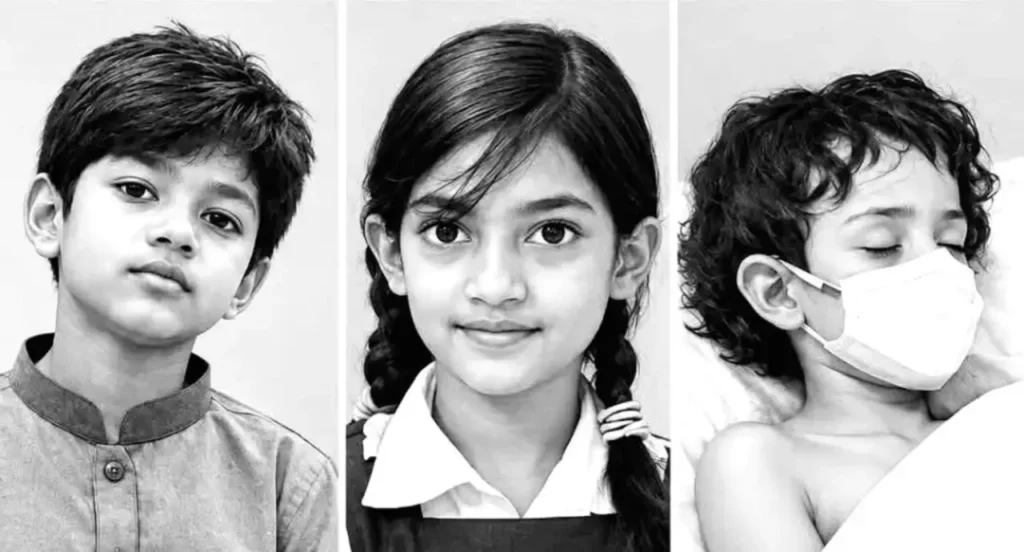
In Bangladesh, the moment a child walks out the front door can mark the beginning of a mother’s longest wait of the day.
Until the child returns, a delayed phone call, an unanswered message or footsteps that do not arrive on time can turn an ordinary afternoon into hours of uncertainty.
For many parents, the journey between home and school has become a daily vigil, measured by the hour a child is expected to return — and the anxiety that follows when that moment passes.
“We are passing a hard time in Bangladesh now. Our children are not safe in their own country. All the time we are very anxious about our children’s safety,” said Sheuli Akter, a mother of a nine-year-old in Dhaka.
Roksana Begum, whose child is an eighth-grade student at a government high school in Chittagong, said the anxiety persists throughout the day.
“From morning to evening, we are very worried about our beloved child. If he is even a little late returning home, we become restless, thinking if anything happened to him,” she said.
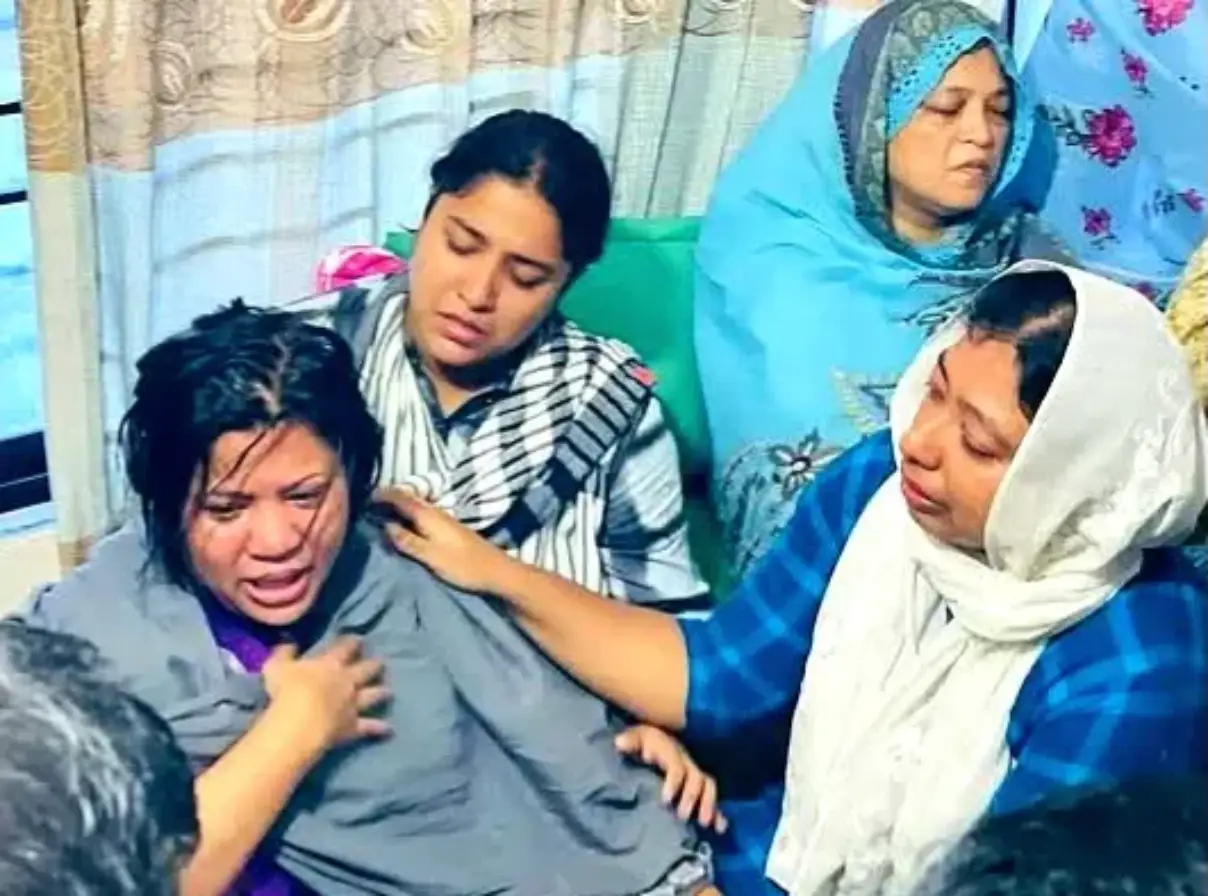
For some families, the fear has ended in loss.
On Sept. 18, 13-year-old Ishiat Shahriar Opratim left his home in Cumilla, telling his mother, Nahida Begum, an associate professor at Comilla University, that he was going out with friends to take photographs using her iPhone.
He did not return.
Nearly 24 hours later, his body was recovered from the Sananda hillocks near the university, according to police and local reports.
“I have only one son. What do I have to live for now? They could have taken the iPhone, but why did they kill my son?” Nahida said.
“I came to work in Cumilla — is this my crime? Why was my son killed? I want the answer to this. How will I live now?”
The number of children killed in Bangladesh more than doubled in August from the previous month, with 77 deaths reported compared with 34 in July, according to the Human Rights Support Society (HRSS).
HRSS said 282 children were subjected to violence and abuse in August, including 77 killed and 205 subjected to physical or psychological abuse. In July, the organisation recorded 180 children as victims, including 34 deaths and 146 cases of physical or psychological abuse.
The figures were published in HRSS’s monthly human rights monitoring report, based on reports from 16 national media outlets and information gathered through its own fact-finding activities.
HRSS also recorded 1,890 children subjected to violence and abuse between January 2025 and April 2026, including 580 rape cases, 318 cases of sexual abuse and 483 child killings.
Residential religious institutions have featured in several recent cases involving allegations of sexual abuse of boys.
In Savar, Dhaka, a seven-year-old boy was allegedly sexually abused repeatedly over about six months at a madrasa where he both studied and lived.
His father filed a case against 10 people from the madrasa, including several teachers.
The case statement alleged that the child first experienced abuse within weeks of enrolling and later sought help from a teacher, who allegedly abused him and threatened him with expulsion if he told his parents.
In another case, police in Fatullah, Narayanganj, arrested a 28-year-old teacher of a residential madrasa over allegations that he repeatedly sexually assaulted a 17-year-old student.
The student had lived at the institution and reportedly disclosed the allegations after falling ill following an incident on Aug. 31. A court later sent the teacher to jail.
Such cases highlight the particular vulnerability of children living away from their families.
Students in residential Islamic madrasas can spend much of their daily lives under the close authority of teachers and senior students, leaving them particularly vulnerable when allegations of abuse involve those entrusted with their care and making it difficult for them to report misconduct independently.
UNICEF has called for stronger safeguarding, reporting mechanisms, child-friendly policing and justice, community protection and greater accountability in schools, madrasas, workplaces and care settings.
The concern extends beyond sexual violence.
Between January and July, police received reports concerning 15,717 missing children aged up to 17, according to Police Headquarters.
Of those, 13,679 were rescued or returned to their families, while 2,038 remained untraced — about 13% of the total.
Among children aged 10 to 17, 1,970 remained untraced; among those aged nine or younger, 68 remained untraced.
Police also said the introduction of online general diaries had contributed to an increase in missing-person reports.
In Jamalpur’s Madarganj, a seven-year-old girl went to school on Sept. 10 and did not return. Her body was found two days later buried beneath the floor of a house. Police said the girl had been raped and killed and arrested two people.
In Pabna, a 10-year-old child who went missing on Sept. 9 was found dead in a ditch seven days later. Police said the child had been raped and killed later.
In Lakshmipur’s Raipur, a mother and her three daughters, aged 10, 17 and 21, were hacked to death in their rented home in June.
In Rangpur, retired teacher Ganapati Chakraborty, his wife, daughter and 12-year-old son Ayush were killed at their home in August.
In Shibchar, Madaripur, the body of a woman was recovered before the body of her one-year-old child was found in a river five days later, according to police.
On Sept. 18, three children from the same family, aged 10, seven and two, were killed in Tahirpur, Sunamganj.
“Under Tarique Rahman, the government cannot ensure the safety of our beloved children. There is no law and order. Almost every other day, we are losing our precious children. This is heartbreaking. A country cannot go on like this,” said a mother from Dhaka who asked not to be named.
After Sheikh Hasina was ousted in August 2024, Bangladesh was governed by an interim administration before BNP leader Tarique Rahman became prime minister on Feb. 17, 2026, following parliamentary elections held while the Awami League’s political activities were banned.
Amid the political upheaval, concerns over deteriorating law and order continue to cast a shadow over a mother’s most basic fear of whether her child will return home safely.
Source: The Chittagong Hill Tracts