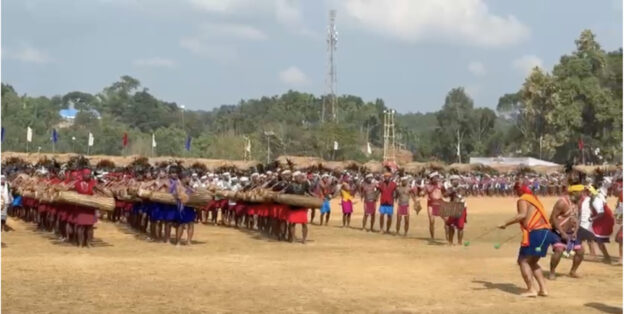
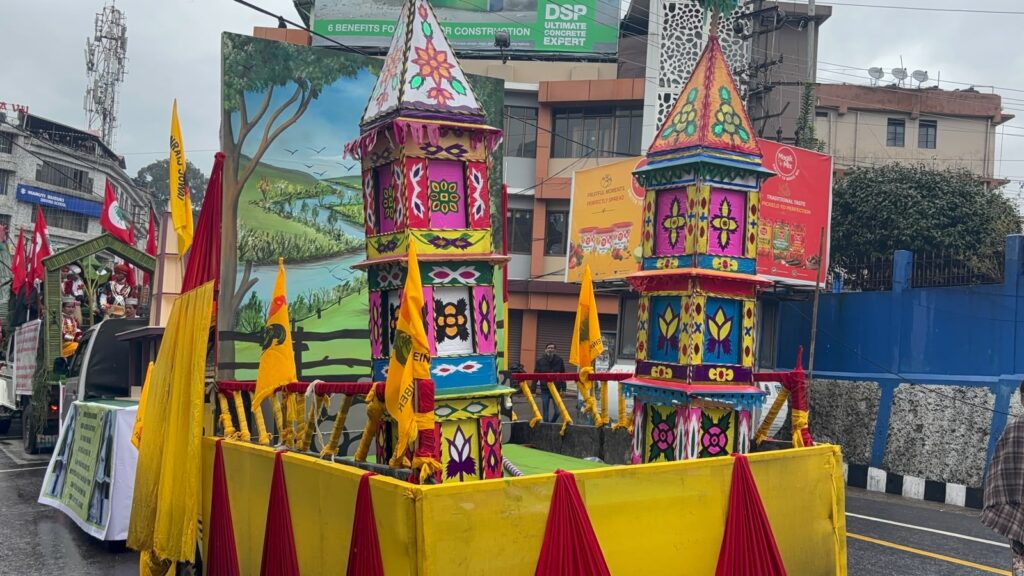
Shillong, November 23, 2026: Marking a remarkable journey that began 127 years ago with just sixteen young men standing up to protect their identity under British rule, tens of thousands of indigenous Khasi-Khara people from across the length and breadth of the Khasi and Jaintia Hills turned out in vibrant traditional attire in Shillong today as the Seng Khasi Kmie celebrated the 127th Seng Kut Snem with deep devotion, cultural pageantry, and prayers to God, the Creator.
The grand celebration unfolded across three historic venues in the city, blending solemn rituals with a massive public display of indigenous heritage. The day-long observance commenced early in the morning at the Ïing Seng with the resonant, ceremonial beating of the traditional drums, Ksing Lumpaid. Amidst the solemn atmosphere, Seng Khasi Kmie President Rgh. Oplysor Pyngrope hoisted the flag and formally inaugurated Seng Kut Snem 2026, accompanied by traditional prayers and obeisance led by the Council of Elders (Kynhun ki Tymmen ki San) of the organization.
During the morning session, General Secretary Rgh. H. Marbaniang officially released the 2027 calender (Almanac), followed by words of traditional wisdom and teachings from the elders, alongside soulful traditional songs performed by the youth wing, Seng Khynnah.
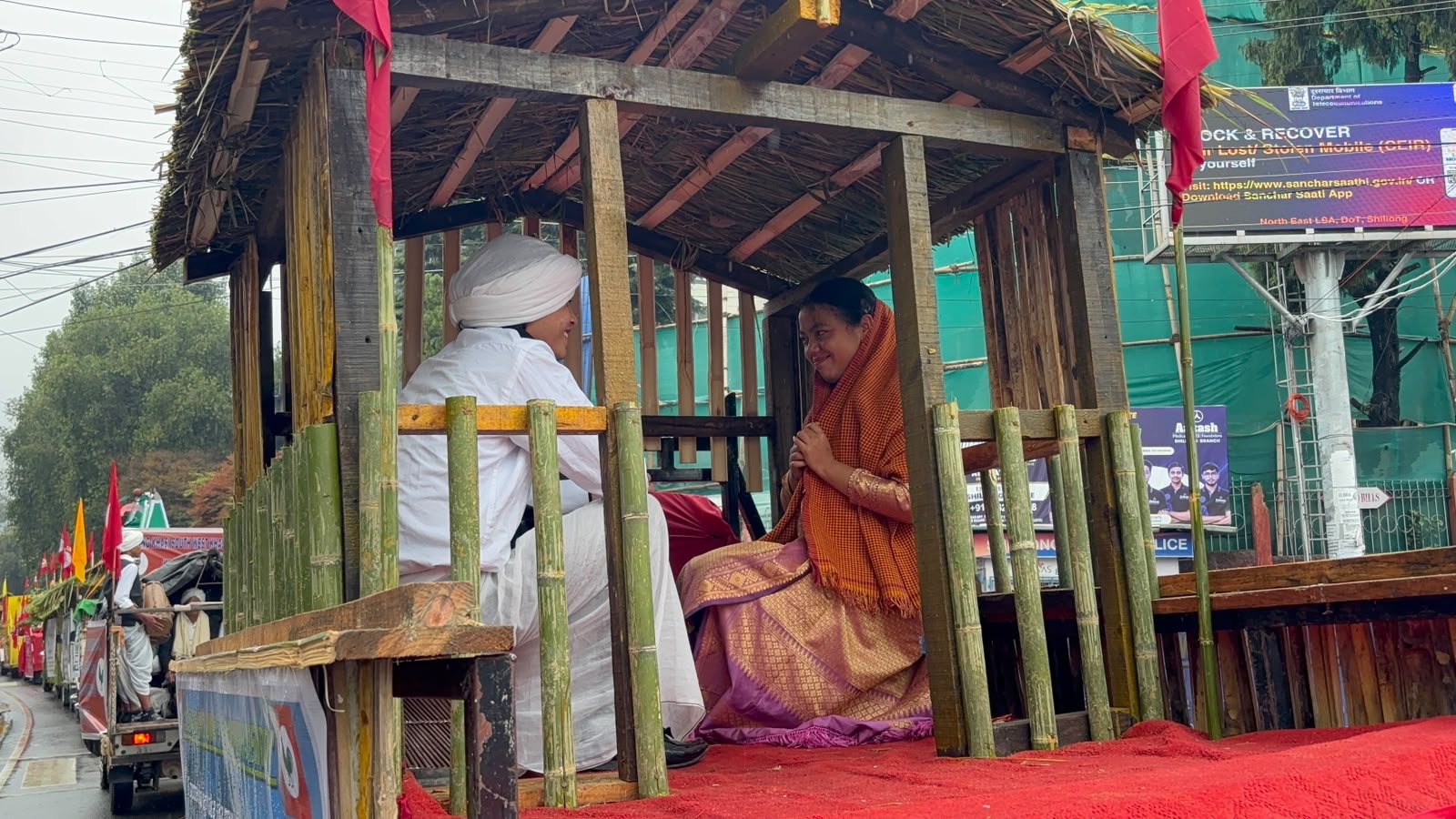
Following the morning rituals, the hub of activity moved to Madan Ïewrynghep, which served as the assembly point for the iconic cultural procession (Ïaid Pyni Riti) of Seng Kut Snem 2026. The programme at the ground opened once again with the traditional Ksing Lumpaid, setting the rhythm for the registration and numbering of the numerous participating tableaux (tabut) representing various localities and clans.
Rgh. Richesly Jana, General Secretary of Seng Khasi Nongthymmai Madanryting Pyllun, extended a warm welcome address to the gathering, while Rgh. Donlang Kharsyad from the same unit led the assembly in prayer. The crowd was then treated to a spirited performance of the traditional Mastieh warrior dance before the grand cultural procession officially set off through the streets of the capital.
The colourful procession culminated at Lympung (Weiking Ground), where members of all clans converged for the main congregation. The formal programme at the ground began with collective prayers, songs, and a formal welcome address delivered by Seng Khasi Kmie President Rgh. Oplysor Pyngrope, followed by prayers offered by the Kynhun ki Tymmen ki San.
The massive gathering joined together to sing the anthem Ïaroh Ïa Seng Kut Snem, setting a reverent tone for the keynote speeches by Seng Khasi Kmie Vice President Rgh. D. L. Nongbri and Sein Raij Jowai Assistant General Secretary Rgh. Wyraiki Kharbuki, which were interspersed with the hymn Ka Burom U Blei. The congregation also witnessed a special felicitation ceremony hosted by Seng Khasi Kmie, followed by a formal vote of thanks from General Secretary Rgh. Hainess Marbaniang, the rendition of the closing song Khublei Ko Kur Ko Kha, and a vibrant cultural programme curated by the Cultural program.
Seng Khasi Kmie Vice President Rgh. Aibanshngain Swer reflected deeply on the historical significance of November 23, 1899—the day sixteen young men from the Khasi community came together during British colonial rule to establish the Khasi Association, which later evolved into Seng Khasi, at a time when indigenous faiths and cultures were being marginalized.
Emphasizing that today’s celebration is a direct result of their hard work, dedication, and selfless service, Rgh. Swer stated that Seng Khasi is far more than a formal organization; it is a living movement dedicated to safeguarding indigenous dances, languages, rituals, and beliefs.
Using the platform to issue a strong call to the younger generation, Rgh. Swer urged the youth to take up a renewed commitment to ensure their modern success remains firmly anchored in their ancestral heritage and the natural principles governing the sacred relationship between mother and father .
He highlighted the enduring significance of the Khasi matrilineal system—in which children take their mother’s clan name—explaining how it serves as the bedrock for social etiquette, interpersonal relationships, marriage, death rites, naming ceremonies, and inheritance within the society.
Rgh. Swer further elaborated that the true essence of the indigenous faith extends beyond mere geographical belonging, residing instead in the Khasi way of life—a profound, harmonious coexistence with Mother Nature, fellow human beings, rivers, mountains, forests, and all living and non-living entities.
Illustrating this spiritual bond, he shared a personal reflection from earlier in the day, recounting how he woke up to heavy clouds and dark skies and sat in prayer asking the Almighty to lighten the rain so the celebrations could proceed smoothly; by the time they arrived at the venue, the overcast sky had given way to bright sunlight.
He pointed to this moment as a reflection of the direct communication and deep connection the Khasi belief system shares with nature and the Creator through signs, symbols, prayers, songs, dance, and rituals. Concluding his address, he affirmed that the 127th Seng Kut Snem reinforces the community’s collective faith in the principles passed down orally and through practice across generations, ensuring that those who profess their traditional faith remain steadfast and strong for centuries to come.
Meanwhile, the government’s initiative to trace the historical origins of the Khasi people has drawn strong reactions from indigenous leaders in Meghalaya, who contrasted scientific and administrative inquiry with longstanding spiritual beliefs tied to Lum Sohpetbneng and the Hynniewtrep Hynniewskum tradition.
Addressing the issue, Seng Khasi Kmie Vice President Aibanshngain Swer noted that spiritual belief and scientific inquiry represent two distinct perspectives that operate on different planes and cannot be directly compared.
While spiritual belief holds that communities originated from a sacred source—a view shared by many indigenous nations across the world—scientific perspectives trace human migration from Africa across the globe and explain human evolution from apes or monkeys.
Comparing the diversity of thought to a bird that flies, a fish that swims, and a human who walks on earth, Swer said each exists differently yet shares the same essence of existence, adding that people across cultures, religions, and traditional systems are all here for good, believe in the Almighty, and share the life goal of earning righteousness.
Swer acknowledged that governance cannot rely on spiritual views and must instead follow conventional and scientific methods to establish historical reasons and find answers about origins. However, he maintained that knowledge, intelligence, and how individuals understand themselves and make decisions ultimately distinguish people through their belief systems.
Observing that various theories suggest people came from different places, locally, or even from the pyramids, he said spiritual belief continues to define the community’s sense of origin, which is why followers gather every first Sunday of February at the sacred site they believe to be their source.
Sharing a sharper critique during the Seng Kut Snem celebration, Sein Raij Jowai General Secretary Wyraiki Kharbuki expressed sorrow over moves to research where the community came from, calling it a matter of shame for followers of the indigenous faith.
He stressed that believers hold that they entered the world through the golden and silver bridge and the ladder and chain by the command of the Almighty, and questioned why they should not simply accept that they were placed by the Creator in the land of the Hynniewtrep Hynniewskum.
Kharbuki said customs cannot be separated from faith, describing faith as the soul of the community and asserting that the Hynniewtrep Hynniewskum is complete and self-sufficient with no need to borrow from outside. Highlighting the significance of Seng Kut Snem, he called it not just an anniversary, but a day to reflect on the past and present while pondering the future of the community, and urged the younger generation to honour the elders who united the people and paved the way to uphold their indigenous faith.
He further recalled that from ancient times, the Hynniewtrep Hynniewskum have possessed their own faith, customs, and language entrusted by the Almighty, alongside sacred rites observed from birth and childhood through marriage under the mother’s roof and rites to elevate and purify one’s being before returning to God.
Describing the community as blessed to live in a self-sufficient land and known globally for its love of nature and distinct matrilineal lineage traced through the mother, Kharbuki said their faith teaches them to earn righteousness through knowledge of humanity, God, and kinship while avoiding the blind imitation of practices alien to their land.