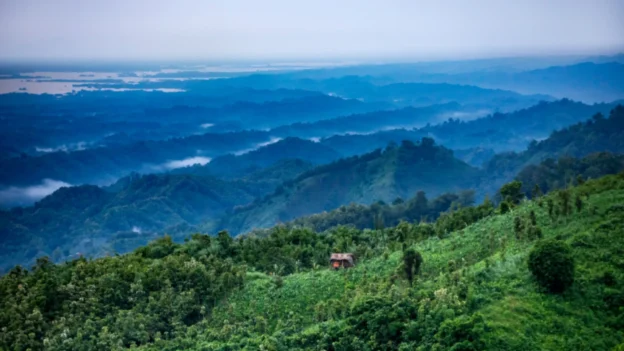

In the high-altitude landscapes of Arunachal Pradesh’s Tawang district, where farming, animal husbandry and traditional crafts continue to sustain rural livelihoods, a growing conversation is emerging around entrepreneurship as a pathway to economic opportunity.
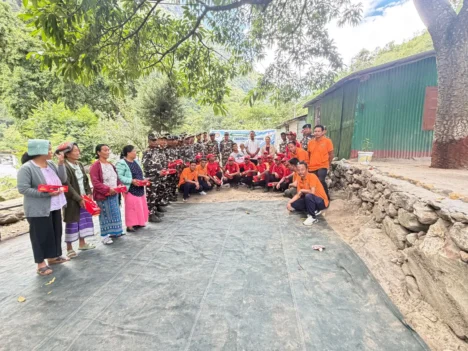
Against this backdrop, the Arunachal Pradesh Khadi & Village Industries Board (APKVIB) on Monday organised a Gramin Udyog and Entrepreneurship Development Workshop at Lumla, bringing together farmers, artisans, women’s Self-Help Groups (SHGs), youth and aspiring entrepreneurs to explore new avenues for income generation and enterprise development.
The workshop drew an enthusiastic response from participants across the Lumla Sub-Division. Many attendees expressed interest in moving beyond conventional agriculture and exploring opportunities in value-added products, agro-processing and small-scale industries that can strengthen household incomes.
Addressing the gathering, Chief Guest Tsering Lhamu, MLA and Advisor for Planning and Women & Child Development, underscored the importance of entrepreneurship in creating jobs and strengthening the rural economy.
She encouraged young people to look beyond the traditional pursuit of government employment and instead explore opportunities to become entrepreneurs and job creators. Lhamu also urged participants to make full use of schemes and support mechanisms offered by the Ministry of MSME, NERAMAC, the Ministry of Development of North Eastern Region (DoNER), APKVIB and other government agencies.
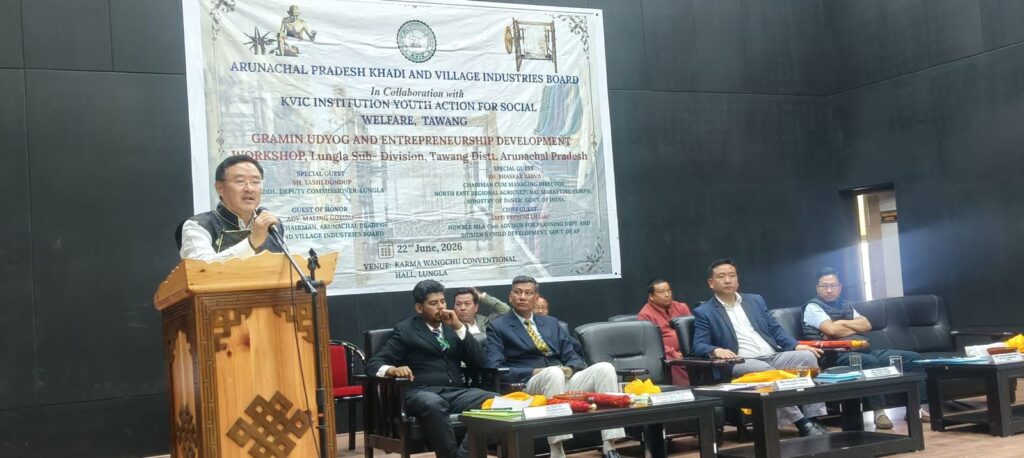
Highlighting the importance of building sustainable businesses, she stressed that value addition, innovation, branding and stronger market linkages would be critical in unlocking the commercial potential of local products from the region.
APKVIB Chairman Adv. Maling Gombu spoke about the need to bridge the gap between rural producers and government programmes designed to support village industries and entrepreneurship.
He informed participants about the benefits of registering with APKVIB as an affiliated institution, including access to technical guidance, handholding support and developmental initiatives. He also emphasised the importance of promoting indigenous products while ensuring the sustainable use of local natural resources.
Resource persons from the Ministry of MSME, NERAMAC, DoNER and APKVIB highlighted the vast potential of village industries based on locally available resources in Tawang district.
Sectors such as handicrafts, handloom, Monpa handmade paper, food processing, beekeeping, agro-based enterprises and eco-friendly rural industries were identified as promising opportunities capable of generating employment while preserving traditional knowledge and skills.
During the technical sessions, Dr. Satish Kumar, Director (I/c), MSME, Itanagar, provided participants with a detailed overview of schemes and programmes available for Micro, Small and Medium Enterprises (MSMEs).
The discussions focused on entrepreneurship development, business planning, financial assistance, digital marketing platforms, market access and skill-development initiatives aimed at helping aspiring entrepreneurs establish and grow their ventures.
Md. Abdul Rakib, Business Development Officer, NERAMAC, Itanagar, outlined market-linkage opportunities and explained the agency’s buyback arrangements in the agri and allied sectors.
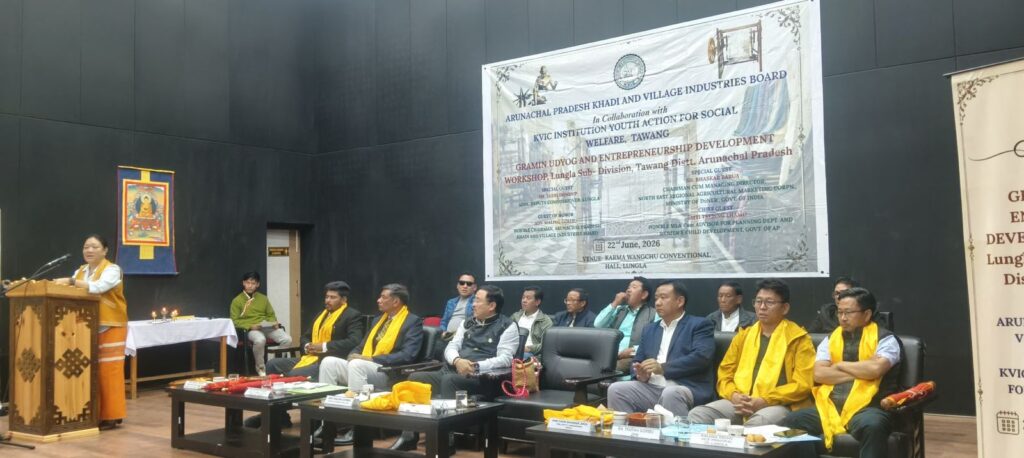
He noted that the Lumla region possesses significant potential for the commercial cultivation and processing of high-value agricultural products and encouraged local farmers to take advantage of emerging market opportunities.
The interactive session reflected the growing interest among local farmers and entrepreneurs in diversifying their livelihoods.
Participants raised questions about the market prospects of products such as amla, lemongrass, seabuckthorn, medicinal plants and other high-value crops that are increasingly attracting attention for their commercial potential.
Many participants sought greater technical support, market access and institutional handholding to help transform these opportunities into viable and sustainable enterprises.
More than 200 participants actively engaged with the experts throughout the day, signalling strong interest in establishing village-based enterprises across a range of sectors.
The workshop concluded with a shared vision of transforming rural communities into centres of entrepreneurship, innovation and self-reliance, aligned with the broader goals of Atmanirbhar Bharat and Viksit Bharat.
Reaffirming the Board’s commitment to rural development, APKVIB Development Officer Ralong Singhi said the organisation would continue supporting entrepreneurs through training, capacity building, technology support, market facilitation and handholding initiatives.
He said these efforts are aimed at creating sustainable livelihood opportunities and strengthening the rural economy across Arunachal Pradesh.