Rail connectivity snapped, thousands stranded, military placed on standby as Sivasagar and Charaideo faced one of the worst flood emergencies in recent years
Upper Assam is witnessing one of the most severe flood emergencies of this monsoon, with Sivasagar and Charaideo districts emerging as the epicentre of a rapidly escalating disaster that has now spilled across the inter-state border into Nagaland. Continuous rainfall over the last several days across the Patkai hills, Nagaland and upper catchments has inundated vast stretches of riverine and low-lying areas, forcing thousands of residents to leave their homes while transport and communication networks continue to collapse.
The Assam Government has requested the Indian Army and the Indian Air Force to remain on standby for large-scale evacuation operations as the situation deteriorates. Chief Minister Himanta Biswa Sarma stated that the safety of residents remains the government’s highest priority and directed senior cabinet ministers to rush to the affected districts to supervise rescue and relief operations. However, by Monday morning, large-scale military deployment had yet to begin, with evacuation efforts continuing mainly through district administration, SDRF and local volunteers.
Sivasagar and Charaideo under water
According to the latest Assam State Disaster Management Authority (ASDMA) flood bulletin, eight districts are currently affected, with Sivasagar and Charaideo among the worst hit. As of Sunday night, 57,199 people across 298 villages had been affected by the floods, while 22 revenue circles remained inundated. Sivasagar alone reported 61 affected villages spread across Sivasagar, Nazira, Amguri and Demow revenue circles, while Charaideo recorded 57 affected villages under Sonari, Mahmora and Sapekhati.
The floodwaters have entered residential areas across Amguri, Nazira, Demow and Sonari, forcing authorities to move families from inundated homes. In Sivasagar district, two relief camps are currently functioning with more than 200 inmates, although local reports indicate many displaced families continue to stay on embankments and elevated roads instead of entering camps.
The ASDMA has also confirmed one flood-related death in Amguri, taking this year’s flood death toll in Assam to five.
Railway connectivity severely disrupted
The floods have disrupted one of the most critical transport corridors in Upper Assam. Railway connectivity through parts of Sivasagar and Charaideo has been severely affected as floodwaters submerged tracks and weakened embankments. Services have either been suspended or operated with restrictions, further isolating flood-hit communities and complicating relief logistics. Local administrations are also reporting disruptions on several important roads connecting villages with district headquarters. Assam, Nagaland bordering
Floods cross into Nagaland
A significant development in the present flood episode is the spread of flooding into downstream areas of Nagaland bordering Assam. Large parts of Mon district and adjoining areas witnessed flash floods and landslides from Sunday evening following continuous heavy rainfall. Houses have been washed away, roads blocked and several casualties reported, highlighting that the present disaster is no longer confined within Assam but has evolved into a regional hydrological emergency affecting both states.
The simultaneous flooding in Nagaland also underlines the complex nature of the Patkai foothill river systems, where runoff generated in Nagaland quickly enters Assam’s plains before flowing back into low-lying border areas, making coordinated interstate disaster management increasingly essential.
Rescue operations lag behind rising waters
Although the state government has activated emergency response mechanisms and sought military support, the speed of rising floodwaters has outpaced evacuation efforts in several localities. The latest ASDMA report indicates that rescue operations remain limited, with only a small number of boats officially deployed despite extensive inundation in Upper Assam.
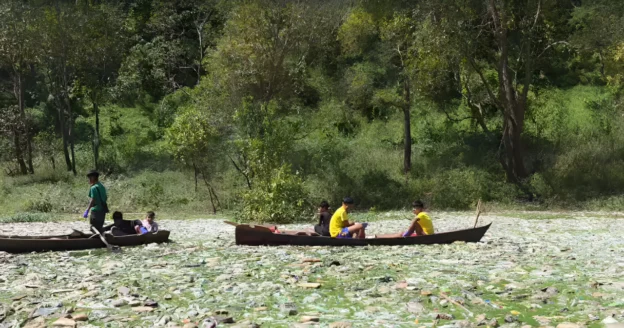
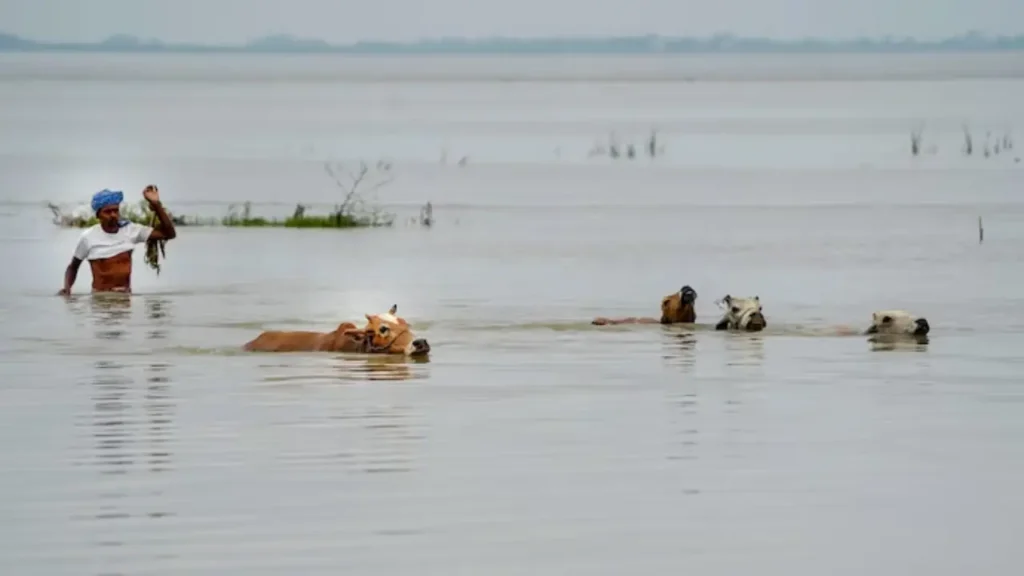
Ground reports indicate that many evacuations are still being carried out using country boats operated by local residents, fishermen and volunteers. In several villages, elderly people, children and livestock continue to remain trapped as water levels rise.
Infrastructure under stress
Besides widespread inundation, floodwaters have begun damaging critical infrastructure. Roads in Sonari and parts of Sivasagar remain submerged, while several public water supply schemes under the Public Health Engineering Department in Amguri have gone underwater, affecting access to safe drinking water.
Although the Burhidihing River remains the only river officially flowing above the danger level, continued rainfall across Upper Assam and neighbouring Nagaland has significantly increased local runoff, producing widespread flash flooding beyond the major river channels.
Beyond river flooding: A new pattern
Unlike the traditional Brahmaputra floods that develop gradually, the present crisis reflects a combination of intense local rainfall, overflowing hill streams, poor urban drainage and rapid runoff from the Patkai hills. This has resulted in flash flooding even in areas that historically experienced limited inundation.
The extensive flooding reported in Nagaland further illustrates that the eastern Himalayan foothills are witnessing increasingly unpredictable rainfall events, consistent with broader climatic trends observed across Northeast India. Such events challenge conventional flood forecasting systems that primarily monitor major rivers while underestimating localized cloudbursts and hill-stream surges.
For Sivasagar and Charaideo, this flood may represent more than another seasonal disaster. It exposes the growing vulnerability of Upper Assam’s transport infrastructure, rural settlements and border landscapes to increasingly erratic monsoon behaviour. As evacuation operations continue and the Army and Air Force remain on standby, the coming 24 to 48 hours are likely to determine whether the crisis stabilizes or deepens further.