

For nearly four months since taking office in late March, Prime Minister Balendra Shah (Balen) of Nepal appeared determined to rewrite one of the oldest rituals of Nepali diplomacy. Foreign ambassadors could come to Kathmandu. They could meet him collectively. They could convey their governments’ messages through established diplomatic channels. But the traditional one-on-one courtesy call at the prime minister’s office (PMO) was, for Balen, apparently a ritual Nepal could do without.
It was more than a scheduling preference. It was presented as a principle.
Shah rose to power promising to do things differently. So, he seemed to believe that Nepal’s diplomacy had become too personalized and too dependent on protocol. His argument, as reported at the time, was that previous governments’ easy access to foreign diplomats had not necessarily strengthened Nepal’s national interest. His ‘solution’ to this ‘situation’ was institutionalization: let foreign policy be conducted through institutions rather than through personalities.
The symbolism was unmistakable. Then reality began to intrude.
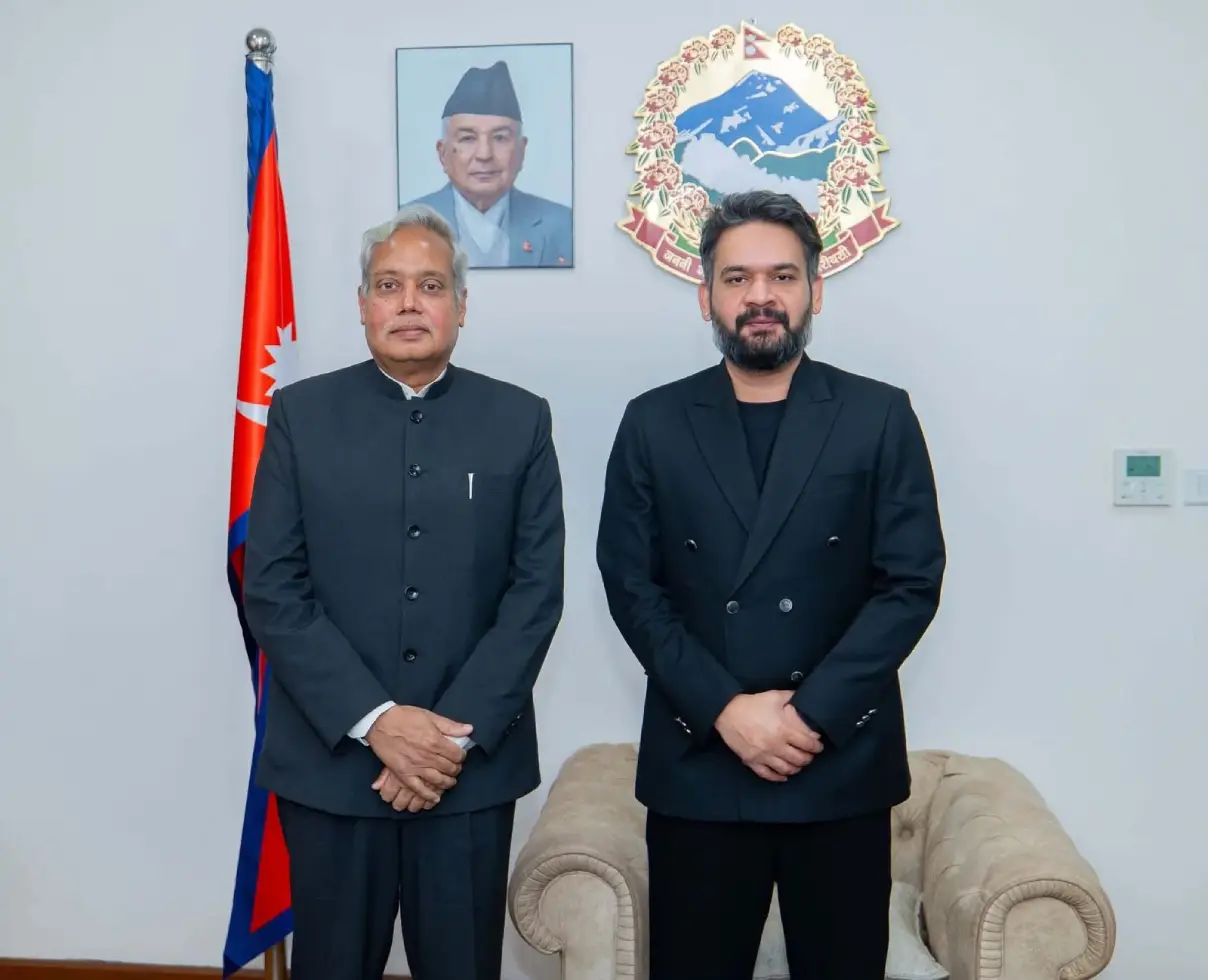
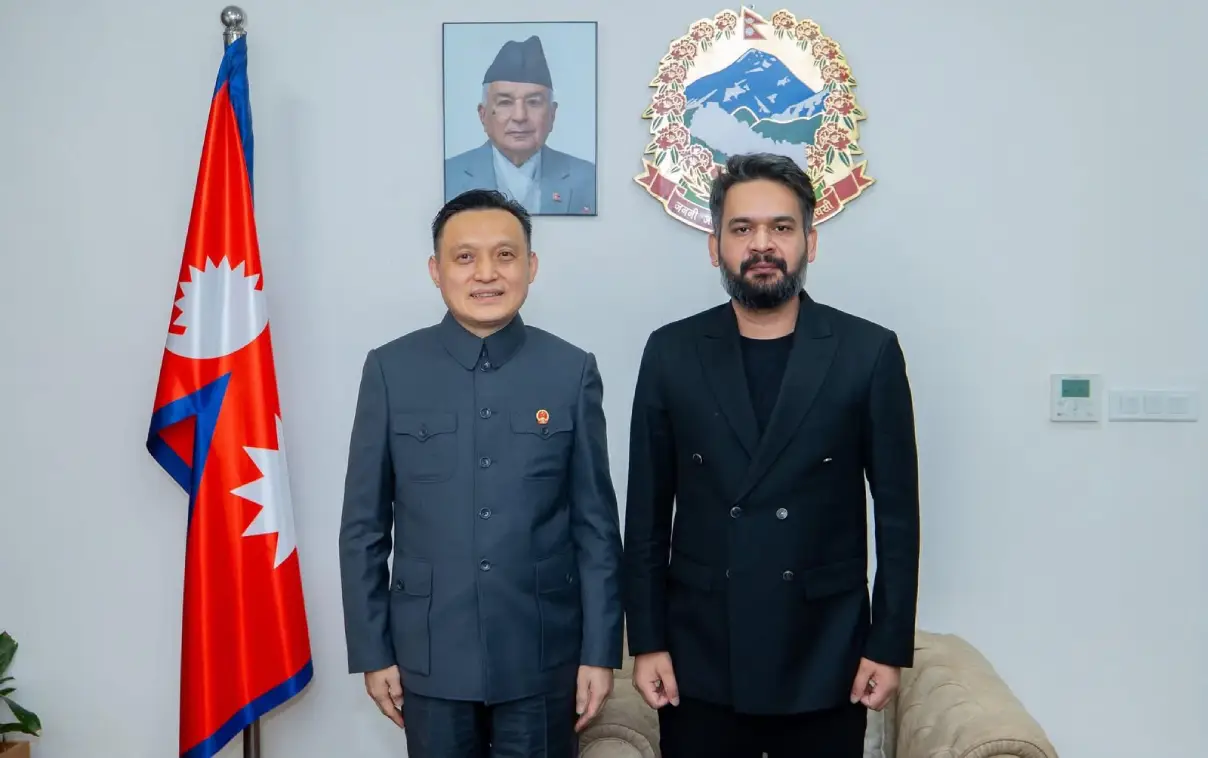
On August 10, Shah held separate one-on-ones with Indian Ambassador Naveen Srivastava and Chinese Ambassador Zhang Maoming. According to some local media reports, a meeting with the US chargé d’affaires was also scheduled. Balen, who had declined individual meetings with foreign envoys, had, in effect, dismantled his own rule.
The question, however, is not merely why Balen changed his mind. The more interesting question is whether Nepal’s reluctant prime minister is slowly discovering that running a country is rather different from running Kathmandu Metropolitan City. That diplomacy, particularly for Nepal, “a yam between two boulders (India and China)”, leaves little room for absolute rules.
When Prime Minister Balen assumed office, he appeared determined to keep foreign diplomats at arm’s length. Requests for meetings with senior American officials were turned down. The planned meeting with visiting Indian Foreign Secretary Vikram Misri did not take place. Even ambassadors seeking the customary post-election or post-appointment courtesy call were kept waiting.
Instead, Shah invited ambassadors collectively.
On April 26, he held a group meeting with Kathmandu-based ambassadors and heads of diplomatic missions. Another collective interaction followed with European Union ambassadors and mission chiefs. Diplomats and foreign-policy specialists praised the transparency of the arrangement, at least in principle.
There was logic behind the experiment. Nepal has long struggled with the perception that foreign policy is sometimes conducted through personalities rather than institutions. Prime ministers, ministers and political leaders frequently develop their own relationships with foreign governments, sometimes leaving the foreign ministry and diplomatic machinery playing a secondary role.
Balen’s instinct – to strengthen institutions – was therefore not inherently misguided.
But there was a problem. Diplomacy is not simply about institutional procedure. It is also about relationships, signaling, access and trust. And that is where the experiment began to run into the hard wall of geopolitical reality.
Geography does not negotiate
Nepal can change its diplomatic etiquette. But it cannot change its geography. India and China will remain Nepal’s immediate neighbors regardless of who occupies Baluwatar. India will remain central to Nepal’s trade, transit, energy, employment, security and people-to-people relations. China will remain indispensable to Nepal’s northern connectivity, infrastructure ambitions and strategic balancing.
There are other actors as well that matter enormously, such as, the United States, European Union, Japan and other development partners.
In such a setting, a prime minister cannot simply decide that direct engagement with ambassadors is unnecessary and expect the outside world to interpret the decision purely as an exercise in institutional discipline.
Diplomats are, after all, representatives of states. A meeting with an ambassador does not necessarily mean surrendering national interest. Nor does refusing one necessarily demonstrate nationalism. Sometimes the stronger position is to sit across the table, listen, disagree and negotiate.
That may be the lesson Balen is beginning to learn. The decision to meet the Indian and Chinese ambassadors on the same day was itself carefully calibrated. The government wanted to convey that India and China were equally important to Nepal. That is classic Nepali diplomatic balancing, and perhaps a sign that the prime minister is beginning to appreciate the difference between making a statement and managing a relationship.
The choice of the Indian and Chinese ambassadors for the formal U-turn was hardly accidental. India and China are not ordinary diplomatic partners for Nepal. They are the two countries with which every Nepali government must constantly calibrate its foreign policy.
The decision to meet their ambassadors separately, and on the same day, was therefore a carefully constructed signal: Nepal is not choosing between India and China. At least that is the message Kathmandu wanted to send publicly.
Some analysts said the sequence – first the Indian ambassador and then the Chinese envoy – mattered too. The government said the arrangement reflected Nepal’s foreign-policy priorities and the importance of both neighbors.
That is perhaps the beginning of diplomatic maturity: understanding that foreign policy is often less about dramatic declarations and more about signals, sequencing and symbolism. Balen’s earlier posture had been strikingly categorical. His new posture is more pragmatic. And needless to say, pragmatism is not necessarily weakness.
There is another important dimension to this change. Balen has also begun meeting people at home.
For much of his early tenure, the prime minister was notably reluctant to meet domestic stakeholders as well. But in the weeks preceding the diplomatic U-turn, he began meeting industrialists, traders, construction entrepreneurs and other business representatives more frequently.
That suggests that the change in diplomatic behavior may be part of something larger. Perhaps the prime minister has realized that governance itself requires conversation.
A government cannot govern merely by issuing decisions. It must hear from businesses affected by policy, diplomats affected by foreign-policy decisions, bureaucrats implementing them and citizens living with their consequences.
The transition from a mayoral style of leadership, where decisions can be visibly imposed on a city, to prime ministerial governance is a much more complicated journey. At the national level, almost every decision has external consequences.
The costs of the initial policy and the Rabi factor
The costs of the initial policy were potentially more serious. Diplomatic meetings are not merely ceremonial. They provide opportunities to clarify misunderstandings before they become disputes. They allow governments to communicate positions directly. They give foreign representatives a chance to explain their own governments’ concerns. They also allow prime ministers to assess foreign governments’ priorities without relying entirely on intermediaries.
That matters particularly for Nepal. The country has unresolved issues with India involving borders, trade, transit, water resources, energy and the recruitment of Nepali citizens into the Indian Army. China, meanwhile, is central to questions involving connectivity, infrastructure, trade and the strategic implications of Nepal’s relationship with Tibet.
These are not issues that can be managed through symbolism alone. They require continuous communication. The cancellation of Vikram Misri’s planned meeting with Shah was therefore more consequential than an ordinary missed appointment.
Likewise, declining meetings with visiting senior American officials meant losing opportunities for direct communication with an important development and geopolitical partner. A small country does not become strategically stronger by becoming diplomatically inaccessible. More often than not, it becomes weaker by doing so.
There is also a fascinating political complication. Analysts and commentators have raised questions about apparently parallel diplomatic activities involving Rabi Lamichhane, the chairman of the ruling Rastriya Swatantra Party (RSP), and the Balen government. They point to reports of Balen’s adviser Kumar Ben travelling to New Delhi for a meeting with Indian National Security Adviser Ajit Doval, while Balen himself had initially been reluctant to meet Indian diplomats. This raises a critical question: why informal channels were being used while formal diplomatic channels remained restricted.
This is precisely where Balen’s original philosophy risks becoming contradictory. If the objective is institutional diplomacy, the answer cannot be to avoid formal diplomatic engagement while informal channels proliferate behind the scenes. Transparent diplomacy is stronger than invisible diplomacy. If Nepal needs to talk to India, it should talk to India. If it needs to talk to China, it should talk to China. If it needs to talk to Washington, Brussels or Beijing, it should do so through recognized diplomatic mechanisms while preserving whatever confidential channels are genuinely necessary.
The issue is not whether conversations happen. The issue is whether they happen coherently, professionally and in Nepal’s interest.
A reluctant student of geopolitics?
It may therefore be premature to call Balen’s change a capitulation. It may instead be his first significant lesson in the difference between political theatre and statecraft.
As a political outsider who rose to national prominence by challenging established practices, Balen understandably wanted to signal that his government would not behave like previous governments.
That instinct helped create his political identity. But foreign policy punishes absolutism.
A prime minister can refuse to follow an old convention. But he cannot refuse geography. He cannot refuse economic interdependence. He cannot refuse the interests of neighboring powers. And he cannot permanently avoid the diplomatic conversations through which those competing interests are managed.
The irony is that Balen may now be discovering that diplomatic engagement can itself be an instrument of nationalism. It goes without saying that meeting an ambassador does not mean accepting that ambassador’s country’s position.
Indeed, the purpose of diplomacy is often precisely to make clear where the two countries disagree.
The Nepali Prime Minister is “finally growing into the job. Perhaps this is ultimately the most charitable interpretation of Balen’s U-turn. The reluctant prime minister is not necessarily abandoning his nationalist instincts. He may simply be learning that nationalism and international engagement are not opposites.
For a country such as Nepal, sovereignty is not demonstrated by refusing to meet foreigners. It is demonstrated by being able to meet them without being overawed by them.
The image of Balen sitting separately with the Indian and Chinese ambassadors therefore carries significance beyond the meetings themselves. Four months earlier, he seemed to believe that distance from diplomats would strengthen Nepal’s hand. Now he appears to be testing another proposition: perhaps Nepal’s hand is stronger when it is firmly on the diplomatic table.
That is not surrender. It is statecraft. And if Balen is indeed learning that lesson, his U-turn could eventually prove to be less a sign of political retreat than an early indication of diplomatic maturity.
The real test, however, has only begun. Meeting ambassadors is the easy part. The difficult part is what comes next: managing India without antagonizing China, engaging China without alarming India, maintaining productive relations with the United States and other partners, protecting Nepal’s interests in territorial and economic disputes, and doing all this while ensuring that foreign policy remains anchored in institutions rather than personalities.
If Balen can make that transition – from refusing diplomatic access to mastering diplomatic engagement – his U-turn may ultimately be remembered not as an embarrassment, but as one of the first signs that Nepal’s unconventional prime minister was finally learning the conventional rules of diplomacy and international politics.