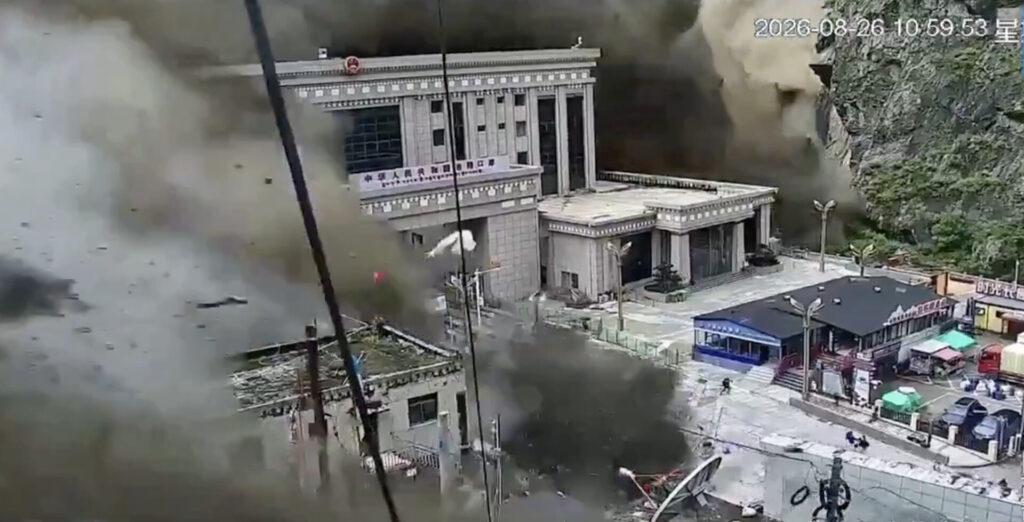
As Nepal reels from the devastating flood that tore through Rasuwa and swept away villages in its path, climate and environmental scientists are pointing to a familiar but increasingly frequent culprit — a glacial lake outburst flood (GLOF), driven by rising temperatures and melting glacial ice, rather than any construction activity across the border.
The disaster has nonetheless sparked a wave of speculation. Several theories have circulated online suggesting that Chinese infrastructure projects upstream in Gyirong may have contributed to the flood, with some accounts alleging that Beijing delayed sharing critical information about the glacial lake breach by as much as 45 minutes.
China has firmly rejected these claims. Officials in Beijing maintain that an earthquake, not any construction activity, triggered the avalanche that set off the disaster.
Some of these allegations have circulated through posts shared by a Nepali journalists’ group on X (formerly Twitter), and are reproduced here as part of the ongoing public discourse; they remain unverified. The group described the August 26 flash flood in Rasuwa as a “purposeful ecological disaster,” linking it to Chinese construction near the Tibet border.
According to the group, settlements and the town of Gyirong — built by cutting into hillsides and reportedly altering the natural course of the Trishuli River — are contributing to a pattern of avalanches and destructive floods entering Nepal each year. The group further alleged that the Gyirong port, constructed along the Rasuwa border, sits at a river confluence in a manner that increases the river’s velocity toward Nepali territory.
The journalists’ group has urged Nepal’s Prime Minister, Balendra Shah, to raise the matter with China, accusing Beijing of “destroying ecosystems across the entire border” and causing what they described as irreparable damage to the Himalayas.
𝗔𝗩𝗔𝗟𝗔𝗡𝗖𝗛𝗘 𝗖𝗔𝗨𝗦𝗘𝗗 𝗗𝗨𝗘 𝗧𝗢 𝗖𝗛𝗜𝗡𝗘𝗦𝗘 𝗖𝗢𝗡𝗦𝗧𝗥𝗨𝗖𝗧𝗜𝗢𝗡𝗦 𝗜𝗡 𝗛𝗜𝗠𝗔𝗟𝗔𝗬𝗔𝗦 𝗖𝗔𝗨𝗦𝗘𝗗 𝗧𝗢𝗗𝗔𝗬’𝗦 𝗙𝗟𝗢𝗢𝗗
Ecological disaster caused by Chinese Xiaokang settlements in Glacial altitudes now trigger avalanches annually on China- #Nepal
1/4 pic.twitter.com/yZvoqjP8uQ— Nepal Correspondence (@NepCorres) August 26, 2026
border resulting in flash floods. Today’s flood was triggered near Gyrong town in occupied #Tibet which has been constructed by cutting hills. The town itself has been constructed on the natural course of Trishuli river. The damage to sensitive ecosystem on glacial peaks now
2/4 pic.twitter.com/D77RDwaMdO— Nepal Correspondence (@NepCorres) August 26, 2026
The Chinese Embassy in Kathmandu has strongly pushed back against both allegations — that China failed to give advance warning of the floods, and that the disaster was caused by a dam burst. Calling the claims “false and misleading,” the embassy said both Nepal and China had been affected by the same natural disaster that struck the Kerung–Rasuwagadhi border area on August 26.
Embassy officials said an earthquake, or an earthquake-like tremor, triggered an avalanche and a large landslide, which in turn caused the flooding along the border. They urged that focus remain on rescue, relief and bilateral cooperation rather than blame.
Notably, Chinese authorities have issued a different warning following the Rasuwa floods. State television, citing the Ministry of Water Resources, reported on Thursday that a lake had formed at a river mouth on the Nepalese side, with roughly 2 million cubic metres of water already accumulated and concerns growing over a possible dam breach.
Officials estimate that another 3 million cubic metres of water could flow into the lake over the following three days, heightening fears of a sudden breach and further flooding downstream.
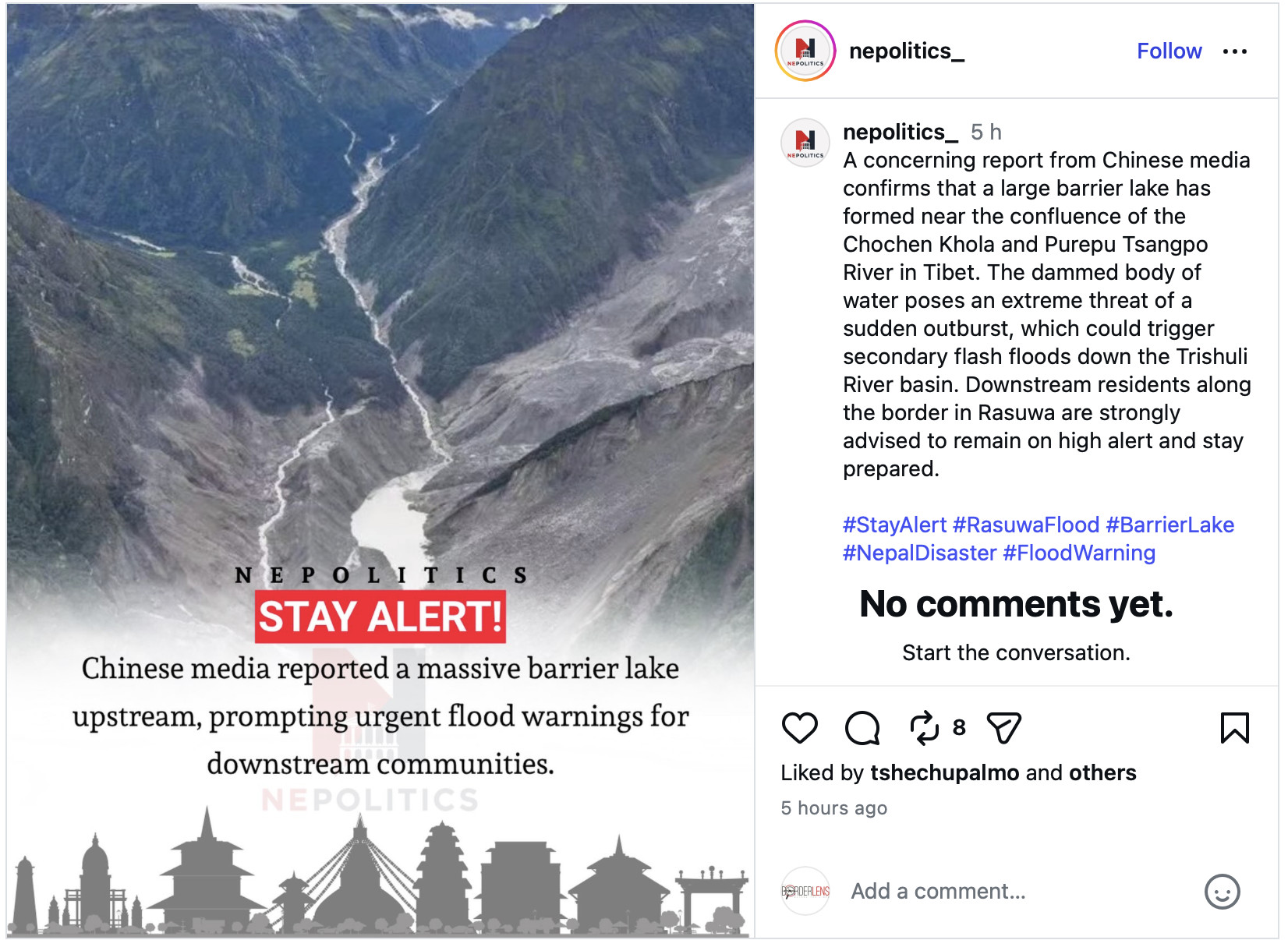
The build-up of water poses a serious risk of a sudden outburst, which could trigger secondary flash floods along the Trishuli River basin. Nepal’s authorities are said to have strongly advised downstream residents in Rasuwa to remain alert and stay prepared for further disruption.
The lake formed following a landslide that began on Wednesday morning, according to Chinese authorities. The resulting disaster, as the world witnessed, caused heavy casualties and left a large number of people missing around Gyirong Port in Gyirong County, in Xizang’s Shigatse region.
Meanwhile, a senior journalist in Kathmandu called for a “trinational mechanism involving Nepal, India and China” to share information on natural disasters of this kind — arguing that such cooperation would benefit both upstream and downstream communities across the Himalayan region.
Search, rescue and relief operations remain intensified on both sides of the border, following landslides that also damaged the Gyirong (Kerung) Port area in Tibet.