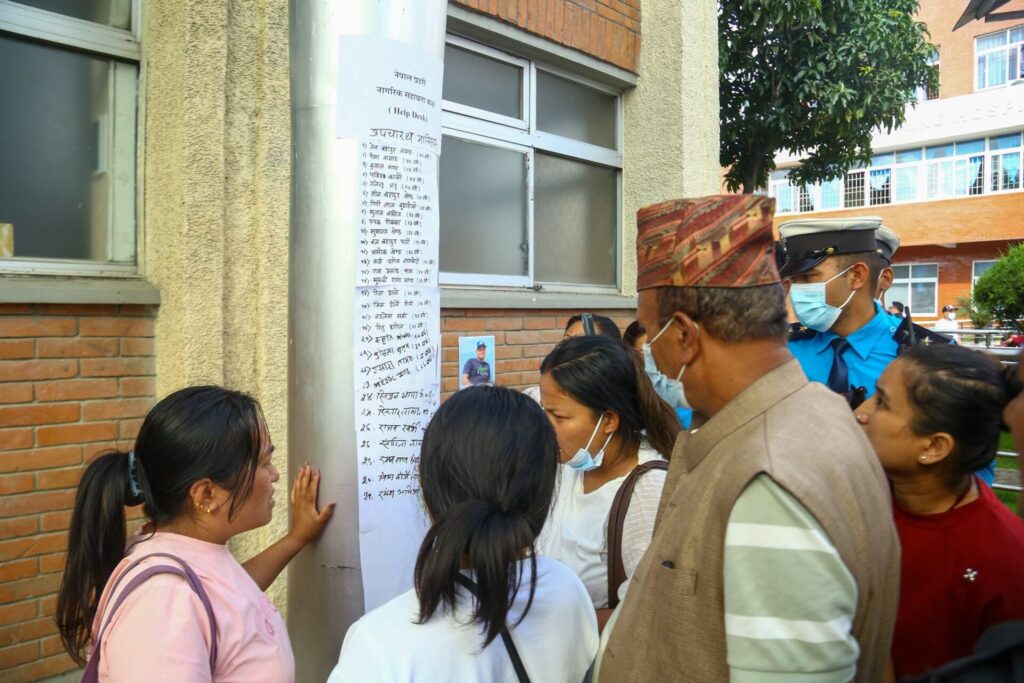
A sudden surge of water and debris entered Nepal’s Bhotekoshi River after an obstruction in the river’s upper catchment on the Chinese side, caused by an ice/snow landslide and debris, suddenly gave way. The flood entered the river system in Rasuwa before moving through Timure, Syabrubesi, Betrabati, Trishuli, Baireni and Devighat, leaving a trail of destruction along the river corridor.
8:40 a.m. — The flood strikes
A major flood entered the Bhotekoshi River, triggering the emergency in Rasuwa and downstream areas.
9:00 a.m. — First information received
Authorities received the initial information about the flood and began assessing the situation and potential risks along the river system.
9:10 a.m. — Alerts begin
Information about the flood and associated risks was disseminated through various communication channels as authorities began coordinating the initial response.
9:35 a.m. — Emergency mobilisation
Responders at the provincial, district and local levels were placed on high alert. Alerts were issued through Nepal Telecom and Ncell, while authorities maintained continuous coordination with relevant agencies.
From 9:45 a.m. — Search and rescue takes to the air
With access to several affected areas severely disrupted, aerial rescue operations began. Nepal Army and private helicopters were deployed, rescuing 116 people in the initial phase of the response.
10:00 a.m. — Monsoon Command Post convenes
An emergency meeting of the Monsoon Command Post was held, with authorities deciding to intensify search and rescue operations and mobilise additional resources and coordination mechanisms in the affected districts.
10:30 a.m. — Emergency teams placed on standby
Search and Rescue and Emergency Response Teams were placed on standby at the airport to support operations as the scale of the disaster became clearer.
11:00 a.m. — National response escalates
The National Disaster Risk Reduction and Management Council (NDRRMC), chaired by the Prime Minister, met to review the situation. Search, rescue and relief were given the highest priority, with decisions taken to deploy additional helicopters and drone teams.
Continuous — High-risk warning downstream
As the flood moved through the Bhotekoshi–Trishuli river corridor, the riverside areas were declared high-risk. Residents living along the riverbanks in Rasuwa, Nuwakot, Dhading, Gorkha and Chitwan were urged to remain in safe locations.
12:30 p.m. — Government orders intensified response
The Council of Ministers met and decided to further intensify search, rescue and relief operations as authorities continued responding to the unfolding disaster.
The rapid sequence of events—from the first reports of the flood to the mobilisation of national response mechanisms within hours—illustrates the speed at which the emergency unfolded and the immediate challenge faced by authorities in reaching communities along a heavily affected river corridor.
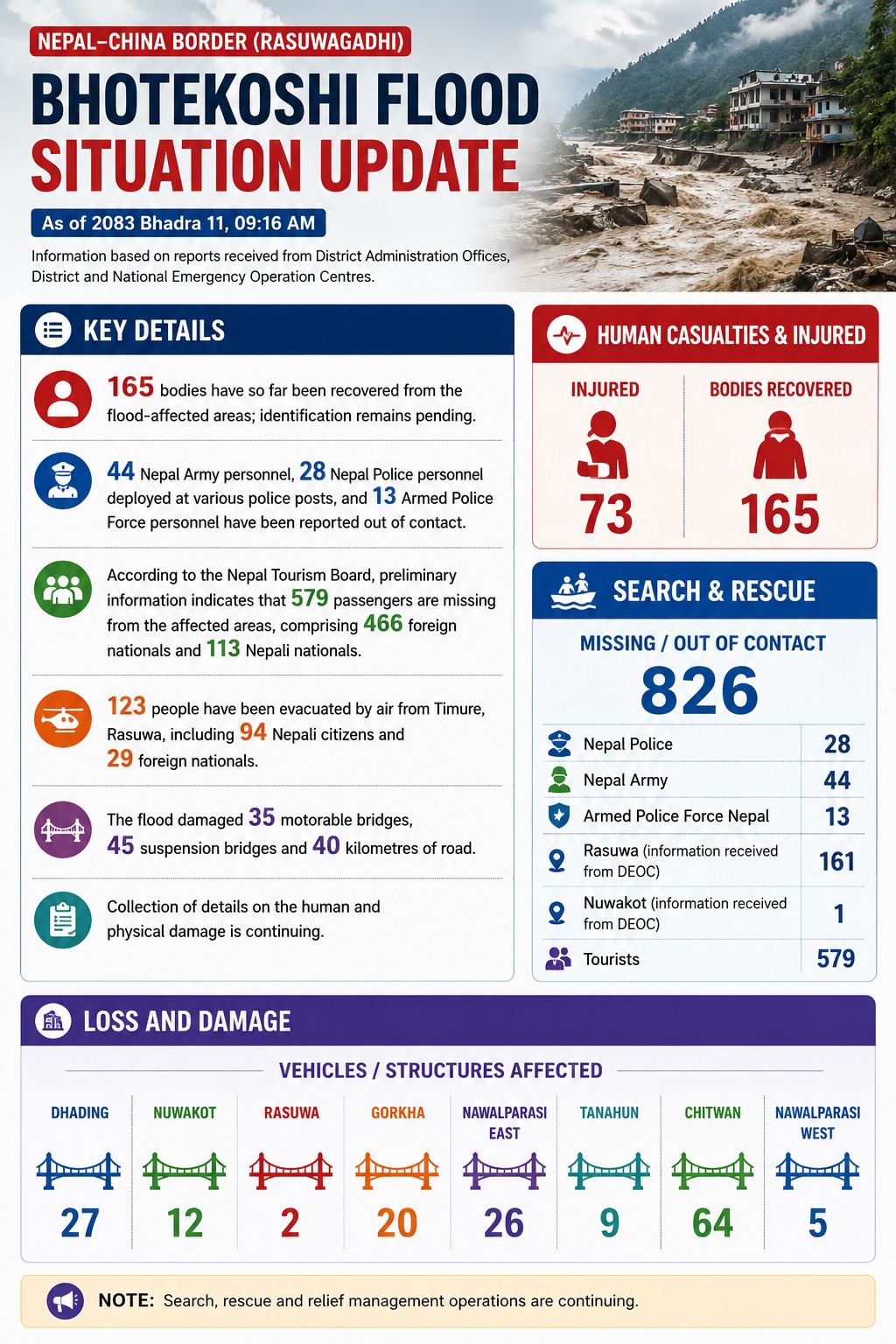
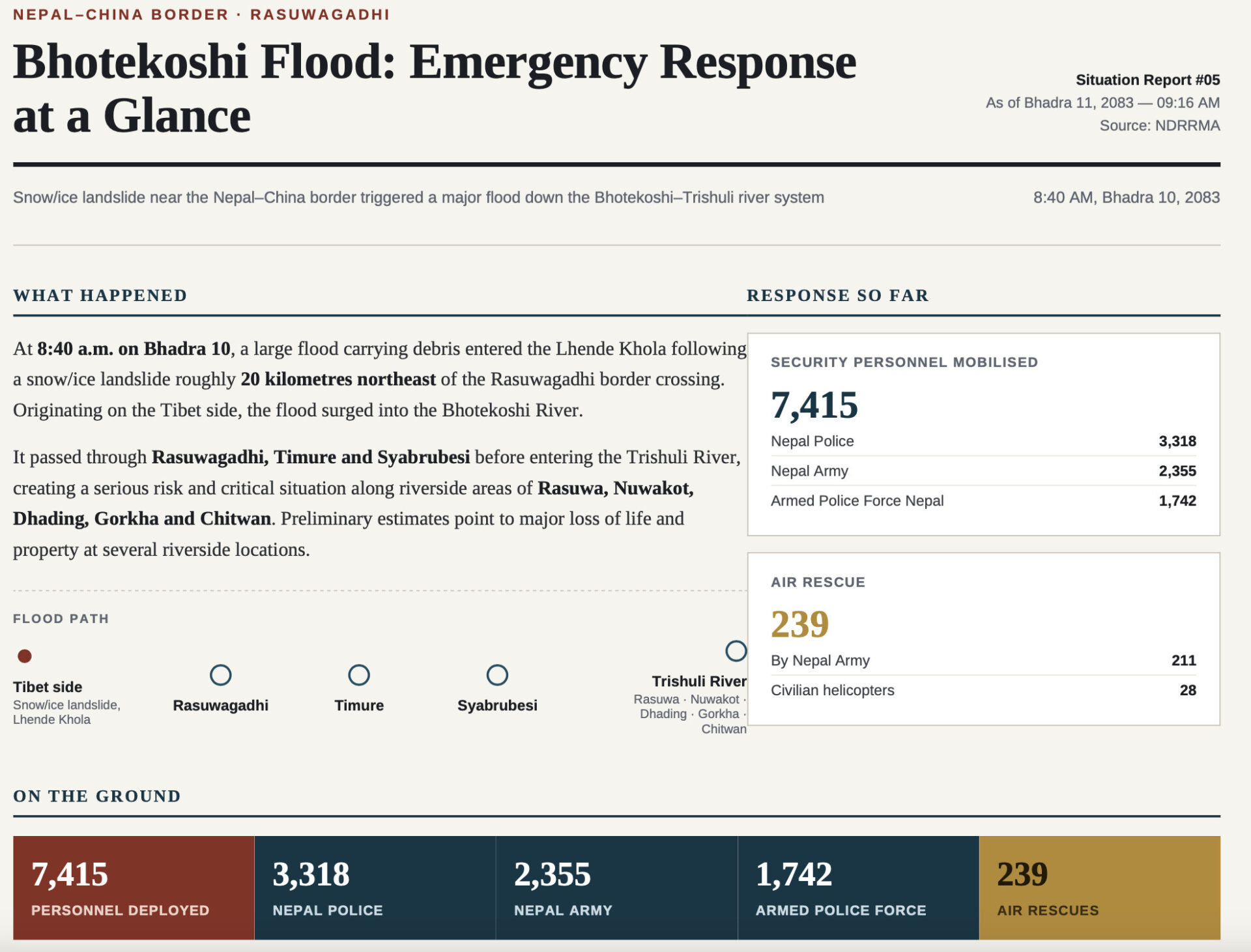

Government Response to the Bhotekoshi Flood
Decisions taken at the Council of Ministers meeting held on Bhadra 10, 2083
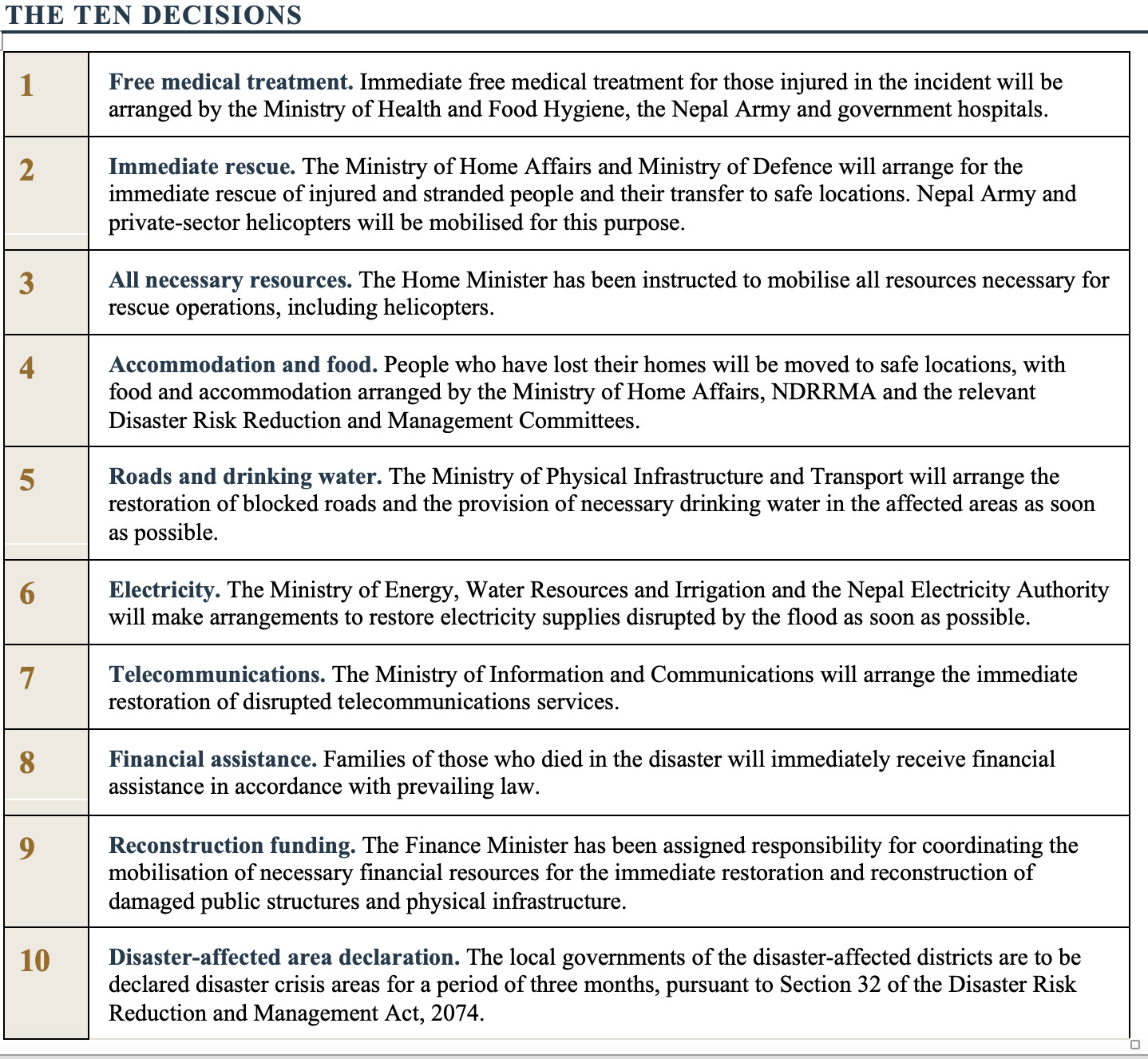
Meeting in the aftermath of the devastating Bhotekoshi flood along the Rasuwa border — including Rasuwagadhi and the areas downstream — the Council of Ministers began by expressing the Government of Nepal’s deep sorrow over the resulting loss of life and property. It extended heartfelt condolences to the families of those who died, and wished a speedy recovery to the injured. On that basis, the Council set out a ten-point response, assigning clear responsibility across ministries and agencies for immediate relief and longer-term reconstruction.